


 Francais
 Deutsch
 Italiano
Refine Your Search
US-Gliders- stock footage and images
- Showing 15757 to 15762 of 21917 results more
more Hide
Hide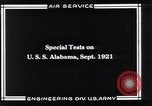
Special tests on USS Alabama and Brig Gen William Mitchell with a group of Air Service officers.
Special tests on USS Alabama off the United States coast. September 1921: USS Alabama at sea. 50 lb Navy type smoke bombs used to obscure the attack by heavy bombers. Smoke trails all around the ship. Phosphorus bombs explode around the ship. 100lb high explosive bombs dropped on it. The ship under attack of 300lb demolition bombs. Smoke clouds over damaged parts. Three NBS-1 in flight over Langley Field. Bombers drop four 2000lb bombs in the final attack. Ship tilted to one side. Three Martin Bombers drop two 1,100lb bombs to finish the attack. A mushroom cloud rises from the explosions. The ship lies half submerged in water due to anchoring in shallow water. Wrecked hull, damaged deck. Soldiers inspect the damage. Brigadier General William Mitchell stands with a group of Air Service officers.
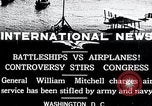
Bombs dropped on German Battleship Ostfriesland cause it to roll over and sink
Group of men standing across the street from the U.S. Capitol building in Washington DC. Two hold newspapers reporting about General Billy Mitchell and airpower controversy. View from an airborne bomber,as four bombs fall and explode in the water at the port side of the German battleship Ostfriesland, causing it to roll over and sink..
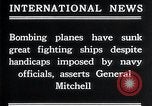
Bombing and sinking of warships off coast of United States as part of Genearal Billy Mitchell's demonstrations of air power.
Aerial view of target ship sinking after being bombed during tests of bomber capabilities against warships, in 1921, as part of General Billy Mitchell's demonstrations of airpower. Views of U.S. Navy battleships firing heavy guns at sea.
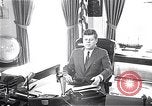
President John F. Kennedy inaugurates Voice of America transmitter at Greenville, North Carolina.
U.S. President John F. Kennedy at his office desk. Photographers and media men take photographs of president. President addresses on microphones on his table. President inaugurates Voice of America transmitter at Greenville, North Carolina.
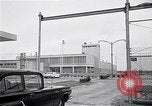
Inaugural ceremony for Voice of America transmitter at Greenville, North Carolina.
A station wagon enters a gate and drives to front of Voice of America building. American flag stands out on pole, in stiff breeze. Several buses arrive. Edward R. Murrow, famous radio broadcaster, and now also Director of the U.S. Information Agency, steps from the first bus, smoking a cigarette, and leads a contingent of officials and media people into the building. All are seated in a hall. Murrow is seated next to the podium, where Voice of America Director, Henry Loomis, addresses the gathering. Several other officials also speak. The last speaker is Mr. Murrow, who also presents Mr. Loomis a distinguished service award. View of the award document.
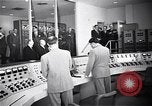
Officials tour new Voice of America transmitter at Greenville, North Carolina.
Officials of the U.S. Information Agency (USIA), and media representatives, tour the new high power Voice of America (VOA) radio transmitter in Greenville, North Carolina. They assemble outside the glass-enclosed sound studio control room as VOA Director, Henry Loomis, explains its workings. Mr.Loomis escorts USIA Director, Edward R. Murrow (smoking a cigarette). Views of recording equipment, magnetic tape recording machines running; extensive patch bays, with many connections; and many teletype machines.
CRITICALPAST.COM: About Us | Contact Us | FAQs - How to Order | License Agreement | My Account | My Lightboxes | Shopping Cart | Advanced Search | Featured Collections | Website Terms & Conditions | Privacy Policy ©2026 CriticalPast LLC.
License Agreement |
Terms & Conditions |
Privacy Policy
©2026 CriticalPast LLC.