


 Francais
 Deutsch
 Italiano
Refine Your Search
US-Gliders- stock footage and images
- Showing 16243 to 16248 of 21917 results more
more Hide
Hide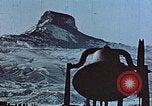
Japanese people do various activities as normal routine despite at relocation home during World War II, in United States.
Relocation to internment camps of people of Japanese ancestrty, in the United States, due to security reasons, during World War II. School bell of relocation center at Heart Mountain, in Wyoming. Students of Japanese origin change classes. Children in a class study mathematics. A teacher teaches drawing. Students study scientific farming at a high school. Business, workers, mechanics studies by students. Evacuee doctors and nurse operate at an operation theater. Doctors and dentists check people's health. A candidate for community council chief during an election for councilmen. Voters vote during election. Trial of a criminal of relocation houses at a court. Softball Match on the beaches at weekend. An artist draws pictures of relocation homes. Sunday church and men carry benches inside for prayers. Boy scouts raise American Flag. Girl scouts, Red Cross volunteers perform various duties. Boy scouts march with U.S. national flag during a parade. Beauty queen and floats follow the parade. Smokestacks of factories at relocations centers, and evacuees walk by them. Military Police guard with a rifle watches them.

16 million men register themselves in United States for the WWII draft, and President Roosevelt addresses from White House.
As World War II heats up, 16,500,000 men between ages 21 to 36 register themselves throughout the United States, signing up during the first peacetime conscription in U.S. history. (This was triggered by passage of the Selective Training and Service Act of 1940, also known as the Burke-Wadsworth Act, the genesis of "Selective Service.") Opening scene shows men lining up to register for the draft before the United States entered World War 2. Views of men filing out their registration forms. At 00:22 famous prize fighter, Barney Ross, is being registered. (He jokes that the registrar shaking his hand has too strong a grip.) At 00:34 Hollywood cowboy Gene Autry is seen registering. Close up view of street signs at Chinatown intersection of Bayard Street and Mott Street in New York City. Sign below it notes "School Street. Drive Slowly. Make no unnecessary noise." Line of many registrants of Chinese-American descent waiting in line, and processing paperwork. Scene changes to another area of the city, where a line of mostly African American men wait outside a registration building. Some cheer and wave for the camera. A police officer at the entrance hustles them inside, pulling some of them along. View of the exterior of the White House in Washington DC. United States President Franklin D Roosevelt addresses the nation's men of draft age, telling them that the call up of 800,000 men for training in year one, and less than one million men in each subsequent year, is a program of defensive preparation only. Roosevelt says to the registrants that "Democracy is your cause. The cause of youth." ( Note: clip is silent except for President Roosevelt speaking at the end.)
Japanese American doctors, nurses and dentists work at relocation centers in the United States during World War 2
Japanese- American surgeons at an operating theater at a relocation center (internment camp) in the United States during WW2. A dentist and his assistant take care of a patient. A Japanese American woman lab technician examines a specimen using a microscope. New born babies taken care by Japanese-American nurses. Student nurses learn lessons at the hospitals.
Children of Japanese Americans go to school inside a relocation center during WW2.
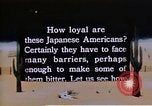
Japanese American children at school in a relocation center (internment camp) during World War 2. The U.S. flag on a relocation center. Young children in Kindergarten class. Teachers teach small students in a primary class. Girl student in the class solves problems. Students learn to play basketball at a court. Slate notes, "How do they react to the rising tide of racial prejudice? Well, here's one answer -- a growing feeling among the older Japanese that they will be permanently segregated and become wards of the United States, like the American Indian. Thus willing hands erect more permanent school buidlings." View of Japanese-American worker-residents in the camp building school buildings. Nisei students and American teacher at a high school. A girl solves trigonometry problems, standing at the black board in a class room. A student arranges drawers in a rack. Older Japanese-born men and women (Issei) learning in a school classroom. A student writes answers on the blackboard.
Nisei Japanese-American citizens, with their families at Manzanar War relocation center during World War II.
Nisei, the Japanese-American citizens of second generation, at Manzanar War Relocation center (internment camp) in California during World War II. A relocated family inside their relocation home. Mother cares her infant while the father reads a book. A father and his son's, who are U.S. Army soldiers temporarily home on furlough, sit and talk inside a relocation home. The mother sits by them. Clothes drying on a line in the house. A service star flag (showing that the family has a soldier serving in the war) hangs near a room divider, and other things and commodities inside the house. Shrubs and plantings beside camp housing units. Slated notes, "In their leisure time they have planted flowers, shrubs, and trees, and made beautiful gardens because they feel that they may become permanent residents. Japanese girls play in garden and are seen with women yards and well developed gardens of their relocation houses, including walkways, wooden bridges, and plantings.
Nisei, the Japanese Americans develop rubber extraction from guayule plant at Manzanar Relocation Center in California.
Nisei, the Japanese Americans of second generation, at relocation centers (internment) during World War II. A Japanese-American grows guayule plant generally grown in Mexico and Texas, experimentally at Manzanar Relocation Center in California. Japanese-American scientist at a laboratory in the relocation center invents methods to extract more rubber from guayule plant. Dried and ground plant at the laboratory. He makes production equipment from old automobile parts. A man paints old parts and modifies them for use. Rubber extracted from guayule plant rises to the surface as the container gets filled with the chemical. The scientist stretches the rubbers so made to check its quality.
CRITICALPAST.COM: About Us | Contact Us | FAQs - How to Order | License Agreement | My Account | My Lightboxes | Shopping Cart | Advanced Search | Featured Collections | Website Terms & Conditions | Privacy Policy ©2026 CriticalPast LLC.
License Agreement |
Terms & Conditions |
Privacy Policy
©2026 CriticalPast LLC.