


 Francais
 Deutsch
 Italiano
Refine Your Search
US-Gliders- stock footage and images
- Showing 1639 to 1644 of 21921 results more
more Hide
Hide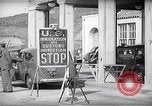
Checking exercises at the U.S. custom and immigration office at the Tijuana Mexico - USA international border.
The U.S. Custom and Immigration checkpoint at the USA-Mexico international border. U.S. Custom Inspector checking thoroughly in and outside of a car. Checking of the luggage. Inspectors check every car and person asking for identification. Sign boards of U.S. customs department. Vigilant checking irrespective of stormy weather.
Training film for U.S. troops with the Army of occupation in Germany after world War II
Opens with bell tolling Victory against Germany in World War II. Next, a slate reads: "Victory Leads to Peace," and a farmer is seen with cattle pulling a plow. But narrator says "the problem now is future peace," and a map of Germany is shown overlaid with "Your Job in Germany." A cartoon of a soldier is superimposed on the map, along with one of a World War 1 American soldier and a figure of possible future soldier with similar mission. Camera focuses on parts of German aircraft in a jumbled heap. Closeups of weary defeated German soldiers at end ot World War II. Glimpse of Adolf Hitler speaking and haranguing an audience from a podium in an animated and forceful way. Swastika flags displayed from houses in a quaint German town. Joseph Goebbels, Nazi Reich Minister of Propaganda, at a microphone. Glimpse of a German concentration camp. But as they appear, each of the Nazi elements promptly disappears, showing the scenes without such Nazi symbols and persons. Skeleton remains of bombed buildings. Flower displays. Bucolic German rural countryside and quaint old villages in peaceful settings. Camera focuses on a book titled "German History." Chapter I, titled "Blood and Iron," shows Image of Otto von Bismarck. German troops march in a parade. Narrator states that "under Bismarck, the German empire was built." (He formed the German Empire in 1871, unifying Germany with himself as Imperial Chancellor, while retaining control of Prussia at the same time.) The film shows mounted German lancers as it alludes to Bismarck's campaigns against Denmark in 1867; Austria in 1866; and France, in 1870. Germany's leaders celebrating its status, in 1871, as the mightiest power in Europe. Troops marching and girls dancing nearby. Farmers plowing field with a horse and cow. Classic peaceful rural alpine scenes with local people in agricultural pursuits. A group of local German musicians playing folk music as village people dance outdoors. Back to the book, Kaiser Wilhelm II is shown on Chapter 2, entitled: "Deutschland über Alles." Gathering of German soldiers in Pickelhaube (spiked helmets). A German Big Bertha howitzer firing. German troops marching against Serbia; Russia; and France (with view of war damaged French cathedral). German invasion of Belgium in 1940 (with view of clock tower resting in rubble). German troops seen in Italy, walking past battle-damaged buildings. German Zeppelin dropping bombs on British targets and view of bombed out London neighborhood. Next scene shows a capsized ship with survivors running across its hull. Film slate labels the scene as United States, as if it is a U.S. ship attacked by Germany. (Actually, it is the Austro-Hungarian Battleship, SMS Szent Istvan, torpedoed, by Italian torpedo boats, during World War I.) Next, American soldiers in trench are seen going "over the top" and into "no man's land" on the western front of World War 1. Glimpse through a window of Kaiser Wilhelm II, after defeat of Germany, in 1918. View of Germans in a Beer Garden. Picturesque view of German town. A German orchestra performing. American soldiers marching out of Germany, with flags waving. Back to the history book,as chapter III is revealed, entitled "Today Germany, tomorrow, the world," and featuring Adolf Hitler. German troops invading Austria (where a civilian lies dead on the ground). German troops entering Czechoslovakia (where local people in tears render the Nazi salute). They march into Poland (where a girl weeps over someone, not seen, on the ground). They march into France (where a wounded, bandaged child cries in a bed). Next, is a scene from England, where a British child victim of bombing lies dead in the remains of a shelter. German troops invading Norway, Holland, Denmark, Belgium, Luxembourg and Russia (where a woman tries to rouse a dead woman). They invade Yugoslavia (where women sit near coffins of children) and Greece (where a woman rescues a naked child). A U.S. merchant ship explodes after being torpedoed by a German submarine (unseen). Scenes of destruction with people plucking dead victims from rubble of buildings. American troops invading Normandy, France on D-day, June 6, 1944. Several American soldiers fall to German gunfire on the beach. Wounded American soldiers being transported in jeeps on the battlefield and being placed on landing craft for evacuation. Americans walking past huge piles of destroyed aircraft parts. A landing craft filled with wounded American soldiers. American wounded and dead on a battlefield. Sailors abandoning a burning American ship by jumping into the sea. A sailor picked up in a life boat. A wounded American soldier being dragged from the beachhead at Normandy. Various wounds being treated by U.S. Medical Corps personnel. More scenes of American wounded being moved on stretchers. Scene shifts abruptly to German people folk dancing. Film concludes with question marks about the future.

Newsreel titled Nazi Defense Crumbles in France depicting the U.S. soldiers fighting and victorious at a battle during WWII.
Newsreel titled 'Nazi Defense Crumbles in France'. A fighter airplane strikes the ground and gets destroyed by huge explosion. American soldiers take guard as fierce infantry firing goes on at a battle field. Soldiers firing artillery at the enemy positions. U.S. soldiers advance under the guard provided by the artillery and infantry firing. A German soldier moves out of bushes with his hands raised up in surrender. U.S. soldiers guards a marching troop of surrendered German soldiers. Medical aid the wounded soldiers. Bodies of those who died during the battle and a dead horse. Ruins of the city where fight took place. Destroyed houses and rubble all over the streets. Destroyed German artillery and equipment. Tanks and U.S. soldiers in a truck and on foot moving towards the next frontier. (World War II period).
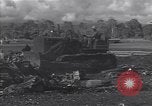
Earthmover cleans way for strip at Henderson Field of U.S. Air Force at Guadalcanal in Solomon Islands, during World War II.
U.S. Air Force runway strips and air fields at islands of Guadalcanal in Solomon Islands, during World War II. A new runway strip at Henderson airfield being constructed for U.S. Air Force fighter aircrafts nearby the sea shore of the island. An operator operates an earthmover and cleans the area for landing strip. U.S. airmen near earthmover watch the process.
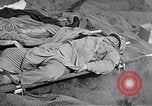
U.S. Marine casualties being evacuated from Iwo Jima during World War II
U.S. Marine casualties in the Battle for Iwo Jima , during World War 2. Bodies of fallen U.S. Marines, on stretchers, on the sands of Iwo Jima. Wounded marines on stretchers, being placed aboard beached Landing Vehicle Tracked (LVT) for evacuation. Marines using a microphone and loudspeaker system to direct evacuation activities on the shore.
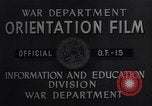
U.S. orientation film for Allied occupation forces, to provide background for understanding Japanese and their society
Background information for United States occupation forces in Japan after end of World War II. At start, the film shows sky filled with U.S. Navy airplanes flying in formations. They include Vought F4U Corsair aircraft, among others, and are seen overhead above the Battleship USS Missouri (BBB-63). Closeup of the USS Missouri with her crew in formation on deck wearing dress whites. Next, General Douglas MacArthur is seen and heard speaking from a podium on the Missouri's deck. He invites the representatives of the Emperor of Japan, and the Japanese Government, and the Japanese Imperial headquarters, to sign the instrument of surrender. The date is September 2, 1945, just after the end of World War 2. Closeups of the Japanese delegation, which includes envoys Foreign Minister Mamora Shigemitsu and General Yoshijiro Umezu, and of MacArthur. Japanese Foreign Minister Mamora Shigemitsu sits at a table. Closeups of him signing the surrender document. Change of scene to Japan, where camera pans over many thousands of Japanese people assembled to learn of their fate. Closeups of Japanese soldiers and family members, as Narrator asks how should the U.S. occupying force treat them. View of soldiers in plain non-military uniforms. Views of Japanese responding en masse to a leader, during World War 2. Views of child victims of the war. Closeup of Japanese soldier firing a short barrel light machine gun. Views of Japanese pedestrians including families, most in western dress. Japanese workers in an office. Film shows artists view of one worker's brain, and then many brains, as Narrator refers to need for reorienting Japanese thinking. View of learned wise Japanese leader at a podium. View of a Japanese soldier posed with his sword above the head of a war prisoner. Japanese mother feeding her baby. Closeups of Japanese babies. Closeups of Japanese school age children, in a group, and some doing things in school, and some at a playground. Group of uniformed Japanese students studying the art of Japanese calligraphy. Students doing artwork, studying nature outdoors, and paying attention to a teacher using a black board to explain how to calculate volumes of different shaped vessels. Students in classes of Geography and of geology. Japanese chemists, architects, and lawyers at work. Telephone switchboard operators at work. Electrified train moving on a track.
CRITICALPAST.COM: About Us | Contact Us | FAQs - How to Order | License Agreement | My Account | My Lightboxes | Shopping Cart | Advanced Search | Featured Collections | Website Terms & Conditions | Privacy Policy ©2026 CriticalPast LLC.
License Agreement |
Terms & Conditions |
Privacy Policy
©2026 CriticalPast LLC.