


 Francais
 Deutsch
 Italiano
Refine Your Search
US-Gliders- stock footage and images
- Showing 17539 to 17544 of 21918 results more
more Hide
Hide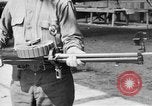
American soldier displays a Lewis machine gun. Another soldier test fires it at an American Army base in World War I
An American soldier, at a U.S. Army base in World War 1, displays a Lewis machine gun without a shroud. He holds it at various angles for the camera. Next, a soldier is seen test firing the Lewis gun set up on an improvised wooden stand in an open field. View from beside the soldier as he fires the gun. Another view from behind him as he fires downward into a ravine.
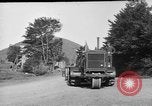
Step-by-step views of American gun crew towing, setting up, and firing a 155mm gun in World War I
Soldiers of American Expeditionary Forces (AEF) operating a Caterpillar-Holt model 75 tractor in World War 1. They display a large American flag, as they tow a French 155mm gun ( Canon de 155 Grande Puissance Filloux (GPF) mle.1917). They move along a dirt road and stop near some trees, where they are joined by other U.S. soldiers who begin preparing the gun for operation. Two soldiers pry a steel cover from the rear of the gun. It falls to the ground, where they pick it up by suspending it on a steel bar. One jacks up the carrier as several soldiers remove the limber from under the gun trails. Two teams of soldiers spread the trails of the gun. Next, two gunners are seen cranking controls to adjust azimuth and elevation of the gun. A gunner wipes clean a shell for the gun. One soldier holds the shell upright as another screws a fuse into the nose. Gun crew rams charge into breech of the gun with a ramrod and another secures the breech, as gunners make final adjustments to elevation. All step away, as one fires the gun with a lanyard. Then the crewmen rush back to ready the gun again. (World War I; World War 1; WWI; WW1)

Women work at a curtain manufacturing factory in United States
Curtain manufacturing factory in United States. Women inspect the length of curtains by spreading them on a table. Women sew curtains using Singer machines. Curtains processed on a machine by men.
M1917 helmets painted and packed for shipment at Ford Assembly Plant in Philadelphia (WWI)
Ford Motor Company employees paint and finish United States Army Brodie-patterned M1917 helmets at a factory in Philadelphia, Pennsylvania during World War I. Factory workers working in assembly line. Worker hammers a bolt in the center of the helmet. A worker attaches chin strap into the helmet. A machine attaches a bolt into the chin strap. Helmets are prepared for the paint tank. Workers dip helmets into paint tanks. Men wipe off helmets to remove a coat of tallow applied to prevent rusting. Helmets placed on rack, dipped in paint tank, and hung to dry on stands. Helmets are treated with sawdust applied with air pressure (“sawdusting”). Workers are seen wearing goggles as they apply sawdust in helmets. After applying sawdust, racks of helmets are placed in bake oven. The workers close the bake oven door. Workers sort and stack new helmets. Military and quality control personnel inspect helmets carefully. Finished U.S. Army helmets put into wooden crate and shipment lid placed onto it. Helmets are packed with air pressure. Crates stenciled, seals soldered, and crates fastened with wires. A man places a receipt on top of helmets before another man seals the crate. Wooden crates piled up for shipment. [Note: This was filmed at the Ford Motor Company assembly plant on Broad Street and Lehigh Avenue in Philadelphia. Helmet shells were manufactured by other firms and sent vie rail to the Ford plant where they were painted and finished. This video depicts that finishing process.]

Manhattan Municipal Building and gathering of Mayor's Committee of Women on National Defense, in New York City
Skyline of New York featuring the newly built Manhattan Municipal Building rising high in the sky above other nearby buildings. A huge bell Liberty Bell-like replica in a nearby park with a sign that reads "Mayor's Committee of Women on National Defense." A man addresses the spectators together with a woman in a red cross-like uniform (likely Mrs. Millicent Hearst, wife of William Randolph Hearst and Chair of the committee, formed during World War I). Two U.S. Navy sailors also stand on the podium. Traffic moves on a street with flag decorated buildings in business district.
Liberty engine of DH-4 airplane assembled and installed at Air service production center at Romorantin in France
U.S. Army Air Service production center, No 2, during World War I, at Romorantin, France. Captain James A Buchanan and Lieutenant JH Coleman come out 805th Aero Squadron building. Construction site with numerous wood logs on the ground. Workers at assembly shop. Men assemble Liberty engines and prepare them for testing. Engines installed in DH-4 planes and assembly of fuselage. Men work on machine gun mounts, engine assembled and cockpit of World War 1 DH-4 planes. A row of mechanics assembles DH-4 engines. Final engine test of Liberty engine in DH-4 fuselage. (World War I; World War 1; WWI; WW1)
CRITICALPAST.COM: About Us | Contact Us | FAQs - How to Order | License Agreement | My Account | My Lightboxes | Shopping Cart | Advanced Search | Featured Collections | Website Terms & Conditions | Privacy Policy ©2026 CriticalPast LLC.
License Agreement |
Terms & Conditions |
Privacy Policy
©2026 CriticalPast LLC.