


 Francais
 Deutsch
 Italiano
Refine Your Search
US-Gliders- stock footage and images
- Showing 17557 to 17562 of 21918 results more
more Hide
Hide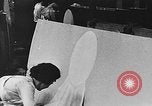
United States Air Force insignia being applied on wings at an aircraft factory in United States
Aircraft manufacture in United States during World War I. Women use transfer ink to apply United States Air Force insignia on the wings of an aircraft. A woman places a paper, applies ink on it and then removes it. Paper placed on the remaining portion to complete the insignia.
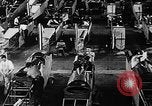
Men and women at work assembling a plane at an aircraft factory in the United States during World War 1.
Aircraft manufacture in United States during World War I. Men warp wooden members for use in wing and fuselage assemblies. Men and women assemble wooden stringers for a fuselage.. Men assemble a fuselage, including cockpit, seats and guns. Women tack fabric on to the fuselage framing. Men assemble the tail section. Men assemble and install the landing gear of an airplane.
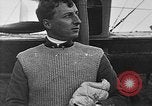
Standard Aircraft Cooperation planes in United States
Aircraft manufacture in United States during World War I. Pilot of a plane. Standard Aircraft Cooperation planes lined up as men stand next to them. Nose of the aircraft with the propellers. Planes lined up as men lift the plane from its tail section as men pull it forward. U.S. Mail written on the fuselage of a plane.
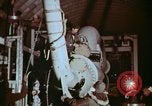
Assembly and startup of a nuclear power plant at Camp Century in Greenland.
United States Army engineers construct Camp Century in Greenland. In final phase, they assemble and start nuclear power plant. Men work on controls, read instruments and take down notes before the installation of nuclear reactor.They assemble the housing for the power plant. Man removes nuclear fuel and unwrap it. Men wear protective clothing as they load fuel element into storage tanks. Men read instruments and announce progress on a loud speaker. Men listen to the announcement made. Fuel element loaded into reactor and control rods placed. Meters indicate the nuclear reactivity. Men smoke cigarette and look tense as they wait. A plot shows location of every fuel rod. Man announces the withdrawal of control rods. A section of Camp Century powered by the nuclear power plant. Men take shower, brush and use electric shaver.
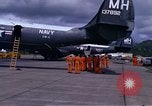
Silver iodide cartridges loaded in bomb racks of planes during operation Storm fury at Roosevelt Roads in Puerto Rico
Project Storm fury at Roosevelt Roads Naval air station in Ceiba, Puerto Rico. Crew members stand near the tail section of EC-121 plane at Roosevelt Roads Naval air station with another EC-121 plane in the background. A ladder leads up to the hatch of EC-121 aircraft. Chief Petty Officer and a civilian engineer opens silver iodide cases next to a RA-3B plane on the line with overcast sky in the background. Cartridges placed in small bomb racks. Men hand over the cartridges to someone in the bomb bay. CPO places a wooden box of silver iodide canisters. He opens the lid and removes canisters. Iodide racks placed in bomb bay. Men use speed wrench to secure the racks on bomb bay. Men off load silver iodide cases from a yellow pick up truck.
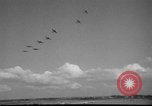
Vampire jets begin landing at Gilze Rijen Air Base in Holland during NATO Exercise Cyrrus
A formation of seven de Havilland Vampire jet aircraft are seen above the Gilze Rijen Air Base in Holland, during NATO Exercise Cirrus, in 1951. They peel off and commence landing in a tactical trail formation at the airfield. The camera follows the first to land as it passes two C-119 aircraft of the U.S. 443rd Troop Carrier Group on the airfield. Next, one of the C-119s is seen taxiing.
CRITICALPAST.COM: About Us | Contact Us | FAQs - How to Order | License Agreement | My Account | My Lightboxes | Shopping Cart | Advanced Search | Featured Collections | Website Terms & Conditions | Privacy Policy ©2026 CriticalPast LLC.
License Agreement |
Terms & Conditions |
Privacy Policy
©2026 CriticalPast LLC.