


 Francais
 Deutsch
 Italiano
Refine Your Search
US-Gliders- stock footage and images
- Showing 17581 to 17586 of 21918 results more
more Hide
Hide
Newly drafted American Army soldiers undergo medical examination in United States.
Draft and mobilization activities for U.S. Army soldiers during World War I in 1917-1918. American World War 1 military recruits take a shower and undergo medical examination. Recruits lined up as doctors with stethoscopes perform physical examination. Those who pass the examination are injected by doctors "with 6 million germs" and their finger prints taken. Men and women at Adjutant General's office maintain the records of the recruits. Recruits in new uniforms lined up as officers go through their records to make registration card, qualification card and various other documents. (World War I; World War 1; WWI; WW1)
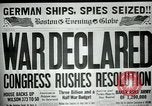
United States declares war on Germany and troops march ahead in European Theater
Events during World War I. A newspaper headline reads ' U.S. declares war' American soldiers embark onto a ship and wave as they leave for the war front. In the European Theater soldiers disembark from the ship and march forward with their weapons. Soldiers march ahead as people cheer them. A cavalry units marches ahead with wrecked houses in the background.
United States court house, custom house and post office in Seattle, Washington.
Seattle, Washington. United States courthouse, U.S. Post Office, and Customshouse, and post office building (301 Union St, Seattle, WA 98101) as cars and people move past the building.
Various experiments conducted at electrical research test building at Wright Air Development Center in United States.
Wright Air Development Center in Ohio, United States. Test of Magnesium photographic flare attached to a United States B-26 aircraft. High voltage generator, a model of F-84 and a test of lightning conducted on it. Various experiments conducted at electrical research test building using electrical instruments as test meters. Civilian and military technicians operate electrical equipment. Electric impulse on one of the machines.
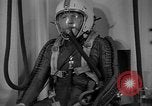
A pilot undergoes a test at a pressure chamber in Wright Air Development Center, United States.
Wright Air Development Center in Ohio, United States. Test pilot at pressure chamber in Aero Med lab uses anti G suit, crash helmet with visor and oxygen mask. A man operates a wind tunnel. A split screen shows altitude reading of 4000 feet, pilot and the pressure door. Pilot's reaction as paper cover over pressure chamber door is burst. Meter shows an increase in altitude from 4000 to 6000 feet.
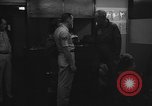
Jimmy Stewart gets acquainted with pilot's personal equipment and emergency procedures at MacDill AFB
Brigadier General Jimmy Stewart, U.S. Air Force Reserve, is helped as he familiarizes himself with pilot's personal equipment, at MacDill Air Force Base in Florida, during his two-week active duty training period, in February, 1964. Aircrew Flight Equipment Specialists fit and adjust his CSU-3/P anti-G cutaway garment, seat harness, flight helmet and oxygen mask. Captain John D. Brown briefs Stewart on the Martin-Baker Mk. H-5 Ejection Seat and emergency procedures and discusses emergency equipment set up on a display board. Stewart sits in the ejection seat as Captain Brown and an equipment specialist discuss it further.
CRITICALPAST.COM: About Us | Contact Us | FAQs - How to Order | License Agreement | My Account | My Lightboxes | Shopping Cart | Advanced Search | Featured Collections | Website Terms & Conditions | Privacy Policy ©2026 CriticalPast LLC.
License Agreement |
Terms & Conditions |
Privacy Policy
©2026 CriticalPast LLC.