


 Francais
 Deutsch
 Italiano
Refine Your Search
US-Gliders- stock footage and images
- Showing 17755 to 17760 of 21918 results more
more Hide
Hide
Attendants fill gasoline in cars at a service station in the United States.
Uses of different petroleum products in the United States. Two cars at a service station. One of the cars is driven away. Another car pulls in the station. Attendants fill gasoline in the cars. A structure on the top of a pole. A piston in the structure goes up and down.
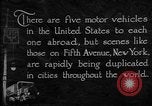
Motor vehicles on Fifth Avenue in New York, United States.
Slate indicates that the U.S. has 5 times as many motor vehicles as other countries. Traffic on Fifth Avenue in New York City is seen. Aerial view from a high rise building looking down on 5th Avenue. Cars and trucks go by. Pedestrians mix in with the cars and cross erratically all over the avenue People milling about in the avenue. A traffic signal tower in the middle of the avenue.
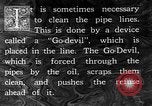
A 'Go devil' which is forced through an oil pipe line to clear it of obstructions is tracked in the United States.
Cleaning of oil pipelines in the United States. Men near a pipe line. A man pushes a 'Go devil' ( a device used to clean oil pipe lines) in the pipe. A man walks near the pipe line to keep track of the 'Go devil'. Animation depicts how the 'Go devil' moves through the pipe line and how its tracking is done. Men near the other end of the pipe line. The 'Go devil' is taken out. Oil flows out the pipe followed by refuse. Men search through the refuse.

Oil drilling equipment is brought in and set up in a jungle in Mexico.
A documentry 'The Story of a Mexican Gusher' visualizes different stages in oil production in Mexico. A political map of Mexico shows Tampico and the distance between Tampico and New Orleans. Men cut through jungles, cross rivers and make roads to bring equipment into the Mexican oil region. Men cut trees in a jungle using machetes and axes. Men at work in an open area. Smoke rises in the background. A barge goes across a river. A jeep on a road built in a jungle. An oil company's railroad. Men work on the company pipeline near the railroad. A camp hospital in a jungle clearing to the south of the Panuco River. Cable tool method of drilling is practiced. Men do 'spudding in' by drilling a hole. Machinery in operation. After the spudding in a cable is 'hitched on' to a 'walking beam'. Men lower a casing at Ebano to drill out oil. A derrick. Oil is discovered at 800 feet and bubbles up from oil well. Two oil workers completely covered in oil work with the oil well equipment.
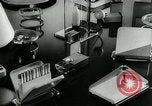
The challenges of reconstruction and rise of communism in Europe after World War II
Reconstruction problems in Europe in the aftermath of World War II. Examples of prewar Germany's industrial and commercial prowess, showing its consumer products and famous cameras. A German coal-burning power plant and miners extracting coal from Germany's vast natural supplies. Coal being transported by conveyer belt. Open rail cars loaded to capacity with German coal. A German iron and steel plant dependent on coal. Shift to postwar destruction including destroyed: German factory; locomotive; rail yards; trucks; farm machinery; fertilizer plant; farm fields lacking crops. Shift to prewar era with view of British coal cars getting ready to be emptied for export to Europe. Current postwar view of British coal cars and coal, that narrator says are barely enough for her own needs. View of prewar German coke being loaded onto conveyers. Coal miners receiving food ration cards. Animated map showing "Iron Curtain," of Soviet occupation, separating traditional German regions of agriculture from those of industry. British Foreign Secretary, Ernest Bevin; French Foreign Minister, Georges Bidault; Soviet Foreign Minister Vyacheslav Molotov; and U.S. Secretary of State, George Marshall; are seen at the Paris Conference in 1946 where they negotiated the postwar future of Germany. Reminder footage of Hitler with brownshirts in 1930s. Italian police coping with communist inspired unrest in Italy. Bombed out buildings in snow. Europeans literally scratching for bits of food from pavement and trash heaps. Two women fighting with each other during time of shortages and ration. Dejected woman. French Communist party leader, Maurice Thorez, speaking to a large crowd. Party flag with hammer and sickle behind him.
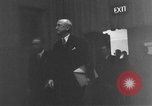
James F. Byrnes urges that Iran be given a chance to speak at UN Security Council meeting regarding Soviet military in Iran
Segment from the United Nations Security Council meeting at Hunter College, New York City, United States, on March 27, 1946. At the time, the Soviet Union, with its troops in Iran, and with interest in the governance and autonomy of Azerbaijan, was pushing to postpone discussion of the appeal by Iran that the action of the Soviet Army in Iran was a threat to international peace and security. American statesman James F. Byrnes, Edward R. Stettinius, Soviet diplomat Andrei Gromyko and representatives of the UN Security Council member countries are seen entering the conference room at Hunter College, New York City. The dignitaries seated at a table. Delegates and spectators present. Gromyko, the Soviet representative to the United Nations, speaks in Russian. Other delegates listen, seated behind. A delegate from China speaks. Several delegates raise their hands with questions. U.S. representative James Byrnes demands that the Iranians be given a chance to be heard. The Soviet delegation stands and exits the talks abruptly. Iranian delegate Hossein Ala', Iran's Ambassador to the United States approaches the table and is seated. The delegates listen as Mr. Hossein Ala addresses the council. Mr. Ala urges the council to take action, saying, "Iran views with grave concern any delay in the consideration by the council of the merits of these disputes. For these reasons, on behalf of my government, I request the council to take up these matters at once and reach, without reference to further negotiations, a solution consistent with the principles of the charter."
CRITICALPAST.COM: About Us | Contact Us | FAQs - How to Order | License Agreement | My Account | My Lightboxes | Shopping Cart | Advanced Search | Featured Collections | Website Terms & Conditions | Privacy Policy ©2026 CriticalPast LLC.
License Agreement |
Terms & Conditions |
Privacy Policy
©2026 CriticalPast LLC.