


 Francais
 Deutsch
 Italiano
Refine Your Search
US-Gliders- stock footage and images
- Showing 1831 to 1836 of 21921 results more
more Hide
Hide
A documentary titled 'He Has Seen War' depicts life of U.S. soldiers under difficult conditions during World War II.
A documentary titled 'He Has Seen War' depicts life of U.S. armed forces soldiers under very difficult conditions during World War 2. Massive large columns of U.S. Army soldiers marching in formation. Wounded and dead soldiers during the World War II. A number of corpses kept under the open sky during the war. Soldiers march in dense wooded areas, in muddy roads and paths, and in dry deserts during various missions carrying their weapons. Tanks and armored vehicles march on roads of ruined villages. U.S. Army soldiers relax, smoke, and eat meal rations during the war. Soldiers stepping up to a pot with steaming drink or soup. African American soldiers wash their feet in a stream. Soldier sits on ground in a rainstorm, smoking a cigarette and reading a wet letter or map.
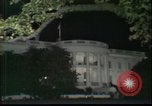
U.S. President Richard Nixon gives his resignation speech from his office in the White House, Washington DC.
U.S. President Richard Nixon delivers his resignation speech from his office in the White House, Washington DC. President Nixon delivers his speech sitting in his office. He mentions his declining support due to the Watergate matter. He insists need for a full time President and Congress. He recalls the difficult conditions America faces at home and abroad. He expresses his faith in Gerald Ford as the President of the U.S. Nixon recalls the achievements of his five and half year tenure as U.S. President. He repeats the goal of America for a lasting world peace and betterment of conditions of poor people all over the world.
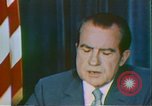
U.S. President Richard Nixon works for peaceful end of Vietnam War, improves domestic conditions and controls drug traffic.
U.S. President Richard Nixon speaks about aftermath of immediate withdrawal from the Vietnam War. U.S. military prisoners of war held by North Vietnam stand before press reporters in Vietnam. President confers with U.S. Secretary of State Dr. Henry Kissinger at his office. Vietnam War draftees being selected by traditional lottery system. Men stand in front of machines that churn out numbered balls for new draft lottery system. Nixon transforms budget expenditure on human needs. Criminals caught by police walk, some covering their faces from the media, as they are led away by police and investigators. Illegal drugs seized by efforts of Nixon administration. View of seized heroin manufacturing equipment. Nixon speaks about the opium farming in Turkey during one of his speeches and mentions agreement with the Turkish government in Ankara to cease all opium poppy production. Customs officers check illegal drug traffic on the border of Mexico and America. Drug enforcement officials search cargo hold of a ship for illegal drugs. Views of drug control officers finding illegal stashed hidden drugs in hiding places in cars and vehicles. Nixon speaks about increased budget to control illegal drug traffic and rehabilitation of drug abusers and drug addicts. He creates the office of Drug Abuse Enforcement and he speaks saying "We must wage what I have called Total War against public enemy number one in the United States: The problem of dangerous drugs." From a pro-Nixon "documentary" called "The Nixon Years: Change Without Chaos" covering President Richard Nixon's first four years in office. Released during his 1972 reelection campaign.
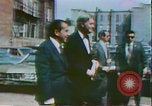
U.S. President Richard Nixon works to reduce cost of living and environment pollution and to increase industrial development.
President Nixon walks with U.S. civilians on a city street and listens to their problems. Food items at checkout area of a grocery store and view of cashier and cash register. Civilians including women and children outside shop or grocery store holding signs in protest of inflation and high prices. Used cars for sale in a car lot. Cashier at grocery checkout ringing up items on cash register. Close-up view of manual cash register. President Nixon discusses with Cost of Living Council to bring down the inflation rate in the United States. Industrial development and export business improves. Workers work in factories and farmers in farms. Farmer driving tractor on field. Car assembly line workers work on an automobile production line. President Nixon addresses the U.S. Congress and urging Congress to make reforms. Vice President Spiro Agnew confers with President Nixon in his office. Nixon travels through land, sea and air and works for controlling air pollution and water pollution. A farm crop duster airplane dusting crops. Heavy traffic on a highway filled with cars. Workers in an automobile emissions testing laboratory. From a pro-Nixon "documentary" called "The Nixon Years: Change Without Chaos" covering President Richard Nixon's first four years in office. Released during his 1972 reelection campaign.
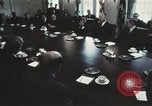
U.S. President Richard Nixon at a meeting with Attorneys General in the Cabinet Room of the White House.
U.S. President Richard M. Nixon at a meeting with 24 U.S. Attorneys General in the Cabinet Room at the White House, Washington DC. President Nixon seated in center of table with Attorney's General. President Nixon, U.S. Attorney General John N. Mitchell and various other attorneys general.

U.S. President Nixon with President of South Vietnam Nguyen Van Thieu during his visit to San Clemente in California.
President of South Vietnam Nguyen Van Thieu during his visit to San Clemente in California, United States. U.S. President Nixon, the First Lady Patricia, President Thieu and his wife walk inside the residence. President Nixon and President Thieu walk on the roads of the state building at San Clemente. They walk towards the U.S. presidential helicopter at a helipad. Marine honor guards salute as the dignitaries board the helicopter. U.S. Secretary of State Dr. Henry Kissinger and Ambassador Bunker watch as the presidential helicopter takes off. The helicopter flies in the sky and vanishes. (Vietnam War period).
CRITICALPAST.COM: About Us | Contact Us | FAQs - How to Order | License Agreement | My Account | My Lightboxes | Shopping Cart | Advanced Search | Featured Collections | Website Terms & Conditions | Privacy Policy ©2026 CriticalPast LLC.
License Agreement |
Terms & Conditions |
Privacy Policy
©2026 CriticalPast LLC.