


 Francais
 Deutsch
 Italiano
Refine Your Search
US-Gliders- stock footage and images
- Showing 20329 to 20334 of 21919 results more
more Hide
Hide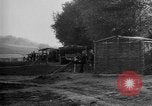
Gunners fire machine guns at targets and a target checker checks hits upon a target in France during World War I.
Activities at Second Aviation Instruction Center in France during World War I. A target gunnery range. U.S. gunners fire at paper targets. Hits upon a target. A gunner and a target checker check the hits upon the target. The gunnery range shows gun turret mock ups, sheds in the area, a gunnery range and a target area. Men fire at targets along a bank. The target test area shows models of aircraft being raised and lowered for the gunners to shoot at. A close up of a gunner sighting down the barrel of a machine gun mounted on a post. The gunner fires too short bursts. He replaces an ammunition clip and fires again.
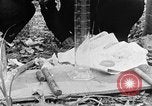
Vietcong soldiers make explosives and pour a liquid substance into a mine in South Vietnam during Operation Junction City.
Operation Junction City in South Vietnam during the Vietnam War. Material used for making explosives. Two soldiers with masks pour a liquid substance in a test tube. Vietcong soldiers make explosives in a field. A Vietcong soldier pours a liquid substance in a mine. Another man covers mines with a paper. The finished mines.
Testing of a new shaft driven motorcycle at the Holabird Quartermaster Motor Base in Maryland, United States.
A film titled 'shaft driven motorcycle' depicts features of a new shaft motorcycle. A U.S. soldier takes a test drive at the Holabird Quartermaster Motor Base. The new motorcycle moves on a road. The features of the motorcycle are a drive shaft, a foot accelerator and four forward gears. (World War II period).
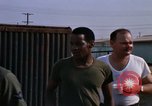
USAF Combat Control Team drinks beer and enjoys at Tan Son Nhut Air Base in Vietnam during the Vietnam War.
U.S. Air Force (USAF) Combat Control Team at Tan Son Nhut Air Base in Vietnam during the Vietnam War. Three soldiers standing and one of them holds a beer mug in his hand. Buildings in the background. Food on a grill. They serve themselves with food. The soldiers enjoy and drink beer. They stand near the grill. A soldier cooks food. The soldiers stand in a group and drink beer and talk. The soldiers drink and enjoy. The soldiers wearing only trousers enjoy. A soldier talks to an officer. They hold beer cans in their hands and talk.
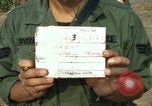
USAF Combat Control Team puts up orange banners across a field in Vietnam during the Vietnam War.
U.S. Air Force (USAF) Combat Control Team in Vietnam during the Vietnam War. A soldier holds a pole in place. Another one hammers it to drive it into the ground. A soldier ties an orange banner on poles. The soldiers move towards other area for putting up banners. They spread the banners on the ground. A soldier stands holding guns and speaks over a radio. A soldier ties an orange banner. The soldiers stand near the banner. A close view of the banner. The soldiers stand in the background.
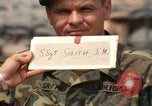
USAF Sergeant Smith talks about facilities given at a camp in Vietnam during the Vietnam War.
U.S. Air Force (USAF) Combat Control Team in Vietnam during the Vietnam War. USAF Sergeant Smith stands near sacks and talks about missions in Vietnam and about their jobs in the missions. Stacked sacks in the background. He also speaks about the security given to them during the missions. He speaks about the facilities given at a camp.
CRITICALPAST.COM: About Us | Contact Us | FAQs - How to Order | License Agreement | My Account | My Lightboxes | Shopping Cart | Advanced Search | Featured Collections | Website Terms & Conditions | Privacy Policy ©2026 CriticalPast LLC.
License Agreement |
Terms & Conditions |
Privacy Policy
©2026 CriticalPast LLC.