


 Francais
 Deutsch
 Italiano
Refine Your Search
US-Gliders- stock footage and images
- Showing 21127 to 21132 of 21919 results more
more Hide
Hide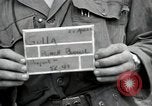
ROK (Republic of Korea) soldiers unload ration supplies from truck in Kachil-Bong, Korea during Korean War.
U.S. supply trucks bring supplies in Kachil-Bong, Punchbowl area during Korean War. ROK (Republic of Korea) soldiers unload ration supplies from truck. They stack crates.
Korean refugees cross frozen Han River in Seoul, Korea during Korean War.
Refugees cross frozen Han River, Seoul during Korean War. Korean refugees cross frozen Han River. Refugees pull carts loaded with their belongings. Two U.S. dukws (six-wheel drive amphibious trucks) on ice-chocked water.
Allied troops march Japanese prisoners toward beach during S-Day invasion of Lingayen in World War II.
Allied invasion of Lingayen, Philippines during World War II. LVTs (Landing Vehicle, Tracked) approach beach. Allied troops on beach. Allied soldiers marching Japanese prisoners toward beach. Group of civilians cheer. A native waves U.S. flag.
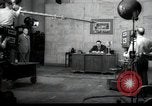
Pioneer of American commercial radio and television, David Sarnoff, makes future predictions in New York.
David Sarnoff of RCA makes predictions regarding telecommunications and consumer electronics during a filming in New York. Television crew at work. Boom moving microphone. Cameraman at work. Sarnoff speaks and says newspapers, mails, magazines and mails will be sent through air at lightning speed and reproduced at home (could be seen as foreshadowing or predicting facsimile use and the Internet). He speaks about pocket size radio instruments enabling people to communicate with anyone anywhere (possible early forecast of portable radio proliferation, and later cell phone, mobile phone, smartphone, and mobile device usage). Cameraman and boom operator at work. Close up view of motion picture camera front and camera lenses.
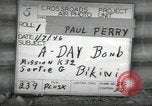
Atom bomb Test Able conducted on Bikini Atoll, Marshall Islands as a part of Operation Crossroads by the United States.
Atomic Bomb Test Able Day (Operation Crossroads) conducted by the U.S. Army on Bikini Atoll, Marshall Islands. A mushroom cloud rises after an aerial drop of an atomic bomb. Aerial views of a cloud of smoke and a target fleet in Bikini Island lagoon.

Harvesting and processing of Manila Hemp in Davao, the Philippines during Japanese occupation period in World War II
At start of film, Camera pans over a field of Manila Hemp plants in the Philippines during occupation by the Japanese in World War 2. Camera shows views along path in the fields with hemp plants towering on either side. Filipino workers use cutters on long poles to harvest the tall plants. They cut large ones at their bases and slice strips of their barks into long thin pieces. Glimpse of a Japanese soldier observing the work. Next, Filipino workers transport the hemp in a wagon to a processing shed. Filipino workers further process the hemp into longer thinner strands and place them on horizontal poles to dry. Closeup of a man separating strands of hemp. Next, workers are seen shaking the strands outside a building. View of workers moving bales of hemp on hand carts to a scale where they are weighed and labeled. Closeup of a labeled bale.
CRITICALPAST.COM: About Us | Contact Us | FAQs - How to Order | License Agreement | My Account | My Lightboxes | Shopping Cart | Advanced Search | Featured Collections | Website Terms & Conditions | Privacy Policy ©2026 CriticalPast LLC.
License Agreement |
Terms & Conditions |
Privacy Policy
©2026 CriticalPast LLC.