


 Francais
 Deutsch
 Italiano
Refine Your Search
US-Gliders- stock footage and images
- Showing 21277 to 21282 of 21919 results more
more Hide
Hide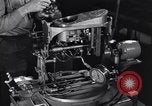
Men working on different part of torpedoes inside a torpedo shop in Montauk, Long Island.
The U.S. Naval torpedo testing range in Montauk, Long Island. Interior of a torpedo shop. A man working on a part of torpedo. He turns the part and works on it. Other men working on different parts of the torpedoes.
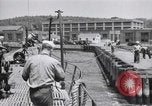
Sailors aboard a submarine handling lines from the submarine to the dock in a harbor in the United States.
A U.S. submarine at a dock in the United States. Sailors aboard the submarine and standing on the dock. They handle lines from the submarine to the dock.
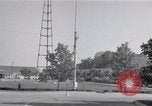
American sailors standing at attention during a flag raising ceremony in the United States.
The American flag is raised on a flag pole in the United States. U.S. sailors standing at attention during the flag raising ceremony. A tower and buildings in the background. The sailors marching after the ceremony.
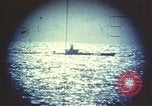
A periscope view of a Japanese submarine underway and exploding in the Pacific Ocean.
A Japanese submarine torpedoed by USS Caiman underway in the Pacific Ocean. A periscope view of a submarine underway on the surface of water. The Japanese submarine is hit by a torpedo from a U.S. submarine. A huge explosion is caused. The submarine sinks.
M4 Sherman tank moving on a combat course and taking a firing position during training in the United States.
A training film depicts operations and uses of tanks during World War II. M4 tank chooses a firing position in the United States . Animation shows firing positions. A tank moves and chooses a position. The tank moves and fires. Animation shows the combat course and the changing of the position.
A USAAF C-47D aircraft piloted by Georges Holmes at Brookley Air Force Base in Alabama.
The last flying days of 58 year old Master Sergeant George Holmes at Brookley Air Force Base in Alabama, United States. A U.S. Air Force C-47D Skytrain aircraft in flight. The airplane is piloted by Holmes. The airplane lands and taxis on a runway. Crew chief waves it into parking area. Master Sergeant Holmes and the co pilot in the cockpit of the airplane.
CRITICALPAST.COM: About Us | Contact Us | FAQs - How to Order | License Agreement | My Account | My Lightboxes | Shopping Cart | Advanced Search | Featured Collections | Website Terms & Conditions | Privacy Policy ©2026 CriticalPast LLC.
License Agreement |
Terms & Conditions |
Privacy Policy
©2026 CriticalPast LLC.