


 Francais
 Deutsch
 Italiano
Refine Your Search
US-Gliders- stock footage and images
- Showing 21409 to 21414 of 21920 results more
more Hide
Hide
People cheer as French sailors parade in New York, United States.
French sailors and officers in the United States. French battleship Richelieu arrives in the U.S. It proceeds towards a navy yard for repairs. Men aboard the ship. An officer aboard the ship. The French flag flying atop a flag pole. French sailors parade in New York. Buildings along the sides of a street. Aerial view of the parade. People cheer. Confetti being thrown from the top of the buildings.
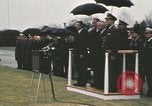
Secretary Nitze makes a speech and presents a citation to Secretary McNamara in the United States.
U.S. Secretary of Defense Robert Strange McNamara leaves the office in the United States. President Lyndon Baines Johnson with other officials at a review stand. Honor guards stand holding flags. Deputy Secretary of Defense Paul Henry Nitze makes a speech. Secretary McNamara stands in front of the reviewing stand. Secretary Nitze presents a citation to McNamara.

Military staff and civilian reporters gather and prepare for atomic bomb testing in Nevada, United States.
Upshot-Knothole Annie atomic bomb test in Nevada, United States. A sign board reads: 'US Atomic Energy Commission Nevada Proving Ground Mercury, Nevada'. A guard stands near the board. Men gather at the Nevada Test Site. Cars and houses in the area to determine their ability to withstand blast wave and radiation. Mannequins in a car and in replicas of houses. Soldiers huddle in trenches two miles away from the explosion area. Cameramen adjust their cameras to record the explosion. The atomic bomb explodes. A mushroom cloud is formed. People wearing goggles for eye protection are seen as they watch the explosion. Governor of California Earl Warren arrives at the explosion site. Personnel with Geiger counter take measurements near the bombing site later.
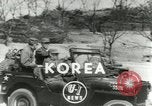
Democratic Party leader Adlai Ewing Stevenson talks to soldiers during his visit to the war front in Korea.
U.S. Democratic Party leader Adlai Ewing Stevenson arrives in Korea during the Korean War. A jeep parked on a field. Stevenson reviews troops. He talks to the soldiers and shakes hands with them. A tent in the background. A high altitude view of the area. Stevenson arrives at the war front in a navy airplane. He gets off the airplane and talks to an officer.
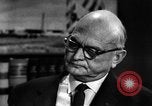
Lieutenant General Ira Eaker talks about the Casablanca Conference during an interview in the United States.
An interview of United States Air Force Lieutenant General Ira Eaker conducted by Dr. Maurer in the United States. General Eaker talks about his experiences in the Air Force. He talks about the Casablanca Conference. He says that U.S. Army General Henry Arnold told them about the President's decision to discontinue the bombardment at daytime and join the British bombers in the night bombing. He told General Arnold that it was not possible as they were not ready for the night bombing, nor their crews were trained for night bombing. He advised to continue the daylight bombing. He presented a number of reasons for the same. They were then allowed to continue with the daylight bombing.
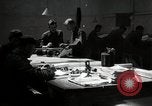
Men repair aircraft and work on them in repair shops at USAAC Third Aviation Instruction Center in Issoudun, France.
U.S. Army Air Corps Third Aviation Instruction Center in Issoudun, France during World War I. Repair shops and storerooms. Men seated at a desk. Other men working in a shop. Tools and equipment on racks. Men working on machines. Some men placing parts of airplanes on racks. Other men working on small tools and equipment. Aircraft in the shop. Men repairing the aircraft.
CRITICALPAST.COM: About Us | Contact Us | FAQs - How to Order | License Agreement | My Account | My Lightboxes | Shopping Cart | Advanced Search | Featured Collections | Website Terms & Conditions | Privacy Policy ©2026 CriticalPast LLC.
License Agreement |
Terms & Conditions |
Privacy Policy
©2026 CriticalPast LLC.