


 Francais
 Deutsch
 Italiano
Refine Your Search
US-Gliders- stock footage and images
- Showing 21469 to 21474 of 21920 results more
more Hide
Hide
The process of filling of the envelope of an airship with helium is explained in the United States.
From a U.S. Navy training film in the United States on working of airships. A diagram of an airship. The envelope of the airship consists of helium and air. The pressure of outside air becomes less when helium is filled in the envelope. As helium expands, air is released through air valves. In the same way, when the pressure of outside air increases, then helium is released. If proper pressure is not maintained, the airship can loose its shape. Animation shows the working and functions of the airship. The ascent of an airship. The process of the escape of gas is also explained.

The design of a ZP2K airships is explained in the United States.
From a U.S. Navy training film in the United States on the working of airships. Specifications and designs of airships are explained. Fleet type airships are called ZP2K airships. Animation shows the design of an airship. Helium in the airship can lift 15 tons. A man aboard an aircraft carrier. Parts of an airship are explained.
The icebreaker, USS Burton Island, leaves San Diego on ice reconnaissance cruise to King Island, Alaska
A film titled' Icebreaker' about the journey of the icebreaker, USS Burton Island (AGB-1) to King Island, Alaska as a part of U.S. Navy annual winter ice reconnaissance program. Skyline of San Diego, California as the USS Burton Island leaves the harbor. Ship underway at sea. Crew member securing items on deck. Commander Everett A. Trickey, U.S.N, Captain of the ship works on a map. Animated map shows the route taken by the USS Burton Island to reach King Island. Helmsman steers the wheel of the ship. Ship underway at rough sea. Water washes over the deck of the ship.
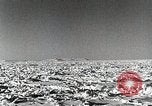
The icebreaker, USS Burton Island, breaking her way through ice sheets Northeast of St. Lawrence island, Alaska
The icebreaker, USS Burton Island, heading Northeast from St. Lawrence Island, Alaska, through ice field. View from bow, as she follows "groove" where ice field has separated and refrozen enabling the icebreaker to easily make way. As she progresses, the ice thickens and she slows, until the USS Burton Island finally stops. The ship's helicopter cranks up and warms up preparing to scout out easier pathways through the ice field. View from the low-flying helicopter, of a polar bear moving across ice flows. view of the icebreaker from returning helicopter. Since no "leads" could be found, the ship must use engine power. View of the engine room where sailors start more engines to increase the icebreaker's driving power. The icebreaker backs down from the ice sheet, and then as Captain calls for more forward power, a sailor on deck advances control, and the ship begins to break her way forward, through the ice.
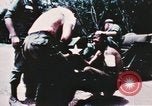
UH-1 Huey helicopter and ambulance bring in wounded soldiers for medical aid in Vietnam during the Vietnam War.
Medical evacuation and first aid operations for injured United States soldiers in Vietnam during the Vietnam War. An air ambulance UH-1 Huey helicopter arrives at a landing zone and U.S. Army soldiers run towards it. Wounded being unloaded from the helicopter. A soldier speaks on wireless. Wounded being loaded onto an ambulance. Wounded on litters being unloaded from helicopters and loaded onto an ambulance van. Pilot in the cockpit of the helicopter. A soldier places a box onto a jeep.
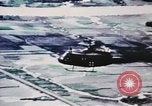
Huey helicopter air ambulance brings in wounded soldiers and doctors treat the patients in Vietnam during the Vietnam War.
Medical Huey helicopter evacuation and first aid operations for injured U.S. Army soldiers in Vietnam during the Vietnam War. An air ambulance helicopter lifts off from a field and the pilot at controls. Huey helicopter lands on a field as soldier help a wounded soldier lie down on a litter. Wounded being loaded aboard the helicopter. Helicopter takes off and in flight. Wounded aboard an airborne helicopter receiving medical care. Helicopter lands on a field and wounded being unloaded. A wounded soldier being provided medical treatment by doctors of a field hospital. Blood being administered to the soldier. Another Viet Cong soldier being treated upon. A wounded after having stabilized being sent to a hospital. Soldiers carry wounded on litters and load them aboard a helicopter. Helicopter lifts off.
CRITICALPAST.COM: About Us | Contact Us | FAQs - How to Order | License Agreement | My Account | My Lightboxes | Shopping Cart | Advanced Search | Featured Collections | Website Terms & Conditions | Privacy Policy ©2026 CriticalPast LLC.
License Agreement |
Terms & Conditions |
Privacy Policy
©2026 CriticalPast LLC.