


 Francais
 Deutsch
 Italiano
Refine Your Search
US-Gliders- stock footage and images
- Showing 21493 to 21498 of 21920 results more
more Hide
Hide
Marines land in Saipan, wounded are treated behind the lines during World War 2.
Recovery of Marines wounded in Saipan during World War II. United States ships underway in the Pacific Ocean during the battle of Saipan in WW2. Naval guns aboard the ship bombard the coast. United States troops aboard transport ships. Landing crafts loaded with Marines move towards the shore. Troops land at the coast amidst heavy firing. Medical Company and Corpsmen arrives at the beach and looks after the wounded Marines. Marines fire machine gun and tanks roll. Injured Marines on stretchers being carried away. Litter patients being placed into ambulance jeep and carried away. Medical officer examines the wounded and provides first aid to them. Wounded U.S. troops on stretchers being placed in a jeep and walking wounded being helped to get into the jeep. Jeep carries the injured Marines to Regimental aid station. Doctor checks the injured Marines and treats them. Tags being prepared for each patient. Records being maintained. Wounded being loaded onto a jeep and the jeep is driven away to a collecting station. At the collecting station Marines at work.
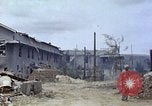
Injured Marines being treated at a division and a civilian hospital in Saipan during World War II.
A U.S. Navy training film about the treatment and recovery of soldier wounded in Saipan during World War II. Division hospital building. Marines pile up sand bags. Tori at the entrance of a Shinto temple as military vehicles move through the gate. A Japanese civilian hospital in a town. Debris being piled up. Marines enter the hospital. A litter patient being carried inside the hospital. Plasma and blood being administered to the wounded Marines. A doctor cleans a wound and administers penicillin. A doctor washes his hands. Patients at the hospital as an ambulance arrives. A sprinkler sprays water on ground to prevent dust from puffing up. A technician works on a microscope and looks into it. A man washes clothes.
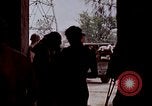
Injured Marines being transferred aboard hospital ship USS Bountiful (AH-9) off the coast of Saipan during World War II.
A U.S. Navy training film about the treatment and recovery of Marines wounded in Saipan during World War II. An ambulance jeep pulls away from hospital building. Litter patients being unloaded from an ambulance. Wounded Marines on stretchers being placed aboard a landing craft at a beach. A hospital boat also comes for evacuation of the wounded Marines. Walking wounded move up the gangplank of hospital ship USS Bountiful (AH-9). Litter patients being hoisted aboard the USS Bountiful.
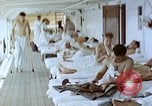
Injured Marines being examined by doctors aboard a hospital ship underway in the Pacific Ocean during World War II.
A U.S. Navy training film about the treatment and recovery of Marines wounded in Saipan during World War II. Wounded Marines aboard a hospital ship underway in the Pacific Ocean. A doctor washes his hands. Doctor and a nurse examine patients. A wounded Marine gets a head massage. Marines rest on the deck as they read, drink ice cream soda. A Marine walks with crutches. Marine on a wheel chair on the deck as others relax aboard the ship.
A soldier with facial injury being provided medical aid at a field hospital in European Theater during World War II.
A U.S. Navy training film titled 'Early care of Plastic surgery' about the treatment of American soldiers with facial injuries during World War II. An ambulance arrives at a field hospital in the European Theater. Wounded soldiers get off the ambulance. Wounded soldier with a mutilated face lies down on bed. Medics help him to lie down on side and cover him with a blanket to keep him warm. Penicillin being administered to the soldier. Animation shows the blood vessels on a human face and the location of 7th Cranial nerve.
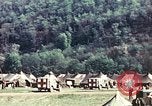
American soldiers with wounded hands being brought to a field hospital in European theater during World War II.
A U.S. Navy training film about the treatment of hand injuries of American soldiers during World War II. Military ambulances at a field hospital. Soldiers on field. Injured soldiers being carried on litters. A patient placed on bed inside a tent. A soldier with a combat wound on his hand. Amputated hand of a soldier as he drinks from a cup. Hands of men after suffering injuries. Men play card game at a table. A man with an injured hand as he plays a card game.
CRITICALPAST.COM: About Us | Contact Us | FAQs - How to Order | License Agreement | My Account | My Lightboxes | Shopping Cart | Advanced Search | Featured Collections | Website Terms & Conditions | Privacy Policy ©2026 CriticalPast LLC.
License Agreement |
Terms & Conditions |
Privacy Policy
©2026 CriticalPast LLC.