


 Francais
 Deutsch
 Italiano
Refine Your Search
US-Gliders- stock footage and images
- Showing 21655 to 21660 of 21920 results more
more Hide
Hide
United States Army jeeps and tanks move through Bavarian region in Germany during WW2
United States tanks, and other vehicles of “A” and “C” Companies, 116th Cav Regt, 12th Armored Division, XXI Corps, Seventh US Army, move through Bavarian countryside towards Weilheim in Oberbayern during World War 2. POV the Bavarian Alps can be seen from the background of farmland as seen from moving tank. German prisoners, one with hands up briefly, clear road debris on road under direction of United States soldiers. A German soldier pulls a smoking bag out of the cargo area of a truck stopped on the road.
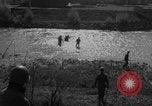
United States soldiers cross river, arrest more German prisoners in Bavarian town of Murnau am Staffelsee during WW2
United States soldiers cross a mined river in Germany during World War 2. German prisoners assist small group of US infantrymen in crossing the river. A United States soldier directs a military vehicle to park. Soldiers cross a bridge. Two United States soldiers into brush at side of road to hide. German locals meet United States soldiers arriving in Murnau am Staffelsee, in the Oberbayern Region of Bavaria, Germany. United States soldiers follow a tank inside Murnau am Staffelsee. In the Murnau am Staffelsee town square, United States infantrymen apprehend more German prisoners.
Chinese refugees fleeing from Japanese invaders withdraw on the Burma Road during WW2
Chinese refugees flee the Japanese Invasion through the Burma Road during World War 2. Chinese refugees ride in horses, mules and various carts on the road. Refugees pass an overturned truck. A woman holds a baby while riding a cart. A Chinese woman pushes a cart. A mother and her small child in a cart. Two men carry a patient on a stretcher. Chinese refugees, wearing bamboo conical hats use carrying poles to transport belongings. Pack mules carry heavy loads while climbing the Himalayas and crossing from India into China with meager WWII supplies.
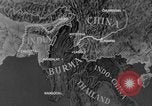
Allied soldiers and Chinese laborers work on Ledo Road construction during WW2
Animated map showing the Ledo Road, an overland connection between Ledo, Assam, India to Kunming, China during World War 2. This road would later be renamed the Stilwell Road. A 3D topography map of the Ledo route from Ledo to Kunming. A United States engineering unit along with Chinese engineers and laborers work on the Ledo Road. An engineer uses a transit scope, another soldier flips through his notebook. Engineer with transit scope waves at another from a distance. Soldiers plant explosives under a tree. Dynamite with burning wick under a tree. Tree explodes. Soldiers chopping away vines, weeds. A bulldozer clears away shrubs, scoops soil. An African American United States soldier operates a bulldozer. Two bulldozers driven by African American soldiers in jungle. Workers haul logs, hammer timber to make a log road in the jungle. Monsoon rain causing soil erosion on the side of a mountain during Ledo Road construction. Bulldozer moves alongside Chinese workers wearing conical hats. Trucks drive on mountainous Ledo road.
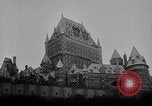
Allied leaders and military officials meet during the Quebec Conference to discuss the creation of the South East Asian Command in WW2
The Quebec Conference in Canada during World War 2. View of the Château Frontenac (1 Rue des Carrières, Quebec, QC G1R 5J5), in Quebec City. Conference takes place inside the Château Frontenac. Present in the Quebec Conference are United States President Franklin D. Roosevelt (FDR), Canadian Prime Minister Mackenzie King, British Prime Minister Winston Churchill, British Admiral Lord Louis Mountbatten, and US General George Marshall and Colonel Lewis A. Pick. President Roosevelt and Prime Minister Churchill seen together. Their chiefs of staff sit at a conference table and discuss important matters such as the creation of the combined British and American South East Asia Command (SEAC). Admiral Lord Louis Mountbatten, the appointed Supreme Allied Commander, during the meeting. Admiral Lord Louis Mountbatten speaks with military officers while walking away from a transport plane in Asia. South East Asian Command insignia depicting a phoenix.

United States President John F. Kennedy addresses the United States Congress for defense and space program budget increase
United States President John F. Kennedy addresses the United States Congress, appealing to increase the budget for defense and support for the space program. Congressmen clap upon the arrival of President Kennedy in the United States Capitol. Cameramen capturing videos of President Kennedy’s address using very long lenses. “These are extraordinary times. And we face an extraordinary challenge. Our strength as well as our convictions have imposed upon this nation the role of leader in freedom's cause.”, President Kennedy begins his speech. “I have not asked for a single program which did not cause one or all Americans some inconvenience, or some hardship, or some sacrifice. But they have responded and you in the Congress have responded to your duty--and I feel confident in asking today for a similar response to these new and larger demands. It is heartening to know, as I journey abroad, that our country is united in its commitment to freedom and is ready to do its duty” said President Kennedy, concluding his speech to the United States Congress.
CRITICALPAST.COM: About Us | Contact Us | FAQs - How to Order | License Agreement | My Account | My Lightboxes | Shopping Cart | Advanced Search | Featured Collections | Website Terms & Conditions | Privacy Policy ©2026 CriticalPast LLC.
License Agreement |
Terms & Conditions |
Privacy Policy
©2026 CriticalPast LLC.