


 Francais
 Deutsch
 Italiano
Refine Your Search
US-Gliders- stock footage and images
- Showing 2731 to 2736 of 21924 results more
more Hide
Hide
German soldier prisoners cook and eat at an open field in Lambach, Austria after capture by U.S. forces
Clip opens with very brief image of buildings at Mauthausen concentration camp during World War 2. Next, scene changes to Lambach, Austria, on the banks of the River Traun, on a large open field in which German prisoners of war (POW) are seen camping and cooking food over open fires. They are German soldiers captured in the Austrian Alps by U.S. Army infantry soldiers of the 80th Division, 3rd U.S. Army, at the time the unconditional surrender was signed. The weather is warm and many are lightly dressed. Some men are lined up behind a truck carrying a tank of fresh water. A section of the camp has been cleared as a football (Soccer) pitch and men appear to be trying to organize a game. Scene shifts to a far end of the encampment, bounded by many trees. Everyone at the camp seems occupied in adjusting their tents and other matters related to their shelters. More views of men at the football pitch. Closeup of a man with stove and cooking gear under an unusual shelter. Closeup of a man eating soup as a group of young soldiers stand behind him. Closeup of three very young German soldiers, two of who are wearing German uniform caps. Closeup of an older man smoking a pipe. Another young man wearing a German soldier's cap.
U.S. Army 1st Infantry soldiers work on wireless communication devices while patrolling in Lai Khe, South Vietnam.
U.S. Army 1st Infantry soldiers move inside the jungles in Lai Khe, South Vietnam. Soldiers sit in a group at the jungle. One of them demonstrates the use of wireless radio telephone sets. The other soldiers listen to him carefully. Views of the radio backpack unit. One soldier holds portable radio units and examines them. He holds them near the backpack unit. (Vietnam War period).
Soldiers of 1st Infantry Division of U.S. Army in camouflaged tiger suit flop hat, move at jungles in Lai Khe, South Vietnam.
Soldiers of 1st Infantry Division of the U.S. Army wearing a camouflaged tiger suit flop hat, move at jungles in Lai Khe, South Vietnam. The hat adopted by all Special Forces and Long Range Reconnaissance Patrol (LRRP) personnel of the 1st Infantry Division of the U.S. Army. Two soldiers wearing the hats move through bushes. They sit on the ground and check map and compass. Sign of 2nh Battalion, 34th Armor, 3rd Brigade and 1st Infantry division. (Vietnam War period).
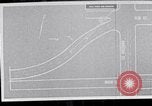
U.S. Department of the Treasury, Secret Service, film surveys scene where President John F. Kennedy was assassinated in 1963
Film opens showing a blackboard and chalk sketch of the area in Dallas where U.S. President John F. Kennedy was assassinated in 1963. Key streets and location where Mr. Abraham Zapruder took his 8mm film of the event are pointed out. Other details are identified, including the window from which shots were fired in the Texas School Book Depository Building. Details of distances from various points and timing of shots are narrated. Scene shifts to view from inside a car following the motorcade route. it turns in front of the Texas School Book Depository, where some spectators are watching the activity. Spectators watch on Elm Street,as the car retracing the motorcade route heads toward and through the Triple Underpass. Dallas police officers are seen controlling traffic to facilitate the Secret Service filming. Scene shifts to the Texas Book Depository, where window used by the assassin is pointed out. The camera focuses back as the car follows the original motorcade path.
USDA and FDA authorities test and register new pesticide ‘Compound 776’ for agricultural use in the United States
A farmer driving a tractor sprayer in the United States. The farmer parks his tractor sprayer in front of a garden shed. The farmer inspects bottles of pesticide. Safety precaution written on a pesticide bottle carry a warning that reads “DO NOT USE WITHIN 10-DAYS OF HARVEST”. Various labels and safety instructions on pesticide containers. Photographs of scientists researching on pesticide development in laboratories. An entomologist holding an insect cage to inspect specimens. A chemist inspects a petri dish. United States agricultural officials and experts deliberate as part of a pesticide’s registration process. A farmer fills a sprayer with water. A woman feeds an infant with Gerber baby food. An Afghan Hound dog eats from pet bowl. Scientists and pesticide manufacturers talk inside a laboratory. A can of Compound 776. State scientists test Compound 776 inside a laboratory. Nozzle spraying pesticide. Plant specimens are sprayed with Compound 776 pesticide during testing. A scientist taking notes while inspecting crops during a fieldwork. Another scientist spraying Compound 776 onto plants. A man with a folder labeled “Labels Compound 776” and a data book “Pesticide Petition Compound 776”. A manufacturer submits pesticide registration petition to the Department of Agriculture or the USDA. The “Application for registration of economic poisons” document. USDA Pesticides Regulation Division official examines the pesticide registration of Compound 776. The official opens the data book of Compound 776. A scientist uses rabbits for animal testing. Scientist treats a rabbit’s shaved skin with chemicals. A man visits the United States Food and Drug Authority (FDA). Pesticide manufacturer submits a pesticide registration petition to the FDA in Washington DC. An FDA officer inspects the pesticide petition. FDA scientists probe the residue levels of Compound 776 inside a laboratory. A scientist points to a graph depicting the residue data plotted against time. FDA authorities study industry data on a pesticide. Bottles, jars, and containers stored in shelves of a laboratory. Laboratory rats inside cages react to pesticide. A chemist working in a laboratory. A Federal Register journal of the United States. Camera zooms to “Food and Drug Administration” in the front page of the Federal Register. A “Notice of Registration Under the Federal Insecticide, Fungicide, and Rodenticide Act” from the USDA. Printing press printing pesticide labels. A truck transporting pesticide enters Maryland state line border. Agricultural pesticides and a weighing scale displayed in shelf.
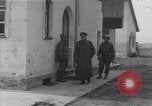
Captured German Field Marshal von Kleist is driven away in a U.S. military truck with Major General Paul in Mitterfels, Germany (WW2)
German Field Marshal Paul Ludwig Ewald von Kleist carrying a baton comes out from a building, talks briefly with U.S. Army Major General Willard S. Paul, and gets into an American half ton truck in Mitterfels,Germany, one day after his capture by American forces. The truck, with Major General Paul in the back seat, is driven away. It stops and Field Marshal von Kleist salutes Generalleutnant Josef Russwurm, Inspector of Army Signals Troops, who was also captured by the U.S. Army 26th Infantry Division. Rußwurm seen beside the truck. The truck drives away again. (World War II period)
CRITICALPAST.COM: About Us | Contact Us | FAQs - How to Order | License Agreement | My Account | My Lightboxes | Shopping Cart | Advanced Search | Featured Collections | Website Terms & Conditions | Privacy Policy ©2026 CriticalPast LLC.
License Agreement |
Terms & Conditions |
Privacy Policy
©2026 CriticalPast LLC.