


 Francais
 Deutsch
 Italiano
Refine Your Search
US-Gliders- stock footage and images
- Showing 2773 to 2778 of 21924 results more
more Hide
Hide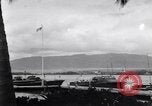
U.S. Navy PT motor torpedo boats and PBY Catalina flying boat seen.
United States PBY Catalina flying boat seen. U.S. flag seen. U.S. Navy PT motor torpedo boats alongside dock. Sailors working on a PT boat. PBY Catalina flying boats take off. A torpedo is slipped from a tube. Sailors cleaning 50 caliber PT guns. Officer examines torpedo and takes pressure. A 50 caliber turret seen. A Lewis Gun disassembled.
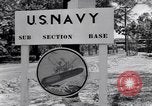
U.S. Navy PT motor torpedo boat along dock
A sign reads 'US Navy Sub Section Base' and insignia of PT Squadron is seen. (The mosquito insignia design was created by Disney animation studio artists for the "Mosquito Fleet" of PT boats -- squadron RON 3 stationed in the Philippines). U.S. Navy PT motor torpedo boat passing from repair dock. Man paints keel. A bridge and turret seen. United States flag seen. PT boat along the dock.
U.S. Navy officers inspect Japanese aircraft Mitsubishi A6M (Zero) at Naval Air Station in Anacostia
U.S. Navy officers inspect captured Japanese Mitsubishi A6M, the infamous "Zero" fighter plane. The captured enemy aircraft has been painted over with U.S. markings and tested at Naval Air Station in Anacostia . A test pilot prepares to fly the captured plane. The captured Japanese Zero taxiing out for take off. Japanese Zero in flight. (World War II period).

U.S. Marines pushing forward after amphibious landing on Eniwetok Atoll during World War II in the pacific.
U.S. Marines are hunkered down in sand on Eniwetok, as a shell fired by a nearby tank bursts. They then get up and follow the tank forward. Camera focuses on several Landing Vehicles, Tracked (LVT) AKA amphtracks moving across desolate landscape of broken trees and debris. Marine infantry moving across the area past an overturned vehicle and searching for remaining Japanese defenders. Two marines fire their rifles into a heap of debris. Four marines carry a wounded comrade on a litter. Others administer blood plasma to a wounded marine lying on the ground. An M3 Stuart light tank moving slowly with some marine infantry behind it. Slate is interjected reading: "Snipers are blasted from their holes." Marines are seen poking rifles into hiding places and preparing grenades for use. Grenade charges exploding.

Cold War era Soviet Jet Fighter aircraft and interceptor aircraft and U.S. aircraft of the same period including F-8, F-4, and new F-14
Cold war era film opens with animated slideshow view of latest Soviet Jet Interceptor and Fighter Aircraft. (Narrator mistakenly identifies the Flagon as a Su-11 but it is a Su-15.) MiG including MiG-23 planes developed by aircraft designers Mikoyan and Gurevich (MiG). Deputy Chief of Naval Operations (Air) Admiral Thomas Connolly discusses the development of United States fighter aircrafts. US aircraft F-8 Crusader landing on an Aircraft Carrier deck. U.S. Navy F-4 Phantom fighter taking off from a Carrier deck. Aerial closeup view of formation of F-4 planes in flight. New F-14 Tomcat fighter aircraft described by Connolly.
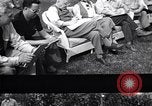
U.S. President Harry Truman speaks to press
John Foster Dulles is among White House staff, Secret Service personnel, and members of the press, seated on chairs in a garden of the Little White House, at the U.S. Naval Station, Key West, Florida. Palm trees around. Rattan furniture and adirondack chairs. U.S. President Harry Truman arrives walking across lawn, and dressed casually. He sits on a chair. Several men standing in the background. The men and women take down notes. The President stands up to leave. [ Note: at TC: 00:19, the person in extreme right of frame is Adon Taft, of the Miami Herald's Key West Bureau (wearing bow tie). He shared these observations about Truman and times at the Little White House at Key West: " I walked with him every morning along with 3 or 4 national reporters and a couple of Secret Service agents. He would walk to the Caribe restaurant down near the Turtle Kraals and have a coffee and then go back. He frequently swam in the ocean. He was in good shape, had a good sense of humor, he was down to earth, friendly with the White House press corps, played poker with some of them. He usually attended Sunday services at the First Baptist Church when he was in town. When the presidential yacht was there, the entire crew would attend Youth for Christ rallies on Saturday night and church on Sunday. .Press conferences ended when the president of the White House press corps (Merriman Smith, of United Press International) signaled it by standing and thanking the president."]
CRITICALPAST.COM: About Us | Contact Us | FAQs - How to Order | License Agreement | My Account | My Lightboxes | Shopping Cart | Advanced Search | Featured Collections | Website Terms & Conditions | Privacy Policy ©2026 CriticalPast LLC.
License Agreement |
Terms & Conditions |
Privacy Policy
©2026 CriticalPast LLC.