


 Francais
 Deutsch
 Italiano
Refine Your Search
US-Gliders- stock footage and images
- Showing 2911 to 2916 of 21924 results more
more Hide
Hide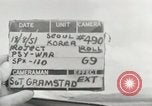
U.S. Captain D. A.McAleney and captain Louis T Pynes of 25th Division Liaison Psychological warfare in Korea.
U.S. Army 25th Division Liaison Psychological (Psy War) warfare team near in Seoul, Korea during the Korean War. Interior of a tent. That is called a general briefing room. U.S. Captain D. A. McAleney and Captain Louis T. Pynes, pilot and co-pilot check the map. Lines being drawn on a map. Rear view of five men at the maps. Men come out of Nissen hut operation marked 'Operation, Flight B'. A group of men walk towards the plane and gets in. A view from the door of the plane as it moves over country side. The last scenes in view of Yongdongpo. Two pilots in a cockpit of the plane. Co-pilot and Captain D. A. McAleney as he checks the map. The other pilot seated in a cockpit. A throttle in the cockpit.
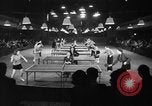
Top ranked table tennis players compete for the U.S. honors in New York City.
A table tennis tournament in New York City at the St Nicholas Arena. Top ranked players compete for the U.S. honors in ping pong. Spectators seated in the stands watch the players play. The players play the match and compete. A referee in a suit at each table watches the players and the scores. Views of star table tennis player Laszlo Bellak using his feet along his paddle for trick shots, and doing other ping pong tricks. A close up of a referee who keeps his eyes on a ball, moving quickly from side to side.
U.S. Army troops of Rifle Squad throw grenades and fire with a gun during a battle drill in the United States.
The U.S. Army troops of Rifle Squad practice during the Battle drill in the United States. Ships underway at sea. Landing Craft Vehicle (LCV) approaches the shore The Rifle Squad troops disembark from the LCV. U.S. Army helicopters in flight. Interior of the helicopter shows rifle squad men seated and a troop wearing headphones. The helicopter lands. Troops holding guns in a jungle and advance forward. They throw hand grenades and fire with a gun. Smoke arises due to firing and bombing. A smoky screen being formed and they advance .
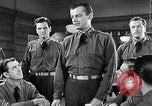
An officer with the help of a model explains when is the Skirmish Line formation used during a battle (WW2)
The advantages of the different Platoon formations during World War II. The Sergeants seated on a desk. A Rifle Squad officer uses a model to explain when is the Skirmish Line used. He starts from the approach march. The model shows the squad breaking into small platoon columns after firing of an artillery. The Sergeants listen to him. He also speaks that the troops are in squad column formation until they reach the particular range of the rifles. He focuses on two things first not to fire from more than 400 yards and do not deploy skirmish until we are forced to fire. He speaks about when and why to deploy skirmishes. He also states three reason for delaying the deployment of skirmishes.
An anti-aircraft gun used in World War I and a gun crew fires a 105 mm anti-aircraft gun in Maryland.
United States anti-aircraft guns used in Maryland during World War I. The guns are manned by 61st C.A.C. (Coastal Artillery Corps). An anti-aircraft gun which was used in the defense of Paris in 1918. Various views of the gun. A 105mm anti-aircraft gun with muzzle velocity 3000ft. and vertical range of 7 miles. The gun crew fires the gun.
U.S. troop transports escorted by destroyers and Navy blimps head for New York Harbor.
U.S. troop transports bring soldiers to New York after World War II. The troop transports escorted by destroyers and navy blimps head for New York Harbor. U.S. troops aboard the transport ship.
CRITICALPAST.COM: About Us | Contact Us | FAQs - How to Order | License Agreement | My Account | My Lightboxes | Shopping Cart | Advanced Search | Featured Collections | Website Terms & Conditions | Privacy Policy ©2026 CriticalPast LLC.
License Agreement |
Terms & Conditions |
Privacy Policy
©2026 CriticalPast LLC.