


 Francais
 Deutsch
 Italiano
Refine Your Search
US-Gliders- stock footage and images
- Showing 505 to 510 of 21920 results more
more Hide
Hide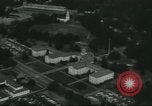
U.S. Army infantrymen learn to fire rifles, repair vehicles and communicate during a training at Fort Benning in Georgia,US.
Training of U.S. Army infantrymen at Fort Benning in Georgia, United States. Aerial view of the U.S. Army Infantry School at Fort Benning. Infantrymen run on a field during their physical training. They are vaccinated. They give measurements for their uniform. An officer instructs them in a classroom. They learn to use rifles and other weapons. They study theory to be applied in field. They learn techniques of communication and vehicle repair. After maneuvers the infantrymen advance in a battlefield and fire artillery.
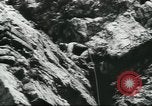
U.S. Army Special Forces soldiers learn mountaineering and jungle surviving techniques during their training in the U.S.
U.S. Army Special Forces soldiers undergo a training in the United States. U.S. Army Special Forces soldiers learn mountaineering techniques. They learn to fire in a jungle. A camouflaged trap with embedded bamboo sharp needles sticks and covered with hay. The soldiers kill a reptile, cook it and eat it in a jungle. They make their shelter with palm leaves. The soldiers are path finders and know their area orientation in the jungle. The soldiers climb down a rope from a mountain. They study about machines in a classroom. The use a dog sledge and a skiing board to move in a snow covered area.
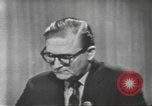
Vice President Nixon and Senator Kennedy debate in the U.S. over a summit conference between the U.S. and the Soviet Union.
The fourth presidential election debate held between Democratic nominee Senator John F. Kennedy and Republican nominee U.S. Vice President Richard Nixon in New York, United States on 21st October 1960. News correspondent John Edwards ask Vice President Nixon about the conditions to be met before meeting Soviet Premier Nikita Khrushchev at Vienna Summit of 1961. Nixon replies that an agenda should be prepared which should delineate those issues on which there is a possibility of some agreement or negotiation. He says that U.S. President should not go to the conference unless they have such an agenda, unless they have some reasonable assurance from Khrushchev that he intends seriously to negotiate on those points. News correspondent Quincy Howe asks Senator Kennedy to comment on the topic. Senator Kennedy says that the U.S. should not go to the summit until there is some reason to believe that a meeting of minds can be obtained on either Berlin, outer space or general disarmament including nuclear testing. He mentions the failure of the conference on May 15th 1960 in Paris, France. He further says it is important that they maintain their determination, that they indicate that they're building their strength, that they are determined to protect their position and that they are determined to protect their commitment.

U.S. medics treat U.S. prisoners after their liberation from a Nazi concentration camp towards the end of World War II.
American prisoners of war, at a Nazi concentration camp in Germany, towards the end of World War II. U.S. medics inspect the surviving U.S. prisoners. American nurses inspect an emaciated U.S. soldier survivor.

U.S. Maj. Gen. Leland Hobbs with a Russian General in front of U.S. 30th Division, XIX Corps Headquarters in Magdeburg, Germany.
U.S. and Russian Generals at U.S. 30th Division, XIX Corps Headquarters in Magdeburg, Germany during World War II. The Generals inspect Color Guards of U.S. 30th Division. A convoy of army jeeps with the Generals arrives at the headquarters. A group of soldiers marches. The Generals inspect the Color Guard. Major General Leland Hobbs talks to a Russian General.
A boat rows from U.S. destroyer and delivers supplies to U.S. submarine in South China Sea during World War II.
Australian prisoners aboard U.S. submarine who survived sinking of Rakuyo Maru, a Japanese prison ship, in South China Sea during World War II. The crewmen aboard a U.S. submarine underway. A U.S. DD (destroyer) underway. A small boat rows from DD to submarine and unloads supplies.
CRITICALPAST.COM: About Us | Contact Us | FAQs - How to Order | License Agreement | My Account | My Lightboxes | Shopping Cart | Advanced Search | Featured Collections | Website Terms & Conditions | Privacy Policy ©2026 CriticalPast LLC.
License Agreement |
Terms & Conditions |
Privacy Policy
©2026 CriticalPast LLC.