


 Francais
 Deutsch
 Italiano
Refine Your Search
US-Gliders- stock footage and images
- Showing 5131 to 5136 of 21998 results more
more Hide
Hide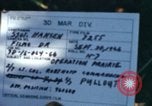
A U.S. Marines prepare grenades, eat C-rations, and advance through a stream and over hills in Vietnam.
U.S. Marines during Operation Prairie in Vietnam. Marines with utilities and camouflage helmet seated on the ground. He removes M-26-A2 fragmentation grenades from cardboard cannisters. Poncho and ammunition crates lying on ground in clearing near heavy undergrowth. Marines seated at base of tree preparing to eat C-rations. Several Marines standing near open boxes of C-rations. Rations being distributed. Marines, some with packs on pack board kneeling and seated on ground while some smoke cigarettes in clearing. A Marine with jungle type hat, towel around neck, holding a map speaks over head set of PRC-25 radio. Some Marines with cartridge belts, canteens, packs, camouflage helmets and carrying weapons move over dirt trail in jungle area. Marine carrying bipod of 60mm mortar on shoulder. Muddy boots of soldier moving through shallow stream. Marines carrying M3A1 .45 caliber sub machine gun and M-14 rifles move through jungle area. A Marine with PRC-25 on his back. Tall thick bushes and wooded hills far below. Marine carrying M 14 rifle and ammunition cannister on pack board. Other Marines with packs and camera tilts. Marines moving through grassy area. (Vietnam War period).

City residents and Native American families using early automobiles in the United States.
Growth of suburban and rural areas outside of cities caused by inter-development of the automobile and the public road system (1897-1927). An African American family emerges from a two story apartment building. Men, women and children seated outside. African American woman and children get into a parked automobile (circa 1925 Ford Model T Touring). African American man uses the hand crank in front of the engine to start the car. They drive away. Next scene shows a car parked beside a group of Native American Indian women and children, who are outside a tent; possibly on an Indian Reservation. Next scene is a busy highway packed with cars during a traffic jam. Final scene shows municipal electricians in an electric service truck with a tall, elevated rig on board allowing them access to electricity wiring. Men stand aloft on the rig while the truck moves between light poles, and the men perform some work on an electric pole.
Trucks and vans used as fire engines, delivery vans, transportation for troops, water and milk tankers in the United States.
Growth of suburban areas caused by inter-development of the automobile and the public road system (1897-1927). Trucks used to save time and for long hauls. Horse carriages carry goods. A fire engine leaves the fire station. A delivery van delivers baked goods. A water tanker moves alongside a car. A delivery truck for horses. Troops transported in trucks. Truckloads of soldiers driven in the countryside. A truck at a gas station. Simpson's milk tankers on their way.
Fire fighting crew members try to douse a forest fire using manual equipment in the United States.
The importance of roads and highways in the development of United States. An important service of the road is to enable fire fighting crews to reach their destination soon. Fire fighters try to douse a forest fire. They use various manual equipment to put it out. Men cut trees to avoid further spread of the fire. Smoke all around the forest area.

Modern housing facility with fully equipped kitchens and landscaped gardens in U.S. are compared to housing in other countries
Housing facilities and living conditions in the United States compared to various other countries. China: Men and women in boats, where they eat, sleep, work and live. North Pole: Eskimos stand with a sledge outside an igloo. Arabia: The Arabian desert. Arab tribal women and children outside a house in the desert. Homes along the canal in Holland, Netherlands. A man rows a boat in the canal. Houses along the canal in Venice, Italy. Men row gondolas. Crowded living conditions in the U.S. Pedestrians and houses in a crowded community market place. A modern community housing facility. Spacious houses with landscaped surroundings. Entrance to a home in an apartment building. A woman in a fully equipped kitchen with modern equipment and facilities. African American women work in the apartment laundry. Children play in the spacious gardens.
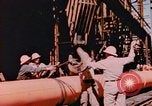
Role of Iron and steel in construction of Liberty Ships. Use of cranes for heavy construction during World War 2.
Building a Liberty Ship in California shipyards (Sausalito or Richmond) during World War II. Raising an 8-ton steel mast from which a ship's boom will extend for loading operations. The gantry crane operator seen in control cabin. A house of steel is built to sit on the deck of an attack transport ship. It is lifted with the help of crane and put into the ship. Several cranes are used to move a 100 ton, 4000 horsepower diesel engine into place in the ship's hold.
CRITICALPAST.COM: About Us | Contact Us | FAQs - How to Order | License Agreement | My Account | My Lightboxes | Shopping Cart | Advanced Search | Featured Collections | Website Terms & Conditions | Privacy Policy ©2026 CriticalPast LLC.
License Agreement |
Terms & Conditions |
Privacy Policy
©2026 CriticalPast LLC.