


 Francais
 Deutsch
 Italiano
Refine Your Search
US-Gliders- stock footage and images
- Showing 5269 to 5274 of 21998 results more
more Hide
Hide
The Old Guard and precision drill team of the U.S. Army perform with band and fireworks
Soldiers of the 3rd Infantry Regiment, U.S. Army (the Old Guard) perform at a nighttime event. The fife and drum corps parade. A precision drill team performs. Band plays. Event ends with fireworks. Washington monument is visible in distance.
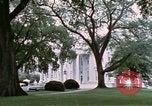
King Faisal is greeted by U.S. President Richard Nixon and First Lady Pat Nixon at the White House in Washington DC.
King Faisal bin Abdulaziz Al Saud of Saudi Arabia during a royal state visit to the United States. The White House in Washington DC. Trumpeters of the Old Guard on the portico. Cars parked at the side of a lawn. Drummers of Old Guard play on steps as King Faisal arrives by car. Accompanied by Secretary of State William Rogers, The King steps from car and is greeted by United States President Richard Nixon and First Lady Pat Nixon. A woman takes a picture, and a U.S. soldier salutes in the background. People in the background. Dignitaries applaud. King Faisal is escorted by President Nixon up steps of red carpeted stand erected on White House lawn. They look out upon military formation standing at attention. Old Executive Office Building, now known as the Eisenhower Executive Office Building (1650 17th St NW, Washington, DC 20500, United States), in background. King Faisal and President Nixon review the military formation. Back on the stage, President Nixon speaks and interpreter informs King Faisal, who also addresses the gathering when the President finishes, while interpreter informs audience over loudspeakers. Women in the crowd listening to the Arab king’s speech. The President and Mrs. Nixon then escort King Faisal into the White House as band plays. Inside the White House, President Nixon and King Faisal sit and talk, with help of an interpreter.
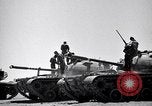
U.S. Troops demonstrate routine cleaning and adjustment of M-48 Patton tanks
U.S. soldiers work on various parts of a tank in the United States. They sweep treads and clean tank gun barrels with long rods. Soldiers tighten parts of a tank. They lubricate parts of a tank. They tighten a clamp on the barrel.

U.S. President Franklin D. Roosevelt dedicates the new chapel at Georgia Warm Springs Foundation
U.S. President Franklin D. Roosevelt dedicates the chapel at Georgia Warm Springs Foundation in Warm Springs, Georgia. Cars parked on the road side. President Roosevelt arrives at the new chapel and drives up footpath to the door. Closeup of license plate on the President's 1938 Ford convertible (with hand controls) reads 'Georgia FDR 1938'. Following the dedication service, the President is seen standing supported by door of his car, as he shakes hands with Rt. Rev. Henry J. Mikell, D.D., Bishop of Atlanta. Standing nearby are Rev. J.D.C. Wilson, Rector of St. Mark's Episcopal Church in LaGrange, Georgia, and FDR's neighbor and friend, and former owner of Warm Springs, Georgia Mustian Wilkins, who donated the funds for the chapel. Scene shifts to large group of polio victims, in wheel chairs. Closeup of President Roosevelt. Group of polio victims , in their wheel chairs, posing outside a Foundation building, with McCarthy Cottage and the E.T. Curtis Cottage in background.
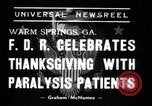
U.S. President Franklin Roosevelt celebrates Thanksgiving with paralysis patients at a foundation in Warm Springs, Georgia.
U.S. President Franklin D Roosevelt at a Foundation in Warm Spring, Georgia. The President seated with other members of the Foundation. President Roosevelt speaks over the microphones about the sanitarium's humane achievements and expresses hope for a nation wide Thanksgiving. President Roosevelt and paralysis patients eat turkey.

U.S. Secretary of State Cordell Hull aboard USS Santa Clara talks about the Pan American Conference.
U.S. Secretary of State Cordell Hull talks about Pan American Conference. Secretary Hull during a press conference aboard USS Santa Clara. He talks about the Pan American Conference in Peru. An American delegate addresses the conference. Cordell Hull poses on the ship.
CRITICALPAST.COM: About Us | Contact Us | FAQs - How to Order | License Agreement | My Account | My Lightboxes | Shopping Cart | Advanced Search | Featured Collections | Website Terms & Conditions | Privacy Policy ©2026 CriticalPast LLC.
License Agreement |
Terms & Conditions |
Privacy Policy
©2026 CriticalPast LLC.