


 Francais
 Deutsch
 Italiano
Refine Your Search
US-Gliders- stock footage and images
- Showing 5395 to 5400 of 21998 results more
more Hide
Hide
Cadets sworn in as the members of the U.S. Air Force Academy at Lowry Field in Denver, Colorado.
Cadets go into the headquarters of the U.S. Air Force Academy at Lowry Field in Denver, Colorado. A model of the building. Cadets sworn in as the members of the Academy. Spectators during the ceremony. Members of West Point and Annapolis parade. Planes in formation.
The U.S. Navy's small helicopter named "Rotocycle" takes off at Long Island in New York.
A man sits in the U.S. Navy's small helicopter named "Rotocycle" at Long Island in New York. Helicopter takes off. Helicopter flies.
The U.S. and Chinese Officers gather at review stand during the 46th Anniversary of the founding of the Republic of China.
People in trucks come down during the 46th Anniversary of the founding of the Republic of China. People stand outside the gate and soldiers at the gate. The U.S. and Chinese Officers gather at review stand. Chinese policemen stand near a jeep under a tree. Troops march at parade ground. Army band stands. Children hold the Chinese flag. Chinese officers and women stand and see the parade. Dignitaries at balcony. Soldiers hold Chinese flags. Soldiers stand and then march.
Views of U.S. military aircraft scrapped at American Naval Air Base, Tsingtao, China
Camera pans over scrapped U.S. military aircraft that have been pushed off a cliff at the American Naval Air Base in Tsingtao (Qingdao) Shantung Province, China, in 1946. A jumbled mess of parts, mostly unidentifiable. Some larger parts include a fuselage and some wings,displaying the American roundel.
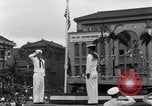
Sailors in attention near U.S. flag during the 44th founding anniversary of the Republic of China in Taipei, Taiwan.
Chinese military band play during the 44th founding anniversary of the Republic of China in Taipei, Taiwan. Chinese flag waves. Sailors in attention near the U.S. flag. Navy officers. Soldier women and people. A man stands in aircraft. Children see parade. People see inside artillery. A boy makes faces.
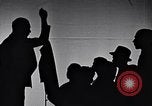
People hold U.S. flag and banners during a procession and a man throws a smoke bomb in New York City.
Dramatization shows silhouette images of people in New York City. A man instructs and others follow him. A man holds a banner in his hand. People hold the U.S. flags and banners during a procession. People hold a man. A man throws a smoke bomb.
CRITICALPAST.COM: About Us | Contact Us | FAQs - How to Order | License Agreement | My Account | My Lightboxes | Shopping Cart | Advanced Search | Featured Collections | Website Terms & Conditions | Privacy Policy ©2026 CriticalPast LLC.
License Agreement |
Terms & Conditions |
Privacy Policy
©2026 CriticalPast LLC.