


 Francais
 Deutsch
 Italiano
Refine Your Search
US-Gliders- stock footage and images
- Showing 5419 to 5424 of 21998 results more
more Hide
Hide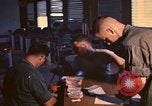
U.S. Army officials exchanging the old currency notes of the soldiers with new ones at the Signal Group headquarters in Vietnam.
Currency exchange at the headquarters of the Signal Group of the U.S. Army in Long Binh in Vietnam. United States Army officials exchanging the old currency notes of the soldiers with the new ones. Officers count notes and make register entries. The old and new currency notes. (Vietnam War period).

U.S. Army orientation film "Here is Germany" showing the contrast in life in Germany pre-war and during World War 2
U.S. Army training film titled 'Here is Germany'. Circa 1930 - 1938 views of pre-war German countryside, and German cities including Berlin and others before destruction in World War 2. Shots include famous German landmarks and buildings in major cities including Brandenburg Gate and Victory Column sculpture close-ups and other monuments all before bombing of World War II. Lifestyle of German people with families and children in their routine lives in the decade of 1930 before the war. Farmers working fields, mined coal transported by rail, potatoes poured from a full sack, a boy shepherd with geese; a farmer counting pigs descending a ramp at a farm. City port or harbor scene with ships and a modern looking railroad train arriving at a station, sign on side reads Deutsche Reichsbahn (German Reich Railway). High speed highway roads like the Autobahn. German cruise ship at sea. Aerial view of airport with "Berlin" sign on ground. German schools, offices, factories and markets. German woman braiding a girl's hair. German woman taking in washed clothing from a clothesline. German men, women, and children cleaning and polishing work areas and possessions. A German library with people studying and others at book shelves. German classroom with a teacher instructing children and writing on a blackboard. Scenes of German musicians and symphony orchestra and musical instruments, artisans, masons, cooks. Busy roads with cars. Narrator then presents a darker other side, showing an arms factory during rearmament of Germany, German soldiers escorting away a religious priest. German military officials. Scenes circa 1945 of victims of German armies and of the concentration camps. Lumps of dead bodies from massive public shootings, a man being tortured, burning chambers, prisoners of war, concentration camps, human ovens, gas chambers. Survivors of the German custody in relief camps of Red Cross. Evidence of atrocities committed by Nazi Germany. Articles made of human skin and bones. Daily utility items like toys and brushes made from human body parts. Scenes of survivors of concentration camps. Polish people dead from Nazi atrocities at Lublin Castle. Italians and Belgians murdered by Germans, American POWs murdered by Germans. Scenes return again to 1930s views of peaceful German citizens and German lifestyle juxtaposed with views of German soldiers and military actions in World War 2. Some famous Americans of German roots: Wendell Willkie, Admiral Chester Nimitz, Henry J. Kaiser. Narrator talking about American customs and values. View of two teenage American boy students viewing a housing area and taking notes. One of the teenage boys is African American. Some men gathered at a bar in an American town. A man holding a long fly fishing pole preparing to depart on a fishing trip. Woman neighbors in discussion. Young American women walking down a sidewalk in an American town as a group of American boys watch and admire them.
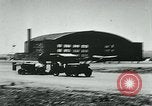
Missile GB-4 carrying an Azon Bomb attached to an B-17 Bomber of the U.S. Air Force
A jeep towing missile GB-4 to a B-17 Bomber of the U.S. Air Force at a base. Air force men installing the missile beneath a wing on a wing rack of the plane. They attach the missile with the rack. Radar antenna of the missile. Airmen checks the control unit of the missile. (World War II period).

Target Seeker Guided Missile GB-6 fired for a target from B-25 bomber of the U.S. Army Air Corps
Target Seeker Guided Missile GB-6 of the U.S. Army Air Corps kept at a laboratory at a USAAC base. Two Airmen attach components to the GB-6. Testing the missile by holding a flame in front of it. B-25 bomber with an attached GB-6 takes off. GB-6 fired takes an aerial route from among the clouds and strikes its target among trees. (World War II period).
Light Seeker Guided Bomb GB-5 of the U.S. Army Air Corps causes explosion at its target in night.
Light Seeker Guided bomb GB-5 of the U.S. Army Air Corps fired on a target at night. The bomb moves in dark seeking lighted target. It strikes the target and a massive explosion takes place. (World War II period).
Radar Seeker Guided Bomb GB-7 of the U.S. Army Air Corps with nose cover removed showing a radar antenna.
Radar Seeker Guided bomb GB-7 kept at a base of the U.S. Army Air Corps. An airman removes the nose cover of the bomb. A radar antenna inside the nose with an aerial can be seen. (World War II period).
CRITICALPAST.COM: About Us | Contact Us | FAQs - How to Order | License Agreement | My Account | My Lightboxes | Shopping Cart | Advanced Search | Featured Collections | Website Terms & Conditions | Privacy Policy ©2026 CriticalPast LLC.
License Agreement |
Terms & Conditions |
Privacy Policy
©2026 CriticalPast LLC.