


 Francais
 Deutsch
 Italiano
Refine Your Search
US-Gliders- stock footage and images
- Showing 5509 to 5514 of 21998 results more
more Hide
Hide
Fighter aircraft of the U.S. 8th Air Force engage German aircraft and ground targets in Europe during World War II
A film titled 'Activities in European theater of operations' shows gun camera films from U.S. P-47 Thunderbolt and P-51 Mustang fighter planes shooting down German planes during World War II.In one, the German pilot is seen bailing out and falling away from his airplane. In another, the German plane explodes and its wing falls off. One sequence shows the German plane trying evasive maneuvers and then rolling over as the pilot bails out. His chute is seen opening moments later. Other scenes show aircraft losing wings, and one exploding into a ball of fire. One scene shows a strafing run at a steam locomotive pulling a train. The locomotive billows white smoke. Two more attacks against trains result in huge fiery explosions.
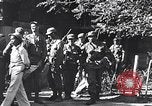
U.S. Rangers and Filipino guerrillas rescue Allied prisoners from Japanese prison camp in Philippines during World War II.
On January 30, 1945, 121 members of the 6th Ranger Battalion and 286 Filipino guerrillas are seen setting out on a 30 mile trek behind Japanese lines, to free Allied prisoners of war (POWs) and civilians from a Japanese camp near Cabanatuan City, in the Philippines, during World War 2. They stretch out in a long, informal column as they traverse low flat lands and ford a wide shallow river. The men carry weapons and supplies (some on their heads) as they move along, almost like a Safari. Scene shifts to rescued prisoner, Major Emil P. Reed, U.s. Army Medical Corps,26th Cavalry. He was the senior officer among prisoners at the Cabanatuan prison camp number 1. He recounts being told by the Japanese Commandant that commencing January 7th, they were free at their own risk, but also assured them they would not be molested by the Japanese if they stayed within their regular camp area. Sergeant Samuel E. Goldy, Signal Corps, also speaks a few words about that period when Japanese were departing. Next the camera records the Rangers and Filipino guerillas returning with the approximately 500 freed POWs. Some Filipino women and children watch them return. At one point, the cadre climb aboard army trucks and continue their journey in a convoy. The POWs climb down from their trucks at the 92nd Evacuation Hospital, in Guimba, Luzon. Some take pleasure is simply lying down on the grass at the site. Many gather around hospital staff handing out packages of treats, including cigarettes, candy and the like. A couple of them express pleasure as they smoke cigarettes. Two frail and injured are seen hobbling with canes. Some appear seriously malnourished. A group are seen trying on new clothes. A British prisoner, Sergeant Robert Bell, Manchester Regiment, British Army, speaks of his experience. He was taken prisoner in Singapore and sent to Thailand where he worked to build a railway for the Japanese. Many prisoners died there from disease and malnutrition. He was one of a small number who survived after being on a Japanese ship with other prisoners when it was sunk by American dive bombers. Sergeant Walter Ring, of San Roque, Luzon, is seated, relaxed on a chair, as he recounts his experiences. Two young Filipino boys sit on the grass at his feet. He reaches to one, whom he says is his son Louis and to the other, his son Sam. His captivity began on Bataan in 1942. Finally, after rest and rehabilitation, the former POWs are seen heading away from the battle fronts to be transported back to the U.S.A.
Quartz Crystal mining and manufacturing and its various uses
Two men dig earth to extract quartz crystals in United States. Specifens are immersed in water to be washed .. They are processed with machines to obtain crystals which are mainly used in tiles and jewelry.
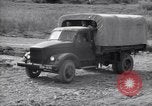
Repatriated prisoners arrive at U.S. camp in South Korea. Gate to Freedom.
Repatriated prisoners arrive at a U.S. camp in Korea where a sign reads 'Welcome: gate to freedom'. They are helped down from military trucks as another American soldier checks their names from a list. After they get off, the trucks move away.
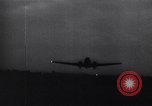
U.S. Army Paratroopers of the 101st Airborne Division load and depart to parachute into France the night before D-day
Paratroopers of the 101st Airborne Division (Screaming Eagles) prepare their equipment and prepare to drop behind enemy lines in France, the night before D-Day. They assemble in "sticks" and board C-47 transports painted in large white stripes to assure they will be recognized and not shot down by U.S. Navy ships, or other friendly fire. They are bid farewell by a three-star General. The aircraft take off one after another bound for the Normandy coast. (World War II period).
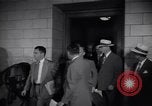
Organized crime figures escorted in handcuffs from courthouse to waiting Us Marshal van.
Mafia crime figures leave New York City courthouse in hancuffs and are escorted to waiting U.S. Marshal van. Photographers take photographs.
CRITICALPAST.COM: About Us | Contact Us | FAQs - How to Order | License Agreement | My Account | My Lightboxes | Shopping Cart | Advanced Search | Featured Collections | Website Terms & Conditions | Privacy Policy ©2026 CriticalPast LLC.
License Agreement |
Terms & Conditions |
Privacy Policy
©2026 CriticalPast LLC.