


 Francais
 Deutsch
 Italiano
Refine Your Search
US-Gliders- stock footage and images
- Showing 5581 to 5586 of 21998 results more
more Hide
Hide
U.S. President Nixon announces the resignation of William Rogers as the Secretary of State at a press conference in San Clemente.
U.S. President Richard Nixon holds a press conference in San Clemente. He makes an announcement about the resignation of the Secretary of State William Rogers. Nixon appreciates the quality work and time given by Roger. He addresses Roger as his close friend and advisor. President Nixon appoints Henry Kissinger as the new Secretary of State. Nixon speaks on the well known qualifications of Henry Kissinger to be appointed as the new secretary.
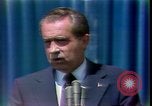
U.S. President Richard Nixon responds to a journalist's question regarding the Watergate tapes in San Clemente.
U.S. President Richard Nixon talks about the Watergate tapes during a press conference in San Clemete, California. He is questioned by a journalist on the exposure of the tapes, and a survey which revealed that he was wrong to make the tapes. President Nixon responds stating that he isn't surprised since Americans do not approve of recording conversations. He talks about the recording capacity in the White House and Camp David, and dismantling and resetting of the system for national security reasons. He also states that the system has existed during the time of President Lyndon Johnson and President John F. Kennedy.
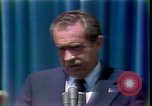
U.S. President Richard Nixon talks about the FBI and CIA involvement during the Watergate investigations in San Clemente.
U.S. President Richard Nixon talks about the Watergate tapes during a press conference in San Clemente, California. A Journalist seeks an explanation from the President regarding the warning given to him by FBI's (Federal Bureau of Investigation) acting Director L. Patrick Gray on July 6, 1972. President Nixon talks about Gray's report that his top aides weren't cooperating and meetings between Gray and General Vernon A Walters. He also states his directive to go ahead with the investigation and the involvement of CIA (Central Intelligence Agency) in the process.
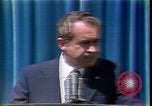
U.S. President Richard Nixon talks about the principle of confidentiality with regard to the Watergate tapes in San Clemente.
U.S. President Richard Nixon talks about the Watergate tapes during a press conference in San Clemente, California. Journalist Tom Jarriel seeks an explanation from the President regarding his meeting with the Assistant Attorney General Henry Petersen, the head of the Criminal Division on April 15 regarding evidence against his top aides. The journalist also wants the president to clarify that even after accepting the resignation of Mr. H. R. Haldeman and Mr. Ehrlichman why did the president involve Mr. Haldeman while listening to those confidential tapes. The president clarifies that he involved Mr. Haldeman to hear only those recorded tapes in which conversations were been carried out between all three of them -- the President, Mr Haldeman and John Dean. They did so to prepare themselves to respond appropriately to the allegations made by Mr. Dean. Another journalist questions the President regarding his failure to make the tapes available to the Senate Committee or the special prosecutor and whether he could let the public see a report about the tapes. The President confirms hearing of the tapes by Mr. Right. He believes that the hearing of tapes either by a judge, before a camera or Senate Committee is against the principle of confidentiality. He believes that the President must conduct affairs with his associates in his office with regard to the principle of confidentiality, irrespective of the fact whether it is a tape or any presidential paper.
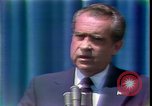
U.S. President Richard Nixon responds to journalists' questions about the investigation responsibility for the Watergate tapes.
U.S. President Richard Nixon talks about the Watergate tapes during a press conference in San Clemente, California. A journalist asks the President regarding the person in charge of the Watergate investigation in June 1972 when the Watergate incident took place, and March 21 when the president got the evidence. The president responds that in June the responsibility of investigation was given to Jeb Magreder who was the new Chairman of the Committee. Magreder and his associates had assured president of a thorough and fair investigation. In the White House, the investigation responsibility was given to John Ehrlichman, Counsel to the President, who in turn had delegated it to John Dean, a White House Counsel. But Dean himself was involved in the investigation of the White House staff by the FBI (Federal Bureau of Investigation). Dean was to report to the President which was then carried on by Dean. The President sates that he has also met Haldeman, John Dean and Ehrlichman to discuss the matter and to get the truth out. Another journalist seeks an explanation for the President not asking Attorney General John Newton Mitchell the truth. The President clarifies that he did have confidence in Mitchell and asked him for details about the conversations. The President states that Mitchell did not tells him the truth and had his own reasons for doing so.

U.S. President Richard Nixon talks about his secret meeting with the judge in Watergate scandal in San Clemente.
U.S. President Richard Nixon talks about his meeting with the judge in the Watergate scandal during a press conference in San Clemente, California. A journalist ask the President regarding the secret meeting between the President, President's Assistant to Domestic Affairs John Ehrlichman and the Judge William Matthew Byrne. He also asks the President whether this was an attempt to bribe the judge and which in turn has depicted a lack of moral leadership on the President's behalf. The President clarifies that he had met the Byrne for a minute only and they did not discuss the case. Byrne had arrived there to meet Ehrlichman who had recommended him for the position of Director of FBI (Federal Bureau Of Investigations). In addition to this the President also talks in regard to the telephonic call he had with Assistant Attorney General Henry Petersen, the head of the Criminal Division on April 18th. In that call the General was concerned about the evidences that developed as a result of investigation.
CRITICALPAST.COM: About Us | Contact Us | FAQs - How to Order | License Agreement | My Account | My Lightboxes | Shopping Cart | Advanced Search | Featured Collections | Website Terms & Conditions | Privacy Policy ©2026 CriticalPast LLC.
License Agreement |
Terms & Conditions |
Privacy Policy
©2026 CriticalPast LLC.