


 Francais
 Deutsch
 Italiano
Refine Your Search
Ubon AirForce Base Thailand 1967 stock footage and images
- Showing 2671 to 2676 of 5487 results more
more Hide
Hide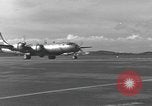
Activities of the USAF 53rd Strategic Weather Reconnaissance Squadron at Kindley AFB, Bermuda
WB-29A, tail number 42-94947, of the 53rd Strategic Weather Reconnaissance Squadron (Hurricane Hunters) taxiing on Kindley Air Force Base, Bermuda. It stops momentarily, with engines running. Squadron logo and "Hurricane Hunters," are displayed on fuselage of the aircraft. Next, it is seen taking off (repeated twice). Long sequence showing the aircraft cruising inflight, over water. Closeup of a weather map on the front of a briefing podium. A USAF Captain briefs aircrews about a mission. Aerial view of a WB-29A aircraft in landing pattern for Kindley Air Force Base. The hand of radio operator keying a message, inside a WB-29A aircraft, as it encounters severe turbulence. An airman typing a message.

USAF B-52 Stratofortresses and Convair B-36 aircraft competing at a SAC bombing competition in Maine, United States.
A Strategic Air Command (SAC) bombing competition in Maine, United States . Aircraft parked at Loring Air Force Base. United States Air Force B-52 Stratofortresses and Convair B-36s parked at a flight line. Men working on maintenance and repairing mechanical defects in an airplane. Flight pilots and crews in briefing receiving information about targets. Animation shows the course of airplanes in flight. Views of aircraft taking and in flight aerial views during the competition. They are tracked from the ground with radar. View of ground teams using radar and in control rooms. The aircraft taxiing on the air base.
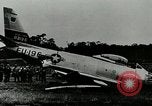
USAFE Flight Safety film depicting problems that can cause aircraft accidents
USAFE ( United States Air Force in Europe ) Flight Safety film illustrating the kinds of errors that can cause aircraft accidents. A Flight Safety Officer points to photograph of a crashed F-86 airplane and lectures to pilots. He says that most of accidents occur because of minor mistakes. A Captain, pilot, naps during the lecture. The most common pilot errors in USAFE written on a blackboard. After ignoring the lecture, the Captain prepares a flight plan at Base Operations. He fails to check NOTAMS (notices to Airmen)and declines assistance from Base weather officer. He performs perfunctory preflight inspection, initials Form 1, and taxis for takeoff breathing 100% oxygen. After takeoff, he levels at 30 thousand feet and makes position report. Sensing hypoxia, he sees oxygen depleted and must dive to lower safe altitude (where fuel consumption rate is too high). He tunes destination radio beacon, becomes disoriented and calls for steer to destination, which is below minimums for GCA (ground controlled approach). He goes to Alternate, has trouble with landing gear, runs low on fuel, and luckily lands safely, but runs out of fuel and must be towed to parking place. A litany of his mistakes is recounted.
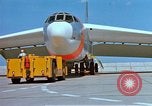
Men work on an aircraft and install several devices into it in Kansas, United States.
The coverage of the Boeing 1960 Progress Report covering the development and production of U.S. Air Force B-52 Stratofortress G and H models. A B-52 aircraft parked on an air base. Men work on the aircraft. The engine of the aircraft being worked on. A map of the United States. Men work and install a GAM-77 missile in the aircraft. Ground support equipment developed for the aircraft. A QEC test stand with turbo fan engines on the air base. An engine cowling on the ground as the workmen remove flange. The QEC test stand permits the testing and the calibration of engines and accessories before their installation in the aircraft.

A map locates various islands of the Pacific and the invasion of these islands by U.S. forces.
A training film titled 'The Kwajalein Operations' on the operations of U.S. forces on Kwajalein Atoll in the Marshall Islands during World War II. A map locates islands in the Pacific Ocean. Animation depicts the area invaded by U.S. forces. The Gilbert Islands, the Solomon Islands, Midway Island, Tarawa and other islands located on the map. U.S. lines of communication on various islands. Kwajalein Atoll on the map. The atoll is selected as a base for U.S. forces. It is selected because of various benefits which would prove useful during the invasion of the Marshall Islands. Bases and installations on Kwajalein Atoll.
New recruits, including African Americans, commence training in the U.S. Army during World War II
Views of damage in the aftermath of the Japanese attack on Pearl Harbor, December 7, 1941. Scene shifts to African American pastor in pulpit of a church speaking about U.S. armed forces. A woman in the congregation whose son is serving in the Infantry, points to a flag filled with blue stars for service members from the church. She reads letter from her son telling her he has been selected for Officer Candidates School. View of new recruits in a railroad depot. African American recruit pauses to say goodbye to his mother, but is moved along by a uniformed Army officer. Closeup of locomotive wheels turning. Glimpse of barracks in an Army base. Recruits leaving railroad train and entering a snow-covered building. Army sergeants organizing the new recruits inside the building. An army spokesman welcomes them to the training camp. Recruits being interviewed about their past training and experiences. Closeup of a Sergeant inquiring about the kind of machine tools a recruit had worked with. Recruits assembled in a base auditorium where they hear from a Chaplain and an officer who demonstrates how to salute. (World War II; WW II; World War 2; World War Two)
CRITICALPAST.COM: About Us | Contact Us | FAQs - How to Order | License Agreement | My Account | My Lightboxes | Shopping Cart | Advanced Search | Featured Collections | Website Terms & Conditions | Privacy Policy ©2026 CriticalPast LLC.
License Agreement |
Terms & Conditions |
Privacy Policy
©2026 CriticalPast LLC.