


 Francais
 Deutsch
 Italiano
Refine Your Search
Ubon AirForce Base Thailand 1967 stock footage and images
- Showing 3169 to 3174 of 5487 results more
more Hide
Hide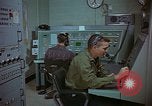
NASA Project Mercury spacecraft tracking facility at Eglin AFB
Operators at work in NASA Project Mercury tracking facility at Eglin Air Force Base, Florida. An FPS-16 operator at control console.Other equipment seen include time signal receiver and time standard equipment. Several technicians are seen, some performing diagnostic testing of equipment.. (Note: The FPS-16 units originally planned for the Project Mercury tracking network did not have adequate displays and controls to reliably acquire the spacecraft during orbit. So NASA had them modified to double their range and also incorporated data-handling equipment to facilitate transmissions from all sites to the Mercury Project computers.)
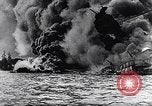
Japanese attack on Pearl Harbor in presaged by a decade of Japanese military aggression in China (WW2)
Opening scene shows the famous image of American battleship USS Arizona as attacked by Japanese forces in Pearl Harbor on December 7, 1941 in World War II. The ship is engulfed in black smoke, and listing. Change of scene to a waterfront in Japan during 1938, where numerous Japanese soldiers board troop ships bound for Manchuria, China. Next, are scenes of Japanese troops marching as they occupy Manchuria. Closeups of some Japanese soldiers. Scene shifts to a train moving on the South Manchurian railway, at a station showing a sign reading,"Chin Hsien." View of steam locomotive pulling a train away from the camera position. (Narrator states that a Japanese train, on the South Manchurian Railway, had been dynamited) This incident triggered a Japanese attack on Mukden, Manchuria. Japanese infantry are seen placing numerous bundles of reeds as a bridge across a wide, shallow, stream and proceeding to cross on their way to invade Mukden. Military supplies are carried on pack animals. In the air, overhead Japanese Mitsubishi G3M Type 96 land-based attack aircraft are seen flying in precision "V" formation. On the ground, Chinese civilians run for cover in the City of Mukden. (The date is September 18, 1931.) Glimpse of Chinese civilians looking at bombing victims on street of Mukden. Brief view of Geneva Switzerland, where League of Nations was housed. A memorial stone monument in that city to Woodrow Wilson, President of the United States and founder of the League of Nations. An entrance to the League of Nations headquarters in the Palais Wilson in Geneva, Switzerland. League delegates in session inside the Palais Wilson. A Japanese Naval Fleet, under command of Admiral Kichisaburō Nomura, is seen steaming toward the Chinese coast and begin a naval bombardment, firing their guns, 15 miles from Shanghai. Japanese Naval biplanes are seen in flight overhead. Japanese troops marching in the streets of Shanghai, as sidewalks of onlookers wave Japanese flags. Next, Japanese troops are seen marching out of Shanghai, at the insistence of the League of Nations. (Narrator states Japan signed a truce with China on May 4th, 1932.) View of Japanese troops entering further, into Mongolia. Japanese soldiers waving flag celebrating formation of the Puppet State of Manchuko in Northeast China and Inner Mongolia, in 1932. Japanese statesmen leaving the League of Nations headquarters, after Japan resigned from the League on February 24, 1933. Japanese infantry moving further into China supported by field artillery fire. Explosions from artillery and damaged buildings, as Japanese troops advance in China. Invaders using tall ladders to scale walls of a damaged fortress in China. Japanese pilots receiving briefing and boarding their Mitsubishi Ki-30 single engine light bomber aircraft at an airfield. View of them taking off and inflight, dropping bombs on Chinese targets. Aerial views of bombs exploding on ground below. Retreating Chinese army marching along the Great Wall of China. Chinese people and military forces moving their military and civilian resources deep into the Chinese interior.
Torchlight ceremony at Zeppelin Field in Nazi Party grounds at Nuremberg, Bavaria, during 6th Party Congress, 1934
As martial fanfare music plays in the background, Camera pans down from clouds, to Huge eagle adorning top of grandstand at Zeppelinfeld (Zeppelin field) in the Nazi Party grounds, Nuremberg, during the 6th Party Congress of 1934. Huge numbers of flag bearers move en masse across the field. View of them descending a slope and marching toward the field. It is late in the day and cloudy. The camera focuses on the flags more than the flag-bearers. A glimpse of Adolf Hitler spot-lighted as he stands on a podium near microphones. More flags. Then Hitler, again, from behind him, on the podium, as he has his hand raised in Nazi salute. Masses of flags parading across the field in fading light. Closeup of Hitler saluting. The Horst-Wessel anthem is played as a dirge in the meantime. Hitler speaks, about some 200 thousand persons assembled here. Camera begins to pan in a circle around the base of the podium, focusing on Hitler as he speaks, about all being together and the strength of their unity. Closeup views of Hitler from various angles with dramatic lighting, as he speaks. Evoking patrotism, Hitler talks about thinking every minute of every hour about Germany, the Reich, and the nation, and concludes with a rousing "Sieg Heil." Views from distance of the spotlighted eagle and flags at the stadium grandstand, in smoky haze of burning torches. Sounds of crowd repeating "Sieg Heil." flags dimly seen in light of torches. Silhouetted marching feet and then men carrying torches, banners, and flags, as martial music plays. Hitler seen holding a straight extended Nazi salute and then closing it, as he turns toward the camera. Formation of torches into the distance and views of uniformed men carrying them. Closeup of Hitler, standing regally, followed by more marchers who fade along with the music, to finish the film.
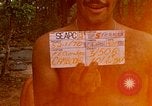
United States 101st Airborne Division soldiers put on field gear in Parrots Beak, Cambodia
United States 101st Airborne Division soldiers put on field gear in Parrot's Beak, Cambodia. They sit against heaps of sand at fire base. They board UH-1D helicopter and it takes off. Soldiers move across grassy field.
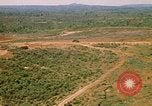
U.S.troops and equipment being marshaled for the incursion into Cambodia during the Vietnam War
View from UH-1 helicopter flying over Camp Holloway in Vietnam highlands, during period U.S. troops are commencing their incursion into Cambodia, during the Vietnam War. Rough dirt paths and landing areas have been carved out of the earth and scrub brush landscape. Half a dozen UH-1s are parked on the site, as well as trucks and other vehicles. A huge section of the site is barren, except for a white wind sock. View from the ground of a UH-1 coming in to land. It sets down on a ramp of marsden matting, aka pierced steel planking (PSP), as a CH-47 chopper takes off in the background. Camera is photographing from another UH-1 that takes off, still focusing on the one that just arrived. A C-130 aircraft is on the runway in the background. The departing camera-helicopter shows troops and equipment on the bare earth below. Scene shifts to aerial views of sky, clouds, and mountainous terrain. Shifting to view of ground, another advance base is seen below. Another UH-1 is seen in the sky.The camera-helicopter passes over a dirt field where a low flying formation of helicopters is raising huge dust clouds. In the midst of this site there is a long hard surface (PSP) runway, that the camera-helicopter flies along, at altitude.Troops and equipment plus more helicopters are in the dirt areas beside the hard runway.
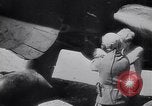
German Luftwaffe operations primarily in siege of Sevastopol in World War II
German ground crews hand crank JU-87 Stuka dive bombers to start them, during World War 2. A flight of four fly over the camera, carrying a bomb under each wing. Scene shifts to German Bf-109 fighters being readied for takeoff. German ace, Captain Hans-Joachim Marseille, is being helped into cockpit of his Messerschmitt Bf-109, by a crew chief. Camera focuses on the tail of his airplane displaying eagle atop a wreath encircling "100." An iron cross appears below the wreath. Ground crews crank start other Bf-109s, that taxi out and are seen, next, in formation flying above clouds. Closeup of two airborne Ju-87 Stuka dive bombers. View from the air of the harbor at Sevastopol, Crimea. Stukas dive bombing Sevastopol. German ground forces bombarding Sevastopol with heavy artillery. German soldiers advancing towards an area being shelled by German tanks. German soldiers gather near radio operator at base of a concrete building using radio to communicate. Stuka dive bombers overhead. Bombs exploding in the city. A Junkers 88 bomber in flight. Bombs dropping on Port below. View of pilot in cockpit of German bomber. View from air of bomb craters below. View from cockpit of a Ju-88 of another Ju-88 ahead. View from overflying German aircraft of silent Soviet Coastal guns atop Fort Maxim Gorky. (Note: Some scenes may be from unrelated times and places. For example, Hans-Joachim Marseille, was know primarily for his flying exploits in Africa.)
CRITICALPAST.COM: About Us | Contact Us | FAQs - How to Order | License Agreement | My Account | My Lightboxes | Shopping Cart | Advanced Search | Featured Collections | Website Terms & Conditions | Privacy Policy ©2026 CriticalPast LLC.
License Agreement |
Terms & Conditions |
Privacy Policy
©2026 CriticalPast LLC.