


 Francais
 Deutsch
 Italiano
Refine Your Search
Ubon AirForce Base Thailand 1967 stock footage and images
- Showing 3631 to 3636 of 5487 results more
more Hide
Hide
Demonstration of how and when U.S. military instructor should select and present training films to troops, United States.
Film based on advantages and procedures of using U.S. Army training films. A U.S. military instructor reads from Field Manual 21-7 which contains list of several training films and their brief descriptions. Instructor makes notes at his desk. Instructor makes a phone call and screens a film, he selected. He makes notes while watching the film. Instructor speaks to a group of men seated in class who are to watch the training film. He outlines the significant points of the film. Men watch the film as general introduction of subject. It is explained why and the how the film is reviewed. Men at work carry out actual procedures they were shown in the film. It is explained when not to show the training film to troops. Troops march through heavy mud. Tired soldiers yawn. A soldier takes a nap while watching a film. An instructor in a training class. Trained troops march on a field. (World War II period).
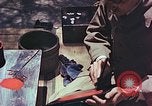
A Japanese artist displays various lacquer products on a table in Kyoto, Japan.
The art and crafts of Kyoto, Japan. A Japanese artist polishes an object with charcoal and coats it with red lacquer. The artist gives the final touch. The final polishing with Tonoko Clay. Lacquer products displayed are red coffee pots, wine cups, cigarette sets, trays with gold dusted base and fan design and a stationary box.
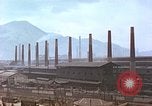
Burned out sections of Japan Iron and Steel Works at Kitakyushu, Kyushu, Japan
Iron and Steel Works at Yawata in Japan (Yawata Steel Works). A view at the end of the Japan Iron and Steel Works. Open hearth, rolling mills and coke ovens. Southern sections of the plant as seen from the roof of the Muwata Grade School. Burned out sections of Yawata as seen from the roof of the school. This area lies between a post office and the south end of the plant. It includes the areas Higaichi, Machi, Okadamachi and Hishimachi. This view shows the results of incendiary attack of August 8, 1945. The coke plant and by-products installations of Japan Iron and Steel Works. The southwest corner of the plant. Views of Tobata Power Plant. Aircraft revetments around the Japanese Naval Air Base in Omura. (World War II period).
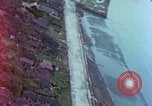
An aerial view of Atsugi Airfield near Atsugi, Japan (close to Yamato and Ayase Japan), at the end of World War II.
An aerial view of Atsugi Airfield as seen from a U.S. aircraft in flight, shortly after the end of World War 2. Aircraft parked on Atsugi Airfield. Scene shifts to a harbor area and dock installations in vicinity of Yokosuka Naval Base. Ships alongside a finger dock. Bomb damage in the surrounding area.
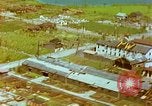
United States fleet enter Sagami Bay, Japan towards the end of World War II.
Aerial views of U.S. fleet in Sagami Bay, Japan towards the end of World War II. An aerial view shows letters 'PW' painted on the roof of a building at a prison-of-war camp located near Tokohoma seaplane base. An aerial view of Yokohama including the prison-of-war camp located close to a railway junction. U.S. fleet underway includes BBs (battleships) and escorting DDs (destroyers) as they enter Sagami Bay.
Two U.S. F-4E Phantom bombers and two U.S. F-4Ds taxi at George AFB during chemical warfare defense training.
A film covers chemical warfare defense training at George Air Force Base in California, United States. Two U.S. Air Force F-4E Phantom bombers and two F-4Ds taxi along a runway at George AFB.
CRITICALPAST.COM: About Us | Contact Us | FAQs - How to Order | License Agreement | My Account | My Lightboxes | Shopping Cart | Advanced Search | Featured Collections | Website Terms & Conditions | Privacy Policy ©2026 CriticalPast LLC.
License Agreement |
Terms & Conditions |
Privacy Policy
©2026 CriticalPast LLC.