


 Francais
 Deutsch
 Italiano
Refine Your Search
Ubon AirForce Base Thailand 1967 stock footage and images
- Showing 3925 to 3930 of 5487 results more
more Hide
Hide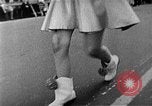
A Columbus Day Parade in the United States prior to the Cuban Missile Crisis of 1962.
A film based on events held in different nations prior to the Cuban Missile Crisis of October 16, 1962 when the United States and the Soviet Union confronted each other with nuclear destruction. A Columbus Day Parade in the United States prior to the Cuban Missile Crisis shows girls dancing along a street and a band playing. A crowd lining up a street. Flags of the U.S. held by marching men. A crowd cheers at a baseball game between the Yankees and the San Francisco Giants. A little girl in calipers becomes the poster girl for March of Dimes (polio charity). The First Lady of the United States Jackie Kennedy with children of foreign diplomats. Fireworks in Uganda celebrating independence. A torchlight vigil held in Vatican.
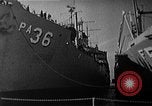
U.S. Navy personnel greet returning families to Guantanamo, Cuba after Soviet Union's decision to dismantle missiles in Cuba.
Soviet Premier Nikita Khrushchev agrees to dismantle Soviet missiles in Cuba during the Cuban Missile Crisis of October 1962. U.S. battleships at U.S. Navy Guantanamo Bay Naval Base in Cuba. A U.S. Navy band plays. A sign reads 'Hi Honey Dinner's Defrostin' Navy personnel greet their family members who were evacuated during the crisis as they disembark from ships. Americans entering a small church to attend services. Reconnaissance photos show dismantled missiles. Soviet ships carry missiles out of Cuba. Americans walk along streets in the United States.
An F4D Skyray aircraft catapulted from USS Coral Sea (CVA-43) in the Atlantic Ocean undergoes a carrier evaluation test.
A U.S. Navy F4D Skyray carrier based interceptor-fighter undergoes first tests aboard USS Coral Sea (CVA-43) in the Atlantic Ocean. Lieutenant Commander James F. Verdin boards the F4D Skyray on the deck of USS Coral Sea. The aircraft takes off from the carrier deck. The aircraft in flight. It lands on the deck of the carrier.
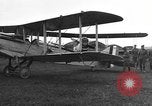
U.S. Brigadier General Benjamin D. Foulois visits airbase at Colombey-les-Belles, France, in World War I.
The U.S. 96th Aero Squadron at the First Air Depot in Colombey-les-Belles, France during World War 1. Chief of Air Service, American Expeditionary Forbce, Brigadier General Benjamin D. Foulois and other officers look over De Havilland DH-4 biplane bombers parked at the air base. Their tails are painted in the French scheme, with blue-white-red vertical stripes. Brigadier General Foulois gets into the cockpit of one of the aircraft. He poses for the camera, beside an airplane, smoking his pipe. He and his staff stroll across the grassy field past parked airplanes.
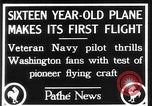
U.S. Navy Captain flies 1912 Curtiss pusher seaplane in demonstration flight, at Washinton D.C.
An original 1912 U.S. Navy Curtiss pusher bamboo seaplane is parked on the shore of the Anacostia River, at the United States Naval Base in Anacostia, Washington, D.C. Its flight controls are seen moving as sailors (unseen) check their movements. Next, with the engine running, Captain "Dick" Richardson, climbs aboard and makes his own quick flight control check. Closeup of him at the controls giving a nod that he is ready to be pushed into the water for a demonstration flight. Sailors maneuver the craft to the edge of shore and push it into the river. Roosevelt Hall, at U.S. Army Fort Lesley J. McNair, is seen across the river in the background. The seaplane's lower left wing dips into the water momentarily, as Captain Richardson taxis it away from the shore. Scene shifts to the seaplane taking off from the river, after which, Captain Richardson Quickly brings it back down to a water landing, near the Washington Channel.
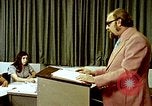
Preparation for America's Decennial Census. Training of census takers and conduct of the census.
Opening scene shows supplementary census workers (enumerators) in a training class. They ask questions that are answered by the instructor. Cartographers preparing detailed standard accurate maps of urbanized areas. Mapmakers at work,kneeling over huge sheets of paper. Postal worker assisting by providing address information to the Census Bureau. Mailmen delivering postal mail. A woman census enumerator carrying a briefcase, with "census" written on it, visits homes. Enumerators visiting remote homes, by car, donkey,and dogsled. A late 1960's or 1970 ambulance approaching the camera position at high speed. A prison compound are shown as narrator discusses census including hospitalized and imprisoned persons. Views of a young child walking on a Native American Indian Reservation; migrant labor camp; a U.S. Air Force Base, and a merchant ship, whom the census must reach. Views of hotel and motel neon signs indicating where census enumerators must also visit. Temporary housing places, such as mobile home parks and shelters for homeless are shown.
CRITICALPAST.COM: About Us | Contact Us | FAQs - How to Order | License Agreement | My Account | My Lightboxes | Shopping Cart | Advanced Search | Featured Collections | Website Terms & Conditions | Privacy Policy ©2026 CriticalPast LLC.
License Agreement |
Terms & Conditions |
Privacy Policy
©2026 CriticalPast LLC.