


 Francais
 Deutsch
 Italiano
Refine Your Search
United States 1982 stock footage and images
- Showing 8641 to 8646 of 26493 results more
more Hide
Hide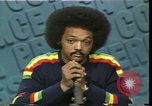
Patrick Borgan questions Jesse Jackson on drugs and smoking in schools in a press conference in United States.
Jesse Jackson is interviewed in a press conference. Jesse Jackson answers Patrick Borgan of London Times on his questions about illegal drug use and smoking in schools. Judith Randal of New York Daily News asks about his views on government steps on doping and drug abuse. Henry McGee of Newsweek Magazine is also present. Bill McCrory of Voice of America is the moderator. Jackson describes how schools can no longer be "dens of dope" (typically illegal drugs of marijuana or narcotics like heroin or opium). Jackson encourages more severe penalties for drug dealers, and he encourages character development for young people to resist drugs. He comments that methadone has not been successful in reducing drug use in the country.
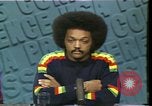
Jesse Jackson answers question about Governor Reagan's Welfare reform recommendations during a press panel in the United States
Jesse Jackson is interviewed in a press conference. Jesse Jackson answers question by Henry McGee of Newsweek regarding Governor Ronald Reagan's recommendations for Welfare reform. Patrick Borgan of London Times and Judith Randal of New York Daily News are also present. Bill McCrory of Voice of America is the moderator.
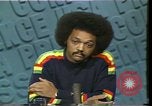
Judith Randal questions Jesse Jackson on use of animals in experiments in a press conference in United States.
Jesse Jackson is interviewed in a press conference. Jesse answers Judith Randal of New York Daily News on use of animals in experiments. Patrick Borgan of London Times and Henry McGee of Newsweek Magazine are also present. Bill McCrory of Voice of America is the moderator.
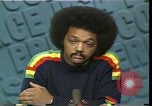
Henry McGee questions Jesse Jackson on women's rights in a press conference in United States.
Jesse Jackson is interviewed in a press conference. Jesse answers Henry McGee of Newsweek Magazine regarding comparisons of women's rights and civil rights. Patrick Borgan of London Times and Judith Randal of New York Daily News are also present. Bill McCrory of Voice of America is the moderator.
Army Secretary Wilber M Brucker greets General Bradley and his wife in United States.
Army Secretary Wilber M Brucker greets General Bradley and his wife. He addresses the gathering as General Bradley and his wife stand by his side. General Lyman L Lemnitzer, Vice Chief of Staff shakes hands with General Bradley. Acceptance speech is given by General Bradley. General Lyman L Lemnitzer, General Bradley and his wife greet people coming in line.
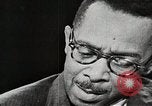
K Clark interviews Martin Luther King on non-violence movement of African Americans and the America's Promise in United States.
Doctor Kenneth Clark, Professor of Psychology at the City College of New York; Director of Fallen Youth Opportunities Unlimited and Research Director, North Pride Center for Interpretation sits in a chair. He interviews Martin Luther King Jr., the famed civil rights leader. Martin Luther King Jr. expresses his views on love, the non-violence movement, and America's promise. King reacts to reported comments from Malcolm X about King's non-violent movement. Martin Luther King, Jr. speaks about the demonstrations in Birmingham, and the teaching of the philosophy of non-violence that was effective in Birmingham in the face of violence from others.
CRITICALPAST.COM: About Us | Contact Us | FAQs - How to Order | License Agreement | My Account | My Lightboxes | Shopping Cart | Advanced Search | Featured Collections | Website Terms & Conditions | Privacy Policy ©2026 CriticalPast LLC.
License Agreement |
Terms & Conditions |
Privacy Policy
©2026 CriticalPast LLC.