


 Francais
 Deutsch
 Italiano

Refine Your Search
United States 1982 stock footage and images
- Showing 1339 to 1344 of 34981 results more
 Hide
Color Sound

President John F. Kennedy talks about nuclear testing for the defense of the nation during a speech in the United States
U.S. President John F. Kennedy gives a speech on nuclear tests in the United States, in the wake of recent Soviet nuclear tests, during the cold war arms race. Kennedy seated at a platform. He speaks over a microphone. A U.S. flag in the background. He speaks about the development of the nuclear weapons for the defense of the nation. He also talks that the U.S. will conduct nuclear tests if necessary for defense, in light of recent nuclear tests conducted by the Soviet Union.
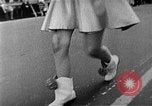
A Columbus Day Parade in the United States prior to the Cuban Missile Crisis of 1962.
A film based on events held in different nations prior to the Cuban Missile Crisis of October 16, 1962 when the United States and the Soviet Union confronted each other with nuclear destruction. A Columbus Day Parade in the United States prior to the Cuban Missile Crisis shows girls dancing along a street and a band playing. A crowd lining up a street. Flags of the U.S. held by marching men. A crowd cheers at a baseball game between the Yankees and the San Francisco Giants. A little girl in calipers becomes the poster girl for March of Dimes (polio charity). The First Lady of the United States Jackie Kennedy with children of foreign diplomats. Fireworks in Uganda celebrating independence. A torchlight vigil held in Vatican.
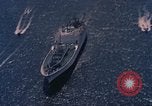
The NS Savannah is welcomed at the ports of various cities in the U.S.
The Nuclear Ship( NS ) Savannah is welcomed at ports of various cities in the United States. The NS Savannah underway at sea. She receives a welcome. Citizens standing in a harbor to welcome the Savannah. People aboard the ship in the foreground. A woman watches through binoculars. The United States Atomic Energy Commissioner Robert E. Wilson speaks. Flags of the United States in the background. U.S. Secretary of Commerce Luther Hartwell Hodges speaks. Other officials seated in chairs listen. A car is lowered on to a deck aboard the Savannah. The ship underway at sea. She makes her first trip through the Panama Canal. On this trip she carries very special passengers. The passengers watch out from the ship. She heads towards the Pacific Ocean. The port of Seattle. Large sign for "Port of Seattle" is seen behind a large old ferry ship. View of the Space needle and harbor in background. The Savannah arrives at the port of Seattle. Citizens of Seattle welcome the Savannah and a banner reads "Welcome Savannah to Seattle Worlds Fair." The captain of the ship draws routes on a map.
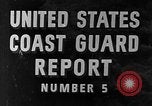
USS Wakefield is painted, cleaned, mail is loaded aboard it and troops embark upon it before it leaves a port of the U.S (WW2)
A U.S. Coast Guard report shows the 'story of a transport' depicting activities of Coast Guard troops and officers aboard USS Wakefield in the United States during World War II. Ships at a sea near port of the United States. Truck, supplies, aircraft and other equipment are lowered on to a ship by a crane. A sign board outside the office of a captain reads "US Coast Guard, Captain of Port". The captain and another officer work on a map at a table in his office. USS Wakefield anchored at the port. The U.S. flag on the ship. The ship is painted and cleaned. Bags of mail are loaded aboard the ship. Army officers in an office discuss at a table. Troops carrying luggage board the ship for transport to the war front. The ship is unanchored. It departs from New York harbor. Shadow of an airship on water. The ship underway at sea. A CG ( Coast Guard ) officer looks through binoculars. A crewman turns a wheel. Coast Guard troops and officers work in the ship's engine room and radio room.

President Johnson delivers a speech and people express grief after the assassination of Martin Luther King Jr. in the U.S.
From production "April Aftermath", showing mourning and grief throughout the United States after the assassination of Martin Luther King, Jr. on April 4, 1968. The flag of the United States is lowered at half mast. People watch on television President Johnson's speech about the assassination of Martin Luther King Jr. (leader in the American Civil Rights Movement). Families are seen at home gathered around the television to watch the speech. Views of several families of husband and wife and children gathered in their living rooms viewing television sets to watch the address. Most are white families. One family is an African American family watching television. President Lyndon B. Johnson delivers a speech. The Seal of the President of the United States on a dais. President Johnson declares April 7 as a national day of mourning for the civil rights leader. Mourning ceremonies are conducted in all churches and pilgrims of the United States. Television broadcast the faces of leaders and the news about the assassination and people expressing grief. A large crowd of civilians gather at a condolence meet. People in a line enter a building to express their grief. They come outside the building. A large crowd of civilians gather and attend the condolence ceremony. They express grief.

Proposal of construction of the dam gets Congressional approval to regulate and control the Colorado river, in U.S.
A film 'The Story of Hoover Dam' shows how proposal of the dam is passed in the United States. A sign reads 'A Modern Civil Engineering Wonder of The United States'. Aerial view of the Hoover Dam. Automobile traffic across the top of the dam. Architecture of the dam. People enter onto dam to see reclamation project and listen to the story of Hoover Dam. View of Black Canyon. Animated map of geographical climate of the Colorado River. Views of mountains and flooded water. Dried crops and bare trees due to raging waters of the river. A wind mill seen. Proposal of construction of Hoover Dam comes in the House of Representatives of U.S. Capitol for Congressional approval to regulate and control the Colorado River, in 1928. View of President Calvin Coolidge addressing Congress in the U.S. Capitol in 1928. President Herbert Hoover in his office in the White House in 1930, signs the bill of appropriation for construction of the dam.
CRITICALPAST.COM: About Us | Contact Us | FAQs - How to Order | License Agreement | My Account | My Lightboxes | Shopping Cart | Advanced Search | Featured Collections | Website Terms & Conditions | Privacy Policy ©2026 CriticalPast LLC.
License Agreement |
Terms & Conditions |
Privacy Policy
©2026 CriticalPast LLC.