


 Francais
 Deutsch
 Italiano

Refine Your Search
United States 1982 stock footage and images
- Showing 1453 to 1458 of 34981 results more
 Hide
Color Sound
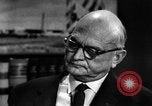
Lieutenant General Ira Eaker talks about the Casablanca Conference during an interview in the United States.
An interview of United States Air Force Lieutenant General Ira Eaker conducted by Dr. Maurer in the United States. General Eaker talks about his experiences in the Air Force. He talks about the Casablanca Conference. He says that U.S. Army General Henry Arnold told them about the President's decision to discontinue the bombardment at daytime and join the British bombers in the night bombing. He told General Arnold that it was not possible as they were not ready for the night bombing, nor their crews were trained for night bombing. He advised to continue the daylight bombing. He presented a number of reasons for the same. They were then allowed to continue with the daylight bombing.
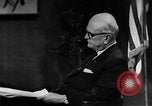
Lieutenant General Ira Eaker talks about his transfer to the Mediterranean Command during an interview in the United States.
An interview of United States Air Force Lieutenant General Ira Eaker conducted by Dr. Maurer in the United States. General Eaker talks about his transfer to the Mediterranean Command. He says that when he was ordered to the Mediterranean, United States Army Air Force General Carl Andrew Spaatz also came up from North Africa. He was named the Commander-in-Chief of the Mediterranean Allied Air Forces. That was a remarkable opportunity and experience for him. He got an opportunity to get acquainted with a new area, commanders of other nations and to work in cooperation with them.
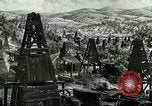
African American soldiers serving in wars, especially World War I; Memorials to African American United States soldiers.
A film on contributions of African American soldiers in various wars, but mostly focusing on World War I era. African American workers at an oil field with oil derricks talk to each other. Depiction of African Americans serving in the Spanish-American War and advancing towards a battlefield. African American man speaks about his experience of the war. Scenes of excavation and construction of the Panama Canal. Huge earth moving equipment at work and a man triggers an explosive detonation during the dig. A U.S. Navy ship underway in the newly completed Panama Canal. World War I scene of a U.S. Army unit including African American soldiers marching through a town in France, in formation, with a military band leading the march. African American soldiers of the 813th Pioneer Regiment near Marseilles France work to build a railroad. Also scenes with soldiers from the 332nd Labor Battalion, and the 808th Pioneer Regiment clearing an area near Verdun. African American soldiers of the 8th Illinois infantry (later the 370th infantry) running with the rifles as they mobilize for battle in France. African American soldiers of 371st Regiment and 372nd regiment crossing battlefield during World War I. Members of the 369th regiment in battle. Railroad guns and heavy artillery firing during World War I. American soldiers leaping from a trench and running across no mans land during battle. African American soldiers of the 369th infantry ("Harlem Hellfighters") receiving awards, medals, and citations at an awards ceremony in France during World War 1. Henry Johnson and other African Americna soldiers marching in New York City victory parade soon after the armistice ending World War I. Graves of soldiers at Arlington Cemetery as seen from a moving vehicle. Images of grave markers for several African American soldiers and officers. Two African American soldiers approaching the All Wars Memorial to Colored Soldiers and Sailors, in Philadelphia, Pennsylvania. Close-up view of the memorial and plaque on the memorial. Several other memorials in the U.S. showing African American soldiers. View of a facsimile of the 371st Infantry Regiment, 93rd Division (colored) memorial in France, near the towns of Ardeuil and Séchault. Dramatized depiction of the memorial being destroyed by the invading German Army on June 15, 1941. African American preacher speaks in a church.

An officer briefs trainees at Motor torpedo boat squadron training center in the United States in World War II.
A U.S. Navy training film titled 'The PT's' about the role and importance of patrol boats during a war ( World War 2). A sign reads 'Motor torpedo boat squadron training center' in the United States. Trainees in a class room as U.S. Navy Lieutenant Commander John D. Bulkeley briefs them about the role of torpedo motor boats. The trainees listen to him carefully and take down notes. Patrol boats underway at sea. A gunner aboard a boat as an explosion occurs at sea.
A PBM Mariner aircraft in flight and different parts that make up its design are pointed out in the United States.
A U.S. Navy training film about the role and importance of U.S. Navy PBM Mariner aircraft during World War II. A PBM Mariner takes off from the surface of a sea in the United States. The aircraft in flight. The design of a PBM Mariner III like the wings, tail and rudders forming a triangle being pointed out on a picture. The aircraft in flight. A side view of the Mariner shows the wings piled up on the top. The rudders being pointed out. The PBM Mariner in flight and different parts of the aircraft like the wings, rudders, engines and floats being pointed out.

General Dwight Eisenhower urges for the purchase of war bonds in United States.
The United States General Dwight Eisenhower gives a message in United States during World War II. He sits on a chair. Several documents and articles lay in front of him on the table. The British and United States flags in background. He urges for the purchase of war bonds.
CRITICALPAST.COM: About Us | Contact Us | FAQs - How to Order | License Agreement | My Account | My Lightboxes | Shopping Cart | Advanced Search | Featured Collections | Website Terms & Conditions | Privacy Policy ©2026 CriticalPast LLC.
License Agreement |
Terms & Conditions |
Privacy Policy
©2026 CriticalPast LLC.