


 Francais
 Deutsch
 Italiano

Refine Your Search
United States 1982 stock footage and images
- Showing 1483 to 1488 of 34981 results more
 Hide
Color Sound
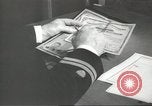
A Coast Guard officer checks identity papers and men being paid in United States.
The U.S. Coast Guard serves the U.S. Merchant Marine in the United States during World War II. A Coast Guard officer checks identity papers. A sign: 'this side to pay off'. The paymaster's table. Merchant marine personnel being paid.
A farmer talks about inability to produce enough foods to feed soldiers and populace without rationing in the United States.
Rationing during World War 2 in the United States. A dramatization: A farmer works at a machine. The farmer gets up and climbs up a hilly terrain. He looks down. He gets into a horse cart. He plows a field. He works in the field. He drives a tractor. He bends his head on the steering wheel as he gets tired. Production of grains, vegetables and fruits. The farmer talks about the inability of U.S. farms to produce enough food to feed soldiers, Navy seamen, Allies and U.S. population without rationing. A ration book for equal share in food. Close up view of hands of person on ration book, showing cover with title 'War Ration Book Two" and views of pages of ration stamps.

An insurance agent highlights the benefits of Veterans Administration's insurance policy in United States.
United States Veterans Administration's role for the war veterans of World War II. An enactment: A World War 2 veteran talks to a man at desk. An insurance agent named Joe speaks about the insurance provided by Veterans Administration. A graph depicts the business that Veterans Administration has surpassed the business of all the insurance companies put together in last five years. He lights a cigarette and then explains the reason for low insurance premium rates available especially to veterans. Piles of insurance mail received at the United States Veterans Administration. Postal letters and mail being sorted out. A map of United States shows the number of civilian deaths and accidents during World War II years. A man at desk as he reviews an insurance coverage document.
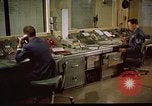
Air Force personnel receive and decode messages; sound an alert; deploy bomber aircraft during drill in the United States.
Nuclear weapon safety strategies employed by the United States Air Force during the Cold War. Shows aircraft alert training drills related to launch of nuclear weapons. U.S. Air Force personnel work on the controls in a control room of an air base. Men answer phone calls. An alert order being received in a coded language. An alarm being sounded and airmen scramble and run from their rooms and billiards table to the aircraft at the base. Crew members enter waiting bomber aircraft and put on their flight gear and breathing apparatus. Controllers decode the message separately and then compare it. Aircraft commanders being instructed. A cocoa alert being sounded and aircraft taxi along a runway. Scene shifts to aerial view of a U.S. Air Force B-52 bomber aircraft in flight, which narrator indicates is among aircraft that are airborne at all times and prepared to proceed to a target. View of pilot and copilot in the cockpit of the B-52 bomber aircraft. Aerial view of B-52 aircraft banking to right side. View of different crew members such as bombardier and navigator in B-52 aircraft as they separately confirm interpretation of an incoming message. View of Republic F-105 Thunderchief aircraft parked readying for takeoff on runway. Another fighter aircraft preparing for takeoff (F-11 ?). A surface missile being readied for launch. A missile being launched from an underground missile silo, taking off and emitting a fiery flare.
A demonstration about creating a gap in a 30 degree sloping wall with the help of bar charges in the United States.
A demonstration shows bar charges being placed and exploded against a wall in the United States. The face of a 30 degree sloping masonry wall. 24 packs of bar charges are placed on the face of the wall. An explosion occurs and smoke rises. The explosion results in an 18 feet wide gap. A U.S. Army tank passes through the gap. 24 packs of bar charges are placed at the center of the masonry wall. An explosion occurs and billows of smoke rise. A 16 feet wide gap is created and a U.S. Army tank passes through the gap.
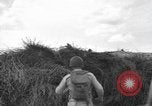
A demonstration about creating gaps in various walls and obstacles with the help of bar charges in the United States.
A demonstration shows bar charges being placed and exploded against a wall in the United States. Soldiers place bar charges on a Japanese stump wall. 24 packs of bar charges are placed on the wall for detonation. An explosion takes place and smoke rises. The explosion results in a 12 feet wide gap in the wall and tanks pass through the gap. The bar charges are placed on a five feet high Japanese log wall. An explosion occurs and a 15 feet and 3 inches wide gap is created. A U.S. Army tank passes through the gap. 24 packs of bar charges are placed on a Japanese wall and an explosion occurs. Smoke rises due to the explosion. A U.S. Army tank passes through the 16 feet wide gap created in the wall. The soldiers near the bar charges. They place the charges under water for a detonation. A steel obstacle. The bar charges are placed at the joint of a member of a steel fence for a detonation. (World War II period).
CRITICALPAST.COM: About Us | Contact Us | FAQs - How to Order | License Agreement | My Account | My Lightboxes | Shopping Cart | Advanced Search | Featured Collections | Website Terms & Conditions | Privacy Policy ©2026 CriticalPast LLC.
License Agreement |
Terms & Conditions |
Privacy Policy
©2026 CriticalPast LLC.