


 Francais
 Deutsch
 Italiano

Refine Your Search
United States 1982 stock footage and images
- Showing 1699 to 1704 of 34981 results more
 Hide
Color Sound

USAAS Douglas World Cruiser fly over a mountain range and heavy smoke rising from a forest fire in the United States.
United States Army Air Service (USAAS) Douglas World Cruiser (DWC) fly over a mountainous region in the United States. Three DWCs take off. A small crowd in the foreground. Six DWCs in flight. American flag flies from a flagpole. A DWC flies over hangars and lands in an open field. Two DWCs fly above scattered clouds. A cloud layer between mountain oaks. The wing of a Airco DH-4M airplane is visible. A DWC flying over a mountain range. Two DWCs fly over a mountain range. Three DWCs in flight over Seattle, Washington. Views of the Columbia River. USAAS Airco DH-4M in flight over Seattle River. A DWC in flight. Mt. Shasta in the background. Views of Seattle as an airplane ( Airco DH-4) performs barrel rolls over the city. Aerial views of heavy smoke rising from a forest fire in a mountainous region.

CAS-2A aerial camera and its functions with other units and assembly and camera loading are demonstrated in the U.S.
Functions of an aerial camera and its units are demonstrated in the United States. CAS-2A aerial camera for trick photography. A reel from which two images can be taken is unrolled. A reel which is used for obtaining 3D images by a stereo viewer is unrolled. A U.S. Navy demonstrator opens the slit of the camera and adjusts light intensity and film speed. He shows two lenses. Lenses can be rotated to several degrees. Manual settings are done prior to photography. Other units of installation include: power unit, scanner, scanner converter and control system of camera. Control panel: the power switch is turned on. Green light on special panel indicates that camera is operated correctly. Various buttons of panel including film failure, inadequate light intensity and exposure remaining. The scanner and computer dial of the control panel is adjusted. Dials for ground speed and altitude of flight are adjusted. Focal length and depression angle are adjusted on the power unit. Photo recorder unit incorporates a motion picture camera. Photo recorder panel is shown. Assembly and loading of the camera: Slit assembly is installed in the camera. 3 slit assembly include left oblique photography, right oblique photography and slit assembly for vertical photography. Electric connections are made. Assembly pushed in to the camera. Lens unit is mounted on the camera. One assembly is cleaned. Two cassettes are take up and supply cassettes. Loading of the supply cassette: A cover is removed, light lock is opened and a pivot is withdrawn. The film is pushed through the light lock. The cover is replaced and a latch is locked. The supply cassette is mounted on the camera. Take up cassette is mounted on the camera. Both cassettes are locked. Camera loading is complete.

Types of mines used by a Minesweeping Boat underway off the shore of the United States is demonstrated by animation.
Demonstration of areas mined, characteristics of mines and types of mines used by a Minesweeping Boat (MSB) underway off the shore of the United States. A mine sweeping boat underway in an ocean. Animation depicts: the areas which are mined including rivers, harbors, channels, coastal waters and ocean areas. Moored mines and bottom mines are used. Moored mines are held at predetermined depth and bottom mines rest on the sea floor. Mine characteristics include contact and influence mines. Moored mines are of either type. All bottom mines are influence types which includes magnetic, acoustic, pressure or combination of these. Demonstration of damage range is shown. The United States flag flutters in wind from the mast of a ship. Modern types of minesweeper includes Ocean Minesweeper (MSO), Coastal Minesweeper (MSC), Harbor Minesweeper (MSB) and craft type used for shallow minesweeping.
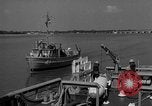
Crewmen operate mine sweeping equipment and hand tools aboard a Minesweeping Boat underway off the shore of the U.S.
Characteristics of a Minesweeping Boat (MSB) underway off the shore of the United States. MSB characteristics include: operates on a daily basis, 57 feet long, beam of 15 feet, draft of 5 feet, effective speed, can be lifted by larger ship, crew consists of 7 men and a chief officer, armaments consists of small arms, constructed from wood and non magnetic material, non magnetic engine and gear. A crewman operates mine sweeping equipment and hand tools. Other man at the control device. The United States flag flutters in wind from the mast of the ship.
An electrical specialist checks wires,harness connections,battery during the inspection of B-24 aircraft in the United States.
The 50-hours inspection of the ignition and electrical system of USAAF B-24 Liberator heavy bomber aircraft at an airfield in the United States. Men exercise on the field. An animated diagram of human skeleton and United States Army Air Forces B-24 Liberator heavy bomber aircraft. The B-24 heavy bomber aircraft takes off. The aircraft in flight over grasslands. The B-24 parked at the airfield. The crew members start the 50-hours inspection of ignition and electrical system of the aircraft. An electrical specialist tightens the elbow terminals and nuts of the hammering engines. The specialist checks the chamber and slides wires and makes sure they are not worn. He checks the cable for security of mounting. After inspecting all the wires and harness, the specialist checks other attachments. He examines the switch lead and removes cover from booster coil. The signals for operation test on cover plate switch board flow smoothly, so the specialist gives an 'OK' signal. During the electrical inspection: the specialist notes the operation of the battery disconnect relay. A man in the cockpit operates the battery switches. The specialist signals in the cockpit and replaces canvas covering. He checks battery insulation for proper security of connections. The specialist makes the hydrometer test with electrolytes and removes the sump and cleans it with soda water bath and neutralize acids. He checks the proper connection of accessible electrical leads and also checks the landing lights and examines the inter cooler shutters in the cockpit. The specilaist checks the generator for security of mounting and makes sure that the brushes are in good condition. He tests the oiling and cooling blast connection.

Officers learn firing and paratrooper techniques at Fort Benning Infantry and Airborne School in Georgia,United States.
Officers training at Fort Benning Infantry and Airborne School in Georgia,United States. View of the Fort Benning Infantry School. U.S. Army Infantry School insignia. Officers stand on the steps of infantry school. Firing ranges named in honor of officers. Officers study staff work and learn to fire weapons in the basic class. They learn to fire tanks. Experienced officers attend advanced class. They learn about combat conditions. Instruction is based on explanation, demonstration,application and examination. Officers learn about handling of weapons. They undergo physical fitness training. They climb cargo net and wall. Paratroopers train at the Fort Benning Airborne School. The paratroopers descend on ground.
CRITICALPAST.COM: About Us | Contact Us | FAQs - How to Order | License Agreement | My Account | My Lightboxes | Shopping Cart | Advanced Search | Featured Collections | Website Terms & Conditions | Privacy Policy ©2026 CriticalPast LLC.
License Agreement |
Terms & Conditions |
Privacy Policy
©2026 CriticalPast LLC.