


 Francais
 Deutsch
 Italiano

Refine Your Search
United States 1982 stock footage and images
- Showing 1771 to 1776 of 34981 results more
 Hide
Color Sound

A dramatization depicts Lucky Burns and Dick Kincaid talking about joining safety classes in the United States.
A film dramatizes the use of safety instruction in coal mines in the United States. The Tippleville coal mine. Men coming out of the mine after a day's work. Men walk past a board which reads: 'Safety Bulletins'. They look at the board. The notice is about instructions which are to be given next Monday about first aid and mine rescue work by the U.S. Bureau of Mines rescue car. Two men, Lucky Burns and Dick Kincaid, talk about the notice. Dick asks Lucky to sign up for the thing. Lucky denies. Dick joins the class. Exterior of the mine. Men walking nearby.

A dramatization depicts Lucky Burns getting injured while working in a mine and then learning safety precautions in the U.S.
A film dramatizes the use of safety instruction in coal mines in the United States. The Tippleville coal mine. Lucky Burns and Dick Kincaid working in the mine. They talk about the work. Dick asks Burns whether he wants or not to drill a 'snubber' there. He refuses and says that they will give more powder to the top shots. They enter the mine the next day to start the work with their tools and equipment. They look at the area they were working on. Their shots were standing up. Dick says that they will have to work and dig the shots down. They load loose coal in cars. Burns suddenly falls and gets hurt by a mass of coal. A miner tries to help him and get him out of the coal pile. He applies a tourniquet to stop bleeding. Exterior of a house. Injured Burns seated outside the house. He reads a booklet about first aid. Dick standing nearby. He tells more about the instructions given to them during a safety course. Dick says that he can get copies of any of the booklets from the U.S. Bureau of Mines. They talk about a topic in the booklet that shows how barricades saved lives during mine disasters. Burns realizes that he was wrong in not attending the safety course. Mary Kincaid arrives and talks to Burns. He talks about information given in the booklet. The information is given about the fact that half of deaths in mines are caused by falling of roofs and coal over workers. Exterior of a house. A woman comes out of the house and meets a man.

Testing of dynamite in a laboratory in the United States.
A film on manufacture of dynamite in the United States. Laboratories for testing and research of dynamite. A chemist working in a laboratory. He tests every ingredient and every finished lot of material. Tests for sensitiveness and velocity are conducted. For conducting a test, gaseous and dusty conditions similar to those found in some coal mines are created. Explosives are fired in it to make sure that they will not ignite gas or dust before they are sent to the U.S. Bureau of Mines for approval as permissible explosives.
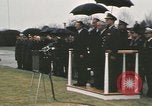
Secretary Nitze makes a speech and presents a citation to Secretary McNamara in the United States.
U.S. Secretary of Defense Robert Strange McNamara leaves the office in the United States. President Lyndon Baines Johnson with other officials at a review stand. Honor guards stand holding flags. Deputy Secretary of Defense Paul Henry Nitze makes a speech. Secretary McNamara stands in front of the reviewing stand. Secretary Nitze presents a citation to McNamara.
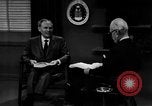
USAF Lieutenant General Ira Eaker talks about his education and military career in the United States.
An interview with United States Air Force Lieutenant General Ira Eaker conducted by Dr. Maurer in the United States. General Eaker talks about his education. He talks about his school and college education. He was not having any military education. He also speaks about his military career and the people who helped him during his career.
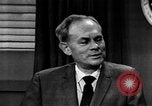
Lieutenant General Ira Eaker talks about his contributions and experiences in the USAF during an interview in the U.S.
An interview of United States Air Force Lieutenant General Ira Eaker conducted by Dr. Maurer in the United States. General Eaker is asked about his contribution to the Air Force. He speaks about the earlier period of World War I when he was a pilot. He speaks about his working as the Commander of the 20th Pursuit Group. He also talks about the working and the activities of the Air Force units during World War II.
CRITICALPAST.COM: About Us | Contact Us | FAQs - How to Order | License Agreement | My Account | My Lightboxes | Shopping Cart | Advanced Search | Featured Collections | Website Terms & Conditions | Privacy Policy ©2026 CriticalPast LLC.
License Agreement |
Terms & Conditions |
Privacy Policy
©2026 CriticalPast LLC.