


 Francais
 Deutsch
 Italiano
Refine Your Search
United States 1982 stock footage and images
- Showing 19087 to 19092 of 26492 results more
more Hide
Hide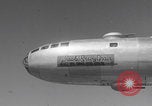
Boeing B-29 Superfortress bomber in flight (WW2)
Side view of United States Army Air Force Boeing B-29 Superfortress bomber (“Rawls’ Gravy Train”, Tail Number: 47-0040) in flight during World War II. Close view of the nose with nose art. Nose art shows a cartoon train and words that read “Rawls’ Gravy Train”. Camera moves away from the nose to show aircraft in flight. The Boeing B-29 Superfortress bomber flies over snow-capped mountains. The camera moves back to show engines and nose of the B-29 bomber. Side view of a Boeing B-29 Superfortress bomber in flight.
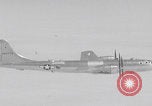
Boeing B-29 Superfortress bomber in flight with focus on modification (WW2)
United States Army Air Force Boeing B-29 Superfortress bomber (Tail Number: 46-9770) flying during World War II. Side view of the Boeing B-29 Superfortress bomber. The camera moves for a closer view of the middle portion of the aircraft. Closer view of the plane belly showing the bomb bays. The camera focuses on B-29 bomber modification showing large rounded area in middle of plane.

Wilhelm Keitel swears under oath during the Nuremberg trials (WW2)
Indictment of German field marshal and war criminal Wilhelm Keitel during the Nuremberg trials after World War II. A pair of Military Policemen escort Keitel to his seat. A man adjusts the microphone and places a glass of water on Keitel’s podium. Keitel puts on his headphones. Keitel swears under oath in before he sits down. Keitel answers the jury in German. Visitors sitting in the gallery of the Nuremberg Palace of Justice (Fürther Str. 110, 90429 Nürnberg, Germany). General Geoffrey Keyes (Former Commanding General, Seventh United States Army), Commanding General LeRoy Watson, and several Russian military officials watch the tribunal from the gallery. Dr. Otto Nelte, Counsel for Defendant Wilhelm Keitel, interrogates Keitel in German. Keitel provides the court with information about his family background. Court stenographers taking down notes. Nuremberg Trial judges listen to the testimony from Wilhelm Keitel.
German defendants in the prisoner’s dock during the Nuremberg Trials (WW2)
People attend the Nuremberg trials at the Nuremberg Palace of Justice (Fürther Str. 110, 90429 Nürnberg, Germany) after World War II. Spectators, justices, and other staff stand up from their seats and began to leave the courtroom after the session. Some court stenographers stay in their seats and chat among themselves. Military Police personnel group around defendants such as Wilhelm Keitel just prior to the end of the session. Spectators such as United States Secretary of War Kenneth Claiborne Royall watch the tribunal from the gallery. German defense attorneys speak inside the courtroom. Nuremberg trials justices Francis Biddle, John J. Parker, Henri Donnedieu de Vabre, and Robert Falco sit on bench during the proceedings. Camera moves to Nazi defendants Hermann Göring, Rudolf Hess, Joachim von Ribbentrop, Wilhelm Keitel, Karl Dönitz, Erich Raeder, Baldur von Schirach, and Fritz Sauckel are sitting in the prisoner’s dock. The testimony of Joachim von Ribbentrop is heard off-screen.
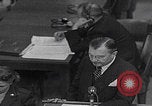
Chief Prosecutor Robert H. Jackson speaks about charging Nazi leaders during Nuremberg trials
United States Chief Prosecutor Robert H. Jackson continues his speech on the Criminality of Organizations during Day 70 of the Nuremberg Trials. Robert H. Jackson speaks to the tribunal at the Nuremberg Palace of Justice (Fürther Str. 110, 90429 Nürnberg, Germany). Female personnel take down notes beside him. A man with headphones reads documents or listens to Jackson’s speech. Camera pans to the two justices, Francis Biddle and John J. Parker, listening to Jackson. French justice Henri Donnedieu de Vabres is briefly seen beside Parker. Camera moves to Nazi defendants such as Hermann Göring are sitting in the prisoner’s dock. Jackson unfolds a sheet of paper while speaking to the tribunal. Jackson highlights the voluntary nature of Nazi membership, criminal accountability rests on the Nazi Party leaders, not from members. “We make no charge of those who supported the Nazi party, although some aspects of the denazification program the supporters are included” he said.
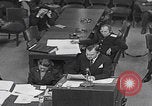
Chief Prosecutor Robert H. Jackson speaks about Nazi organizations during Nuremberg trials
United States Chief Prosecutor Robert H. Jackson continues his speech on the Criminality of Organizations during Day 70 of the Nuremberg Trials. Robert H. Jackson speaks to the tribunal at the Nuremberg Palace of Justice (Fürther Str. 110, 90429 Nürnberg, Germany). Female personnel take down notes beside him. A few guests seated near Jackson listens to his speech. Camera moves to Nazi defendants Hermann Göring, Rudolf Hess, Joachim von Ribbentrop, Wilhelm Keitel, Karl Dönitz, Erich Raeder, Baldur von Schirach, and Fritz Sauckel are sitting in the prisoner’s dock. Military Police personnel surround the defendants. Camera moves back to Jackson speaking to the tribunal. Jackson gives his documents to the secretary beside him before leaving the podium. Jackson speaks about certain Nazi organizations- the paramilitaries SA (Sturmabteilung) and the SS (Schutzstaffel)- were not selected without considerable study by the prosecution and that they were the most vicious in Germany.
CRITICALPAST.COM: About Us | Contact Us | FAQs - How to Order | License Agreement | My Account | My Lightboxes | Shopping Cart | Advanced Search | Featured Collections | Website Terms & Conditions | Privacy Policy ©2026 CriticalPast LLC.
License Agreement |
Terms & Conditions |
Privacy Policy
©2026 CriticalPast LLC.