


 Francais
 Deutsch
 Italiano
Refine Your Search
United States 1982 stock footage and images
- Showing 20665 to 20670 of 26493 results more
more Hide
Hide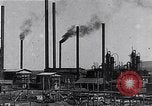
Soviet people endure during invasion by Germany during Operation Barbarossa in World War II
Film begins showing Soviet industrial complex with many smoke stacks emitting dark fumes. A banner is raised in front of a statue of Joseph Stalin. Soviet workers turn wheel and use wrench to install a large shaft into a machine in a factory. A large number of Soviet people descend stairs from an electric distribution network at a hydroelectric dam. Soviet head of state Mikhail Kalinin is among the persons seen in the group. Spectators stand on a platform above the dam where a large sign is displayed. View of the dam with gates open and water pouring through to the lower level of the river. Scene shifts to military parade on Red Square in Moscow. during World War 2. A formation of trucks carrying anti-aircraft guns drive along the street. Soviet T-34 tanks are also in the parade. Joseph Stalin waves from a balcony on the Kremlin as the parade passes. Soviet workers also join the parade, carrying banners and marching in a dozen parallel columns along Red Square. They exit in columns around both sides of Saint Basil's Cathedral. Soviet heavy artillery batteries fire at night creating great flashes of light. A shell strike destroys a building. Soviet troops fighting in close quarters among debris in a Russian city. Dead German soldiers lying in debris on a city street. Some are surrounded by weapons and belts of ammunition. A Soviet soldier removes a swastika from the top of a steel bridge. Soviet citizens walk about the ruins of a city during a lull in combat. A child emerges from an underground bunker. Russian sailors walk together along a street. Soviet people gather at an outdoor market, where they purchase foods.
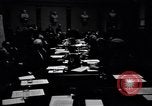
Meeting of Senate Appropriations Committee on Mutual Security appropriations. Margaret Chase Smith. John Foster Dulles.
The U.S. Senate Committee on Appropriations at work on Mutual Security appropriations. Members seen include Senators Margaret Chase Smith,John L. McClellan and Mike Mansfield..The Committee welcomes Secretary of State John Foster Dulles to answer Committee questions.
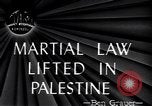
Lifting of Martial law in Tel Aviv
A newsreel titled 'Martial law lifted in Palestine' shows, armed crewmen inspect a wrecked train after a bomb blast and guards patrol the area in Jerusalem, Palestine. Jewish agency executives including American representatives gather at a hospital to meet with President David Ben-Gurion and discuss the creation of a Jewish state. American representatives include Ms. Rose Halprin and Dr. Abba Silver. Martial law being lifted as people move out on streets and British soldiers remove barbed wire that had been dividing Jerusalem. Crowd of men, women, and children greet and mingle after the wire is removed.
Allied troops fighting toward and entering Rome, Italy during World War 2
British and troop patrols converge on the road to Rome, in the beginning of this film. Soldiers of the 1st Canadian Infantry Division and 5th Canadian Armored Division are seen next, mopping up after breaching the Hitler Line, on 24 May 1944. They are seen leaving the area to advance further. Brief view of soldiers tending to a tank and marching past an abandoned anti-aircraft gun. Captured German prisoners march rearward along a road as a camouflaged (with foliage) Canadian M4 Sherman tank advances along a road. It carries many infantrymen riding along atop it. (Narrator states they are en route to Pontecarvo.) Allied artillery pounds the ruined streets of the city. Canadian troops are seen next,entering the destroyed town of Aquino. British Hawker fighter planes flying over water in trail formation, behind the camera plane. Allied patrol from the Anzio front engages a German strong point, using bazookas and small arms. Glimpse of burning German armored vehicle. Polish troops are seen entering the village of Piedimonte. They pull a German from his hideout in a trench. German prisoners marching under guard. Stretcher bearers carry wounded to an open field where they are being tended. Polish forces hold a ceremonial parade where British General Sir Harold Alexander decorates a Polish soldier. Brief closeup of General Alexander. June 4, 1944, American troops enter Rome. German Sturmpanzer (panzer) IV "Grizzly Bear" tank abandoned on the street. U.S. troops walking about in the city and in area of Piazza Venezia. Altar of the Fatherland in background. Local inhabitants cheering the Americans. Italians mob the local fascist controlled radio studio and force occupants to leave the building, abusing some as they depart. Views of happy crowds. Some showing newspapers announcing the arrival of the Allies.
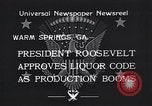
President Roosevelt approves liquor code (leading up to ratification of 21st amendment) and liquor production booms
Newsreel titled 'President Roosevelt approves liquor code as production booms' shows President Franklin D. Roosevelt conferring with Secretary of State Henry A. Wallace before approving liquor code in Warm Springs,Georgia near end of Prohibition. This occurred in advance of the formal ratification of the 21st amendment on December 5, 1933, repealing the 18th Amendment (Prohibition). Approval leads to a boom in the production of liquor. Scenes in a distillery and assembly line operation for Old Colony Dry Gin. Machines filling bottles with liquor. Women on assembly line packaging gin bottles. Lab technician beside laboratory instruments in distillery examines and tastes liquor and smiles. Large wooden barrels or casks being filled with beer or liquor, and then barrels rolled by men at production plant toward shipping areas.
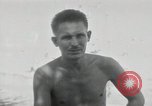
An American soldier recounts his experience as a prisoner of war in Manila, Philippines (WW2)
An American soldier named Gene Kneebone from Grass Valley City, California being interviewed in Manila, Philippines. Kneebone recounts his experience as prisoner by Japanese forces in World War II during the interview. He states how he was beaten up at military police headquarters after two of his friends escaped from the Japanese prison camp.
CRITICALPAST.COM: About Us | Contact Us | FAQs - How to Order | License Agreement | My Account | My Lightboxes | Shopping Cart | Advanced Search | Featured Collections | Website Terms & Conditions | Privacy Policy ©2026 CriticalPast LLC.
License Agreement |
Terms & Conditions |
Privacy Policy
©2026 CriticalPast LLC.