


 Francais
 Deutsch
 Italiano

Refine Your Search
United States 1982 stock footage and images
- Showing 2089 to 2094 of 34981 results more
 Hide
Color Sound
A woman goes for cancer diagnosis to a clinic and then gets back home in the United States.
An awareness film about cancer by U.S. Public Health Service, United States. Dramatization shows a woman's experience with cancer. A woman named Mrs. Brown sits at the clinic of her family doctor and asks him if she is suffering from cancer? And says that she is now ready for examination after attending the talk in the club. The doctor says that it can be confirmed only after diagnosis. Mrs. Brown lying in an operation theater. Nurse wears her cap. Surgeon gets ready for surgery. Technician in laboratory looks through a microscope. Technician work on frozen tissues, he stains, washes and mounts it on slide. Surgeons work in an operation room. Mrs Brown and her husband climb down the stairs, she hugs her kids. They all come home. Mrs Brown enlist herself to Women's Field Army. Director of American Society for the Control of Cancer Clarence C. Little talks about resolution against cancer.
German Zeppelin Hindenburg (LZ-129) parked in hangar as people look at it. Lakehurst, New Jersey, United States.
German commercial rigid airship, Zeppelin Hindenburg (LZ-129) parked in a hangar at the U.S. Naval Air Station, Lakehurst, New Jersey, United States.. 'Hindenburg' written on side. Swastika on tail. People in hangar walk around it. People look t its various parts.
Crew of U.S. Air Force KC-135 aerial refueling tanker aircraft are awarded medals by General Joseph J. Nazzaro.
Crew of a U.S. Air Force Strategic Air Command (SAC) aerial refueling KC-135 tanker aircraft stand on a stage. They stand at attention as a Lieutenant Colonel at a podium reads the citation accompanying their award , in recognition of a unique refueling mission they performed during the Vietnam War. The crew members are Major John H. Casteel, Aircraft Commander; Captain Richard L. Trail, Pilot; Captain Dean L. Hoar, Navigator; and Master Sergeant Nathan C. Campbell, Boom Operator. During Operation "Daisy Chain," they performed the first ever three-level aerial refueling operation that saved six carrier-based U.S. Navy aircraft critically low on fuel, over the Gulf of Tonkin. Each crew member is awarded the Distinguished Flying Cross by SAC Commander in Chief. General Joseph J. Nazzaro. Closeup of the medal on Sergeant Campbell.
Psychedelic drug Lysergic acid diethylamide discovered by Dr. Albert Hofmann is used for mind control in the United states.
Documentary depicts development and administration of LSD (Lysergic acid diethylamide ) by the CIA (Central Intelligence Agency) as a tool for mind control (Project MKUltra). Scenes of swirling colors and lights meant to simulate the experience of someone being under influence of a hallucinogen. Prostitutes and late night city street scenes. A bull in a bull fighting ring that narrator says has electrodes implanted in its head to control it. A man sitting in a chair while under the influence of a drug speaks emotionally and cries. A close up of George White who worked on the CIA program. On September 21, 1977, Stansfield Turner, Director CIA, speaks about Mission Mind Control. Members are seated in a hall. News correspondent Paul Altmeyer stands in front of the Headquarters of OSS (Office of Strategic Services, and precursor to the CIA) in its original World War 2 era location in Washington DC. The first mind control work began from this Headquarters. The members who are the part of this mission are the shapers and molders of the OSS. Still photos of U.S. General, William Joseph Donovan, nicknamed 'Wild Bill', and Boston industrialist Stanley Lovell, who is the Head of OSS Research and Development efforts into mind control. Still images of OSS Captain George H. White, formerly of the Bureau of Narcotics. Correspondent shows and reads from the diary of George White and talks about his training and schooling. J. Michael Burke, President of Madison Square Garden Center is seen walking across the basketball court in the Center. He was a former colleague of Mr. White, and Burke talks about George White and his technical knowledge. Another colleague of White who is a narcotics officer talks about him. A close up of George White. A note written in White's diary. George White worked on a truth drug at St. Elizabeth's Hospital in Washington DC where experiments were conducted. View of exterior of Saint Elizabeth's psychiatric hospital in Washington DC. A 1952 CIA memo says the aim is "controlling an individual to the point where he will do our bidding against his will." Exterior views of the Sandoz Laboratory buildings in Basel, Switzerland where doctor Albert Hofmann believed that they had discovered and found a psychedelic drug and the discovery was LSD. Retired Chief Psychologist for CIA, John Gittinger, talks about the powerful drug and is being interviewed publicly. CIA's interest in LSD was intense but they were worried that the Russians would get hold of it. Commentator notes that mistaken intelligence reported that Sandoz Laboratory was going to put 100 million doses of LSD on the open market. Concerned, the United States was prepared to buy the entire supply. However, through information learned from Freedom of Information Act filings, John Marks, author of The Search for the Manchurian Candidate, tells the interviewer that this was mistaken information caused by a mixup when an American military attache confused milligrams versus kilograms, so there were in fact only 100 doses on the market. Brief footage of CIA chemist, Dr. Sydney Gottlieb.
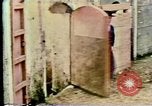
CIA and other U.S. sponsored experiments dealing with control of animals and people using various techniques during the 1960s and 70s.
In 1964, Professor Jose M.R. Delgado, of Yale University's School of Medicine, invented a device he called a stimoceiver. It was a chip that could alter the brain’s electrical impulses via radio signal. In tests sponsored by the U.S. Office of Naval Research, he implanted the device in the brain of a bull. This film opens shows that experiment and its results. A man in Cordova, Spain, opens a bull ring door to allow a fighting bull to enter. It charges a man holding a cape. Another man fires a dart to sedate the bull. Several men plant electrodes for a stimoceiver in the bull's brain. Next, the bull charges a man holding a cape, but pulls up short before hurting him. The bull chases the cape but never attacks the man as the man uses remote control to influence the animal's behavior. The bull charges around in a circle. Scene shifts to Dolley Madison Parkway (Route 123 in Mclean, Virginia, where sign points toward the CIA headquarters at Langley, Virginia. Narrator lists various techniques examined in the 60s and 70s, including brain surgery; psychosurgery; creation of amnesia; parapsychology; and manipulation of genes. Glimpse of some facilities at CIA headquarters. Change of scene to hearing of the Senate Subcommittee on Health and Scientific Research on September 20, 1977. Chaired by Senator Edward M. Kennedy, the Committee sought information about these activities by the CIA. Narrator says witnesses had agreed to limit information they would provide the Subcommittee. Former narcotics officer Charles Siragusa is seen on camera admitting that the man he reported to at the CIA wanted him not to say anything. Former CIA chemist Robert V. Lashbrook is seen testifying that he has no knowledge about the CIA running safe houses. (Narrator states he ran one of them and that a "surprise LSD experiment" was conducted there.) Scene shifts to a California tennis court, where Dr. Sidney Gottlieb is playing doubles tennis, Narrator says he oversaw those activities at the CIA but destroyed all his records when he retired in 1973. View of a letter he wrote at that time, in which he states he and his colleagues had been able to maintain contact with the leading edge of chemical and biological developments in the field of biological and chemical control of human behavior. View of Dr. Gottlieb entering an ante room where he testified before the Senate Subcommittee on Health and Scientific Research without being filmed because of what his lawyer claimed were health and cardiac problems. View of him on the tennis courts as Narrator states he declined ABC News requests for an interview. Change of scene to George White who retired from the CIA and lives in Stinson Beach, California. View of Stinson Beach from high overlooking vantage point. People jogging on the beach. Narrator states that White wrote to Dr. Gottlieb summing up his career saying, "it was fun fun fun, and where else could a red-blooded American boy lie, kill, and cheat, steal, deceive, rape, and pillage, with the sanction and blessing of the All Highest." Narrator strolls on lawn near the U.S. Capitol building and says it appears doubtful that mind control has been achieved. But work, that we don't know very much about, is continuing in this field. He asks how deeply are the Russians and other dictatorships into this. He notes that the CIA is reluctant to give information about it (such as Project MKUltra) and he questions where such a program fits in a democracy. He notes that one person working on these projects told him there are capable, conscientious, and very capable scientists working for our country, and "their work speaks for itself."
U.S. troops show their ingenuity by designing new improvised gadgets (WW2)
A World War II documentary titled ' Yankee Noodle' depicts improvised devices and techniques used by U.S. troops to save time. Aircraft parked in a line at an aircraft industry. A man operates washing machine. Men at work on a granite launcher. A man operates a grappling wire used to trip mine. A man holds a cable binder used to put a line. Men on an elephant and put a wire. A man uses oxygen tank and a copper tube being coiled inside an oil drum for making a still for distill water. The water comes out from the tank and used for the battery. Men put the water in the battery. A U.S. aircraft lands. A man works on a gadget that takes only 20 minutes to change the tire of an aircraft. A tire loaded in a trolley and being pulled by a jeep. Three men load tire. Men hold a winch designed to tighten nuts and bolts. Mobile service and repair unit mounted on a truck. Instrument panel mounted behind the driver seat. Men at work on 110 volt generator. A work light, electric grill. A parachute used as an emergency brake for an airplane.
CRITICALPAST.COM: About Us | Contact Us | FAQs - How to Order | License Agreement | My Account | My Lightboxes | Shopping Cart | Advanced Search | Featured Collections | Website Terms & Conditions | Privacy Policy ©2026 CriticalPast LLC.
License Agreement |
Terms & Conditions |
Privacy Policy
©2026 CriticalPast LLC.