


 Francais
 Deutsch
 Italiano
Refine Your Search
United States 1982 stock footage and images
- Showing 21427 to 21432 of 26493 results more
more Hide
Hide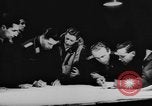
Views of German air and naval nighttime operations in World War II
Nighttime operations in World War 2, by German military air and naval units. German Air Force aviators discuss a mission. German armorers fastening large bombs under fuselage of a German Dornier 17 twin engine bomber, at night. The aircrew boarding the aircraft. Engines running and the bomber taxiing out for takeoff. Scene switches to a German coastal gun firing in the darkness. Next, the wake from a German torpedo boat, is seen at night. Interior of the boat, showing controls. A gun on deck, and face of sailor operating the boat. TWo torpedoes being launched. Explosion and fire from torpedo striking a ship, seen at night. Controls of a ship set to full speed ahead. A torpedo being launched from a surfaced submarine at night. A huge explosion from the torpedo striking a target ship.
British infantry and tanks push German Army back and free civilians from Nazi occupation in Holland, during World War II.
Allied forces free the civilians from Nazi occupation in Holland, during World War II. British infantrymen of the 9th Army and tanks advance in Holland and defeated German forces retreat. British artillery and tanks fire at the Nazis during a battle. Allied soldiers rescue civilians from the rubble of houses destroyed during battle. British tanks and flamethrowers attack German Army units. British Army and tanks advance on rubbled streets of a town in Holland.
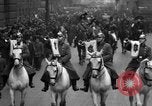
The police force in Berlin parades before the citizens of Berlin
A parade of Policemen on the streets of Berlin. Slate early in clip reads, "Die Polizei - unfer Schutzer und helfer." Policemen on horseback carrying German eagle flag lead the march along with several policemen playing trumpets. The policemen wear a variety of ornate uniforms across varying ranks and functions. Following the leadership, a police band marches carrying a variety of instruments, in turn followed by policemen on foot. Large crowd of civilians gather to witness the march. The citizens are reserved; not boisterous. A policeman on horseback carries a cup close to parade watchers so they can contribute money to the police force. He crosses from one side to the other of the parade route. Police with dogs (K-9 or canine unit) parade on roads. The troops march past the Brandenburg Gate; the Quadriga visible atop. Ambient sound of the parade in the background.
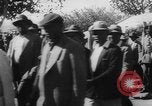
African unrest in 1960: Anti-apartheid demonstrations, assassination attempt on Verwoerd, and riots and arrest of Lumumba in Congo.
Riots and uneasy conditions in South Africa and Congo during the year 1960. South African natives demonstrate against apartheid racial discrimination and passbook requirements. Protestors at Sharpeville shown burning passbooks. Policemen fire at peaceful demonstrators in what became the Sharpeville massacre of May 31, 1960. Next scene shows attempted assassination of Premier Verwoerd by a white farmer. A photographer takes photos as an aide holds Verwoerd after he is shot. Next scene shows riots in Congo, Africa after elections. Rioters dispersed by local police forces. The United Nations peace keeping forces arrive in Congo. Premiere Patrice Lumumba arrested and policeman ties his hands with ropes. View of Colonel Mobutu Sese Seko in military uniform.
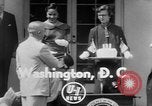
Film division of UN Committee presents cake to U.S. President Truman on anniversary of the UN at White House in Washington DC.
The film division of the United Nations Day Citizens Committee presents a cake to U.S. President Harry S Truman at the White House in Washington DC. Cake presented on the forth coming sixth anniversary of signing the UN Charter. A woman brings the cake and presents it to President Truman. The President and First Lady Bess at the ceremony with the cake. President addresses press reporters and people; laughter breaks out at the ceremony.
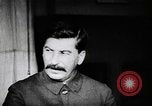
Joseph Stalin in an interview with UPI correspondent Eugene Lyons (unseen) in Moscow
Joseph Stalin, General Secretary of the Central Committee of the Soviet Communist Party, being interviewed by Eugene Lyons (unseen). Lyons was United Press International (UPI) correspondent in Moscow, and the first Western correspondent to be granted an interview with Stalin.
CRITICALPAST.COM: About Us | Contact Us | FAQs - How to Order | License Agreement | My Account | My Lightboxes | Shopping Cart | Advanced Search | Featured Collections | Website Terms & Conditions | Privacy Policy ©2026 CriticalPast LLC.
License Agreement |
Terms & Conditions |
Privacy Policy
©2026 CriticalPast LLC.