


 Francais
 Deutsch
 Italiano

Refine Your Search
United States 1982 stock footage and images
- Showing 223 to 228 of 34981 results more
 Hide
Color Sound

The U.S. Army IX Corps soldiers on trucks carrying howitzers at a desert training center in the United States during WWII.
U.S. Army IX Corps maneuvers at the desert training center in United States during World War 2. U.S. aircraft in terrain. Soldiers on military trucks. A truck carries a 155mm howitzer. Another truck carries a 75 mm howitzer. Soldiers with a howitzer. Soldiers with their rifles march in the desert. The dust clouds at their feet. The military jeeps and trucks moves across the terrain. The camouflaged M-3 tanks in the maneuver area. The mobile laundries in the desert. The water pumps at the water edge. The soldiers stand near the water pipes. The sunset at the desert.
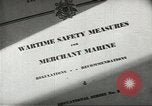
Two U.S. Merchant Marine seamen who survived in life rafts are interviewed by U.S. officials.
Wartime safety measures for United States Merchant seamen. A document reads 'Wartime Safety Measures for Merchant Marine'. Survivors of sinking ships are asked to give suggestions by U.S. officials to improve survival at sea. Two Merchant seamen are interviewed by officials. They share their experience of spending days on a raft after sinking of their ship. Both seamen are shown on a raft floating at sea. They wave to ships passing faraway but ships did not notice them on raft. Officer asks if they had any signaling device on raft. Seaman says they never had any device but they used a tin can as a reflector to signal the ships. An aircraft flies overhead and seaman uses tin can to signal the aircraft and a cutter is sent for rescue. A U.S. Navy officer holds a mirror which is made required equipment on life rafts.
U.S. Army aircraft patrol for forest fires, in 1919, in the United States. Bulldozers and forest plows introduced in 1932
World War I scenes of U.S. Army airplanes in action at the front. A picture of U.S. Army Major Henry A. (Hap) Arnold and California Forester Kurt Dubois, who, together, started the fire patrol practice by United States Army aircraft in1919. Army flyers lined up on a field. Army Curtis JN-4 (Jenny) airplanes in flight as smoke rises from the forests below. Weighted messages with ribbons attached, being dropped by pilots while in flight to inform about a forest fire. Later on after the installation of radios a pilot sends a message on a radio set in case of a forest fire. In 1920s, Crawler tractors used to skid logs out of the forest. In 1925, tractor with a blade was developed and used to build forest roads. In 1932, a Bulldozer being used to create firebreaks during a Southern California fire. A fire plow in operation.

U.S. soldiers practice landing assault and art of street fighting at an amphibious training center in the United States.
United States soldiers practice the invasion of Europe during World War II. United States troops loaded in invasion barges practice a landing assault in the United States. Invasion barges being towed by barrage balloons as they arrive at a beach. The troops land at the beach as live ammunition is being fired. The soldiers land and cross over barbed wire fences at the beach. Motorized equipment being carried inland from the beach. The soldiers being trained in street to street fighting at an amphibious training center. They fire rifles.
United States ships like destroyer escorts and a tanker ship being launched in the United States during World War II.
United States Navy ships being constructed and launched in the United States during World War II. A shipyard as men work on destroyer escort USS Parks. Final touches being given to the ship. The ship being launched. United States Navy destroyer escort USS Hopping being launched at a ship yard. A new tanker ship being launched. Men at the bow of the ship.
United States Coast Guardsmen patrol beaches throughout the United States with the help of trained dogs and radio sets.
United States Coast Guardsmen patrol coasts in the United States. Coast Guardsmen mounted on horseback as they patrol coastlines throughout the United States. Narrator states they are guarding the coast from landings of enemy saboteurs who would arrive by submarine (reference to the Coast Guard discovery of Operation Pastorius Nazi German would-be saboteurs caught on Long Island, New York.) Coast Guardsmen ride horses on a beach. Trained dogs and radio sets also assist them in patrolling the shoreline.
CRITICALPAST.COM: About Us | Contact Us | FAQs - How to Order | License Agreement | My Account | My Lightboxes | Shopping Cart | Advanced Search | Featured Collections | Website Terms & Conditions | Privacy Policy ©2026 CriticalPast LLC.
License Agreement |
Terms & Conditions |
Privacy Policy
©2026 CriticalPast LLC.