


 Francais
 Deutsch
 Italiano

Refine Your Search
United States 1982 stock footage and images
- Showing 2341 to 2346 of 34981 results more
 Hide
Color Sound
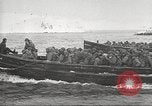
Centers for distribution of U.S. Army films throughout the world in World War II.
Scenes of U.S. troops training in amphibious assaults and manning and firing antiaircraft guns. Animated map showing U.S. Army film distribution centers in various countries during World War 2.

Firemen direct water on a fire and control it in a house in the United States.
Safety in everyday life in the United States. Exterior of a house in upscale suburb in the United States. Man, woman and their child inside the house. Housewife sitting in chair sewing, and a boy child lying on the rug in a room, reading. A man working in office in another room. He carelessly throws a cigarette in an ash tray and comes out of the room. He sits with his family. The other room catches fire because of the burning cigarette. The woman calls the fire department. Firemen arrive and fire fighters extinguish the fire with water from fire hoses.
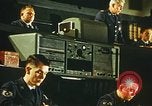
Elements of the North American Air Defense (NORAD) system and U.S. Strategic Air Command in operation
Command and control center in headquarters of NORAD (North American Air Defense), at Ent Air Force Base, Colorado Springs, Colorado. NORAD Commander, General Laurence S. Kuter, USAF, and NORAD Deputy Commander, Canadian Air Marshal Roy Slemon, Chief of the Canadian Air Staff, step into the Center, to observe activities. Based on teletype messages, U.S. airman marks aircraft positions on plexiglass overlay of NORAD area map. Staff of the center phone information to other elements of NORAD. View of concrete SAGE combat center with staff at large radar monitors. USAF Convair F-102 Delta Dagger aircraft take off on an interception exercise. They are seen at altitude, firing air-to-air munitions, under command of the SAGE combat center. A CIM-10 Bomarc surface-to-air missile is raised at a NORAD site and then launched. View inside the underground Command Control Center of the U.S. Strategic Air Command (SAC) at Offutt Air Force Base, near Omaha, Nebraska. Officers oversee the operation. B-47, B-52, and B-58 bombers are seen taking off. A SAC Major General at desk with a "Red Phone" connecting all SAC elements and the White House (shown). Control room of a ballistic missile center. View of SM-65 Atlas intercontinetal ballistic missile on launch pad and then launching. Civil defense officials man phones of national warning system, from NORAD headquarters. The system's links to North American cities shown on map. City street scenes.

U.S. developments in defense against intercontinental ballistic missiles
Actor Raymond Massey standing in front of color map of North America, speaks about U.S. measures to defend against potential enemy intercontinental ballistic missiles. Aerial view of one of the largest radar antennas in the world being set up in Greenland and Alaska, and another planned for Great Britain, all part of the BMEWS (Ballistic Missile Early Warning System). A teletype machine printing information transmitted by the BMEWS system. View of technicians working in BMEWS communications circuit vault. More views of BMEWS radar antennas. Animated diagram of earth with early warning satellites orbiting to provide instant notice of missile launch. Views of U.S. Army Nike-Hercules missiles being tested, before development of the Nike-Zeus versions.

The liaison between the telephone system and civilian defense units for air raid drills in the United States.
The air raid warning systems in the United States during World War 2. An air drill in Newton, Massachusetts. A Daprato Statuary company building on fire (a drill meant to simulate fire from bombardment.) A warden in uniform reports the bomb damage to the information center. A sign reads: 'Report Center (Telephone Room)'. Men and women work inside the room. A woman talks on the telephone and she notes down the information about the location, time, date and other essential things on a paper. Chief warden and other officials seated in the report center. The report about the bombardment is given to them. The location of damage is planted on a map. They take quick actions and assess the impact and needed response. Messages are relayed by uniformed Boy Scouts standing by. Fire equipment and medical aid is dispatched to the scene. A sign reads: 'District Warning Center'. Public utility representatives stand by to take charge of the repair of water mains, electrical and telephone equipment. A map locates various areas in New England, United States.
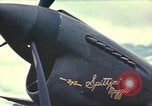
Names written on various USAAF airplanes parked at an airbase in the United States.
United States Army Air Forces aircraft at an airbase in the United States during World War 2. Airplanes parked. Nose of P-47 Thunderbolt. Names on the names of various P-47 aircraft, including "Spittin Maggie", "Coleen", "Honey Chile", "Ginnia 367" and "Hattie Hawgmeat" written on the planes. A man standing near a P-47.
CRITICALPAST.COM: About Us | Contact Us | FAQs - How to Order | License Agreement | My Account | My Lightboxes | Shopping Cart | Advanced Search | Featured Collections | Website Terms & Conditions | Privacy Policy ©2026 CriticalPast LLC.
License Agreement |
Terms & Conditions |
Privacy Policy
©2026 CriticalPast LLC.