


 Francais
 Deutsch
 Italiano
Refine Your Search
United States 1982 stock footage and images
- Showing 247 to 252 of 26492 results more
more Hide
Hide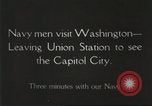
Sightseeing United States sailors visit landmarks in Washington DC, United States and Annapolis, Maryland.
United States sailors visit Washington DC area. View of the U.S. Naval Academy Chapel in Annapolis, Maryland (Slate the precedes this shot incorrectly states that it is the U.S. Capitol). View of Pennsylvania Avenue in Washington, DC, as seen from the U.S. Treasury Building. Traffic along Pennsylvania Avenue. View of exterior of U.S. Treasury Buildings, with sailors descending steps. View of the South entrance of the White House. A sailor standing next to Tidal Basin views the Washington Monument in the distance. Exterior of the side of the Lincoln Memorial, with two U.S. Navy sailors walking toward the building. Sailors descend the steps of building. The south entrance of the White House. A sailor looks at the Washington Monument from Tidal Basin. The sailors in front of the Lincoln Memorial.
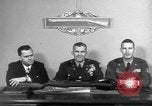
U.S. Army Colonel William W Quinn interviews World War II correspondents on combat unit publicity in the United States.
Colonel Quinn interviews World War II correspondents in the United States. Colonel United States Army William Wilson Quinn introduces 2 war correspondents Doug Larson of Scripps Howard and Sergeant Francis Porter of the United States Army during interview. They all seated at desk. Colonel states: Publicity of combat unit by press increases combat effectiveness and unit efficiency because Individuals are recognized, individuals are placed under spot light and results are enhanced. War correspondents state their points. Colonel questions about the commanders reluctance to publicity and their liking to follow specific units. Correspondents answer and state their points to these questions.
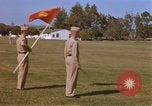
United States Marine Corps march on parade field at Camp Pendleton, California, United States.
Salute and gun firing. Major General Kyle General Sawyer along with other marines stand at the parade field at Camp Pendleton, California, United States. Marine marches with the USMC flag. Marines lower their flags. USMC standing in attention salutes. Marine Corps march playing a band on the field.
United States Army on a rescue mission liberates United States and Filipino prisoners of war at Cabanatuan, Philippines
A patrol liberates United States and Filipino prisoners of war in the Philippines during World War II. U.S.. Army soldiers fire artillery and mortars on battlefield. Smoke arises from firing. Soldiers approach a chaplain, one by one, to receive prayers and pardon. Soldiers load shells in various artillery and fire. They move toward a hillside and advance up the hill. Soldiers passing bodies of dead soldiers. Soldiers carrying wounded back downhill on stretchers. Graphic shows movement of U.S. forces down through plains toward Cabantuan prisoner of war camp. Allied guerilla forces and U.S. Army Rangers move on a rescue mission 25 miles behind enemy lines, moving through fields and jungle areas. Staged scene of a soldier firing through a gate lock and entering the gate of the prisoners' camp. Soldiers who were victims of the Bataan Death March, now freed from their prisoner camp, walk in columns with Army escorts. Many are smiling. Some are emaciated. Local women and children watch them. Another group of liberated prisoners pass by in the back of a truck.
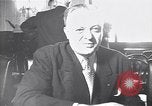
United States Congress representatives at informal caucus in United States
Congressmen, including Lyndon B. Johnson, at informal caucus of members in the United States. They interact with each other. Some members greet other members. (Clip is on same reel of film as scenes from 1948 reopening celebrations at The Greenbrier Resort in White Sulphur Springs, West Virginia. This clip may or may not be connected to that event.)
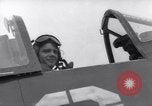
United States aircraft take off from United States Navy aircraft carrier USS Boxer in Korea
United States Navy aircraft carrier USS Boxer (CV-21) during Korean War. Lieutenant Commander E.R. Coffman in the cockpit of an F4U Corsair aircraft as he takes off for an air strike against Korea . Planes take off. Bombs and rockets loaded under the wing of an aircraft. A helicopter stands by for air-sea rescue.
CRITICALPAST.COM: About Us | Contact Us | FAQs - How to Order | License Agreement | My Account | My Lightboxes | Shopping Cart | Advanced Search | Featured Collections | Website Terms & Conditions | Privacy Policy ©2026 CriticalPast LLC.
License Agreement |
Terms & Conditions |
Privacy Policy
©2026 CriticalPast LLC.