


 Francais
 Deutsch
 Italiano
Refine Your Search
United States 1982 stock footage and images
- Showing 2557 to 2562 of 26493 results more
more Hide
Hide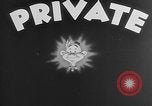
An educational animated film shows Private Snafu being placed as the in charge of a camp in the United States (WW2)
An animated film shows cartoon character Private Snafu in the United States. Private Snafu works and complains about his work. He is admitted in a hospital. Technical Fairy, First Class arrives and places Private Snafu as in charge of a camp. Private Snafu permits the discipline to break down. The troops enjoy themselves. The troops sit with girls in a Jeep. Private Snafu sits in a camp and is attended by several women. Technical Fairy, First Class informs Private Snafu about the attack of enemy on the camp. Private Snafu calls for his troops. The enemy attacks unopposed. Private Snafu hides himself in the ground. The enemy aircraft attacks him. A Nazi German sign on the enemy aircraft. (World War II period).
Lieutenant General Lesley James McNair receives posthumous recognition in the United States (WW2)
Posthumous recognition given to Lieutenant General Lesley James McNair in the United States during World War II. Past events show him at various stages of his carrier. U.S. Army Lieutenant General Lesley James McNair stands with troops near an aircraft. He sits in a car. He trained army officers as he served as the Commanding General of the U.S. Army Ground Forces.

A fleet oiler re-fuels destroyer, USS Cooper (DD-695), underway at a sea in the United States.
Fueling of destroyer, USS Cooper (DD-695) underway at sea in the United States. Sailors aboard a destroyer ship. Officers maneuver the destroyer. An engineer involved in the preparations. An animated diagram shows information applicable when a destroyer takes on board fuel oil from a tanker alongside and both ships are underway. The small tanks are filled first. The officers work efficiently and wear life jackets. Men at forward fueling station. An animated diagram shows the course taken by the destroyer and the tanker. The animated diagram shows the collision of both ships. The heaving line and towing line are taken from the tanker to the destroyer ship. The free end of the messenger is returned to the destroyer. Sailors hold the fuel hose and take it to the tanks. A safe distance is maintained between the two ships. The straps are cut after refueling and the destroyer ship increases it's speed. (Note: The USS Cooper was torpedoed by the Japanese Destroyer, Take, during an engagement with Japanese naval forces in the Gulf of Leyte, on December 3, 1944. Reportedly, She exploded, split in two, and sank. Of her crew, only 168 could be rescued. The remaining 191 lost their lives.)
Basic principles of torsion bar suspension used on army track vehicles are explained in the United States.
Explanation of the basic principles of torsion bar suspension. The vehicle suspension uses a torsion bar as the main weight bearing spring. United States tank destroyer 3-inch Gun Motor Carriage (GMC) M10 and 76 mm Gun Motor Carriage M-18 tank destroyer move along an uneven terrain. M-10 uses spring type suspension and M-18 uses torsion bar suspension. A man uses a model to describe the principles of torsion bar suspension used on army track vehicles. He uses a plain piece and a simple model for demonstration of principles. The bar's torsion resistance is demonstrated. Torsion bar and suspension bar are explained by the model.

A storm causes heavy damages and tides flood areas in East Coast of the United States.
Damage caused by a storm on the East Coast of the United States. Tides flood areas in New York City. The storm causes damages at Eastern Seaboard New Jersey to Maine. A view of the flooded area. Elderly civilians are rescued in boats. Streets on the shoreline filled with debris. Shops flooded with water. Damaged houses in view. Automobiles buried in water on the streets. A man runs behind a goose. Ruins and rubble in view.
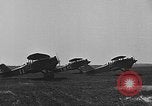
U.S. Curtiss P-1 Hawk planes in flight in formation during Air Corps demonstrations in United States.
Planes in flight during Air Corps Demonstrations of Command Schools in United States. U.S. Army Air Corps Curtiss P-1 Hawk aircraft taxis on field. Planes take off and in flight over targets. Curtiss P-1 Hawk planes in flight in formation. Us Army Air Corps Curtiss-Martin NBS-1 planes in flight. Bombardiers release bombs. Planes strike targets. Smoke rises up due to explosions.
CRITICALPAST.COM: About Us | Contact Us | FAQs - How to Order | License Agreement | My Account | My Lightboxes | Shopping Cart | Advanced Search | Featured Collections | Website Terms & Conditions | Privacy Policy ©2026 CriticalPast LLC.
License Agreement |
Terms & Conditions |
Privacy Policy
©2026 CriticalPast LLC.