


 Francais
 Deutsch
 Italiano
Refine Your Search
United States 1982 stock footage and images
- Showing 2713 to 2718 of 26493 results more
more Hide
Hide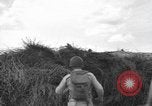
A demonstration about creating gaps in various walls and obstacles with the help of bar charges in the United States.
A demonstration shows bar charges being placed and exploded against a wall in the United States. Soldiers place bar charges on a Japanese stump wall. 24 packs of bar charges are placed on the wall for detonation. An explosion takes place and smoke rises. The explosion results in a 12 feet wide gap in the wall and tanks pass through the gap. The bar charges are placed on a five feet high Japanese log wall. An explosion occurs and a 15 feet and 3 inches wide gap is created. A U.S. Army tank passes through the gap. 24 packs of bar charges are placed on a Japanese wall and an explosion occurs. Smoke rises due to the explosion. A U.S. Army tank passes through the 16 feet wide gap created in the wall. The soldiers near the bar charges. They place the charges under water for a detonation. A steel obstacle. The bar charges are placed at the joint of a member of a steel fence for a detonation. (World War II period).
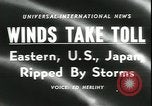
Hurricane Helene in the United States and Typhoon Ida in Japan lead to severe damage to property and life.
Storms hit the United States and Japan. Hurricane Helene hits Carolina and Virginia Cape as strong winds blow at 140 miles per hour. An uprooted tree. High waves occur at sea. Damaged buildings as a result of the hurricane. Damaged roof of a house. Aftermaths of Typhoon Ida in Japan. Water clogged streets. Damaged houses as a result of the typhoon. Japanese soldiers carry on rescue work.
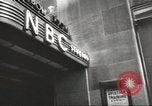
War veterans sing during auditions at the NBC studio in New York, United States after World War II.
A dramatization depicts war veterans appearing for NBC auditions in New York, United States after World War II. A sign on a building reads ' NBC studios'. George from the NBC ( National Broadcasting Corporation) addresses the returning veterans before the auditions. Soldiers audition themselves one by one. They sing and play musical instruments like mouth organs. Three of them get selected. The Vice President of the NBC appeals to the veterans to appear for the auditions and assures them of being taken care of if they get selected.
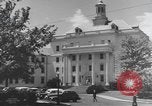
Setting up of hospitals to treat veterans suffering from neuropsychiatric disorders in the United States.
Medical facilities related to neuropsychiatric disorders being provided by the Veterans Administration in the United States. Exteriors of a V.A. hospital building. Animation shows the increase in number of neuropsychiatric patients from 1942 to 1950 and forecasts growing through the 1980s. Narrator describes high prevalence of such problems among veterans. (Also known as "shell shock" or, more recently, Post Traumatic Stress Disorder, or PTSD.) Exteriors of hospitals and training schools where neuropsychiatric specialists train. A doctor talks to a patient in a bed. Neuropsychiatric research being conducted in a laboratory. A technician works on an instrument. A neuropsychiatric specialist being trained. A technician works on an instrument. Psychiatrists discuss. They give various therapies to patients like the shock therapy, the socializing therapy in which a patient plays golf.

A hospital under the Veterans Administration that treats patients suffering from various diseases in the United States.
Medical facilities related to medicine and surgery being provided by the Veterans Administration in the United States. A graph depicts the increase in number of patients suffering from medicine and surgical diseases up to 269% from 1942 to 1950. Two war veterans at a hospital as they recover after an ailment. A surgery being performed. A pathological conference being conducted. Specialists give on the spot directions as they look after the patients. Doctors examine patients as they take X rays. A doctor looks after veterans suffering from various diseases. Patients at a hospital suffering from tuberculosis. Patients in wheel chairs. Women lying down in a garden. A doctor takes a patient's X ray. He looks at the X ray film.

Function of local Veterans Administration offices in answering questions from United States military veterans after World War 2
A public service announcement or PSA after World War 2, targeted at U.S. military veterans. Narrator communicates how to correspond properly by mail when contacting the Veterans Administration. He encourages veterans to visit their local Veterans Administration office to get answers to questions when possible, rather than writing to the United States Veterans Administration. View of the central office of the Veterans Administration with a number of bags of postal mails and letters piled up. Stacks of letters received from veterans, at a rate of four million letters each month. Mails being sorted out by the staff. A veteran visits a local Veterans Administration office. Animation shows issues that the Veterans Administration cannot assist with, including housing, employment or jobs, and surplus property, and encourages that they contact other government agencies for help on those issues. They summarize problems of veterans that the Veterans Administration does look into like housing, jobs and employment, surplus military property, education, insurance and medical care. They encourage veterans to visit local Veterans Administration offices for answers and help.
CRITICALPAST.COM: About Us | Contact Us | FAQs - How to Order | License Agreement | My Account | My Lightboxes | Shopping Cart | Advanced Search | Featured Collections | Website Terms & Conditions | Privacy Policy ©2026 CriticalPast LLC.
License Agreement |
Terms & Conditions |
Privacy Policy
©2026 CriticalPast LLC.