


 Francais
 Deutsch
 Italiano

Refine Your Search
United States 1982 stock footage and images
- Showing 34351 to 34356 of 34981 results more
 Hide
Color Sound

British factory workers visit RAF Station Feltwell to see the Vickers Wellington Bombers they built, in action
British factory workers visit Royal Air Force Station, Feltwell, in Norfolk, East Anglia, England, during World War II, where RAF Squadrons fly the Victor Wellington I Bombers they helped build. The factory workers walk up to a British Vickers Wellington medium bomber aircraft and meet flight personnel in front of the aircraft. The pilot shakes hand with the factory workers. Two crew members in the foreground. The nose of the Wellington Bomber in the background. A British enlisted man removes tarpaulin cover from stacked bombs. Steel scaffolds in the background. The pilot and crew members enter the Wellington bomber through the nose hatch. The factory workers watch as the bomber takes off on a mission to bomb Germany.

Allied landing craft being loaded in preparation for the D-day assault on Normandy in World War II
Allied troops and equipment being loaded on landing craft for the invasion of Normandy, France, during World War 2. A Landing craft tank (LCT) Number 153, with ramp down alongside Stone pier,Castletown, Portland, England. A halftrack backs onto the LCT. "That's all Brothern!" written on side of the halftrack. Soldiers aboard an LCT, watching vehicles load. "Berlin" and picture of girl with words "Ma-Cherie" written on side of the craft, which also displays and American flag and C-232. LCT 214 with her ramp down. Troops standing and waving from an LCT as her ramp is being raised.Several landing craft maneuvering in the harbor. View of a transport ship and a Coast Guard 83-foot cutter alongside.
Military award ceremony for members of 351st Bomb Group At RAF Station Polebrook, England, during World War II
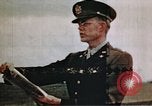
During World War 2, Group Adjutant reads 8th Bomber Command orders of the day, on July 7th, 1943. Members of the 351st Bomb Group stand in formation in front of B-17s during an award ceremony. The decorations, including Silver Star, Distinguished Flying Cross,and Soldiers Medal, are arranged on a table for presentation. The recipients are lined up at attention. Narrator points out Bombardier Stevens receiving the DFC and other airmen and their awards.

German Heinkel He-111bomber shot down by the British Royal Air Force in Scotland during World War II.
Many sightseers stand around the wreckage of a German Heinkel He111H-2 bomber that crash landed in a field. A swastika painted on the tail of the bomber. The damaged cockpit. Several British Royal Air Force fliers examine it. (Note: This is German Heinkel He-111H-2 bomber,coded 1H+JA of Luftwaffe Stabskette/KG26. Known as the 'Humbie Heinkel,' it crash landed, on 28 October, 1939, at Humbie, East Lothian, Scotland, after being shot down by No.602 'City of Glasgow' Squadron of the British Royal Air Force, during an armed reconnaissance mission over the Firth of Forth, where Royal Navy warships were harbored, during World War 2.)
Formation of B-17s in flight over countryside, England.
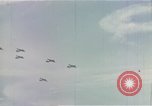
Aerial formation of B-17s over English countryside. Formation of B-17s at relatively low altitude. .Views from gunners' positions and from pilot's position in the cockpit of one aircraft.
German U-boats obtained by Britain after World War I
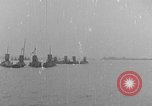
German submarines taken as war prizes by Britain after World War I. A British official is taken by boat to inspect the submarines. Accompanied by British Naval offiers, he steps walks along the deck of the German submarine, U-9, pointing to its identifying letters. He poses with the officers. Visible behind them is the British submarine, L-15. (Note: The German U-boat, U-9, was surrendered on November 26, 1918 and broken up at Morecambe, England, in 1919.)
CRITICALPAST.COM: About Us | Contact Us | FAQs - How to Order | License Agreement | My Account | My Lightboxes | Shopping Cart | Advanced Search | Featured Collections | Website Terms & Conditions | Privacy Policy ©2026 CriticalPast LLC.
License Agreement |
Terms & Conditions |
Privacy Policy
©2026 CriticalPast LLC.