


 Francais
 Deutsch
 Italiano
Refine Your Search
United States 1982 stock footage and images
- Showing 415 to 420 of 26492 results more
more Hide
Hide
Nixon-Agnew election campaign focuses end of domestic violence in United States.
Richard Nixon-Spiro Agnew election campaign for the office of Presidency in United States. A view of domestic violence in United States. Civilians protest in United States. United States policemen fire tear gas. Fire in a building. Wounded civilians. Policemen with guns. A protesting group carries banners. A banner reads 'Independent Socialism'. 'US Mail Box' lies between rubble. A broken statue on road. Damaged building. Men of Young Americans for Freedom (YAF) protest. They carry banners reading 'To give aid and comfort to Viet Cong, Treason' and 'None dare to call it treason, YAF dares'. Richard Nixon promises order in United States without any violence.
Election campaign of Richard Nixon-Spiro Agnew in United States.
Richard Nixon-Spiro Agnew election campaign for the office of Presidency in United States. Democratic National Convention. A huge crowd gathered to protest. People stand with the U.S. flags. A sign reads 'Illinois'. Banners read 'Boycott McGovern' and others reflect support for McGovern. Domestic violence in United States. A man holds a pistol. A fire in a building. People protest on streets. A protesting group carries banners. A banner reads 'Independent Socialism'. Another group carries banners reading 'To give aid and comfort to Viet Cong, Treason'. Wreckage on street. United States soldiers in Vietnam. Unemployed citizens and poor people in United States. A man stands in a building. A poor woman with her child. Reflection of light in water. The campaign stresses on choosing the right leader in United States. (Vietnam War period).
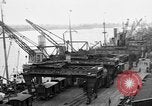
U.S. Army Quartermaster Corps filler depots, reserve depots, manufacturing depots and remount depots in the United States.
United States Army Quartermaster Corps depots in the United States. A port in the United States. Men at work in the port. The port of embarkation, during World War I, filled with the supplies for the soldiers being sent by the manufacturer due to the lack of sufficient depots for storage of supplies. Cars carry supplies to New York port. A map of the United States shows filler depots at ports of embarkation across the nation. A pictorial representation of New York port, being huge, taking supplies from three nearest filler depots. Another map shows reserve depots in four locations. Manufacturing depots in two locations - Philadelphia where clothing is manufactured and Jeffersonville hardware is manufactured. A manufacturing depot in which women sew different clothing. Workers at equipment in a manufacturing depot. The Philadelphia Quartermaster Depot where items are manufactured and which is also a reserve depot for clothing. Rolled flags in wheel carts hauled by workmen in the depot. Workers during the inscription work of insignias on the flags. View of the insignia. Horses moving in columns on a path. Newly purchased horses and mules trained in areas provided by the Quartermaster Corps. Dogs bred in an area. The corps with the dogs. A map of the United States shows remount depots in three locations.
Vice President Lyndon B. Johnson becomes the 36th President of the United States after assassination of John F. Kennedy.
Features President Johnson assuming his new responsibilities as the President in an atmosphere of grief in the U.S. United States civilians walk in a long queue line and entering the U.S. Capitol Building to view the casket of President John F. Kennedy, days after his assassination death. The U.S. flag draped coffin of assassinated President John F. Kennedy (35th President of the United States) is seen in the center of the dome room. People cry and express grief, and comfort each other. Point of view shot of mourners exiting the U.S. Capitol building and looking out over the National Mall, with the Washington Monument visible in the distance. Night time exterior view of the White House. Scenes changes to show a man, possibly Indian, laying bricks at a construction site. A teacher in a college talking to a student in a courtyard. Women seated selling and buying goods at an outdoor market in Asia. A farmer driving a red tractor in the United States and tilling the soil of a farm field. A lit up room in the White House. Lyndon B. Johnson, former Vice President of the U.S. (now the 36th President of the United States) sits with documents at his desk and works in the White House. Close up side view of President Johnson as he works. Flashbacks: Views of President Johnson surrounded by large crowds, including a group of children, and being greeted during his trip to Asia, Europe, Africa and South Africa. LBJ signs promoting Lyndon Johnson at a Democratic Convention. Brief excerpts of Johnson speaking about Civil Rights and about space exploration, and about military readiness. President Johnson entering the House of Representatives chamber in the U.S Capitol five days after he became President of the United States to make his first speech to Congress as President. Lawmakers assembled give him a standing ovation as he enters.
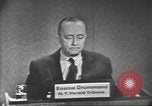
John Kennedy and Nixon debate over the prestige of America prior to the presidential elections in the United States.
Presidential election debate held between Democratic nominee Senator John F. Kennedy and Republican nominee U.S. Vice President Richard Nixon in the United States. New York Herald Tribune newspaper correspondent Roscoe Drummond asks Senator Kennedy that how can American prestige be measured abroad. Senator Kennedy responds stating that America is identified with the cause of freedom and if other countries have to choose between America and a Communist country, they would choose America. He further speaks that there are many indications that prestige of the United States is not as high as it once was. Kennedy summarizes some of these indications and relates to it by mentioning the example of Sputnik space program by the Soviet Union in 1957 (during the Space Race). Kennedy speaks about the economic development of the Soviet Union. He says the Soviet Union will be ahead of any other country scientifically and militarily by 1970. He mentions votes by different countries in the United Nations dealing with Red China. He says that Guinea and Ghana, two independent countries now are supporting Soviet foreign policy at the UN. NBC correspondent Bill Shadel asks Richard Nixon to speak on the topic. Vice President Nixon responds by speaking about the economic development of the Soviet Union. He speaks that the Soviet Union is a very primitive economy and that the United States is well ahead economically. He says that if the United States is going to maintain its strength and its prestige, they must not only be strong militarily and economically but must be firm diplomatically also. Bill Shadel says that an entire hour was devoted to answering questions from the reporters. He says that each candidate was questioned in turn and each had the opportunity to comment on the answer of his opponent. Shadel says that the reporters were free to ask any question on any subject, neither candidate was given any advance information on any question that would be asked. He says that the fourth debate is scheduled for Friday, October twenty-first.
Roosevelt wins 1944 United States Presidential Election during WWII
Newspaper boy peddling newspapers with headline "Nip and Tuck Race." View of Times Square in New York City during WW2. Shops in Times Square with barricades to prevent vandalism by crowds. View of Times Building. An Asian man and a White man standing together while checking for election updates from Times Building. Election officials and staff open a machine processing election returns from the small towns from the Eastern United States. Election official opens a Perfection ballot box. Radio announcer with CBS microphone, possibly Bob Trout, broadcasts updates as votes are tabulated. Volunteers tabulate results. Woman's hand seen turning on radio. United States soldiers based in Italy and France listen to radio to hear that current United States President and Democratic party candidate Franklin D. Roosevelt was leading race. Two United States soldiers smiling as they hear the news. WEAF Radio announcer broadcasts election returns from the west coast. An American family listening to the radio in their living room. An American family, with a picture of a serviceman on top of radio, listens to the news that Roosevelt won. Zipper marquee on Times building announcing election returns. Crowds gathering in Times Square New York. Americans celebrated the victory in New York. View of the Times Square at night. American civilians and soldiers celebrate the victory of United States President Franklin D. Roosevelt’s fourth term in office.
CRITICALPAST.COM: About Us | Contact Us | FAQs - How to Order | License Agreement | My Account | My Lightboxes | Shopping Cart | Advanced Search | Featured Collections | Website Terms & Conditions | Privacy Policy ©2026 CriticalPast LLC.
License Agreement |
Terms & Conditions |
Privacy Policy
©2026 CriticalPast LLC.