


 Francais
 Deutsch
 Italiano

Refine Your Search
United States 1982 stock footage and images
- Showing 4243 to 4248 of 34981 results more
 Hide
Color Sound

Origin of the U.S. Census and its development and refinement over time.
(Animated cartoons for majority of clip; actual office and early computer scenes near end of clip.) Accompanying narration about the origins of the United States census and establishment of the permanent Census office in 1902. Animation and cartoons illustrate the manner in which the census was taken over its history. A cartoon illustration of census worker, Henry Hollerith, developer of the punch card method of data recording and manipulation. (The 88 column punch cards shown in use in 1950, bear his name.) Equipment illustrated include: punch card sorting machinery; and early digital computer. Actual Images of 1970 era early computer and tape machines and related electronic computer keyboards. A worker mounting a tape on a machine in an office.
The U.S. Bureau of the Census processing data for the 1970 decennial census.
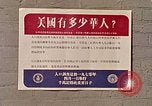
Posters in Japanese and Spanish, illustrating efforts by U.S. Bureau of the Census, to reach all Americans. Such a non-English sign in a barbershop window. Census enumerators conversing in a District Field Office. A woman checking responses against a master list of residents. Staff members discuss individual cases. Newspaper headlines reporting preliminary census results for their respective localities. Census staff making corrections after preliminary results are disclosed. A forklift moving a stack of census documents at the central processing office in Jeffersonville, Indiana. View inside warehouse at Jeffersonville, containing 75 carloads of census questionnaires stacked in bins. Staff in the Central Processing office using special machinery to microfilm the paper forms. View of census workers microfilming in near darkness. Woman at Census Headquarters, with machine called "Fosdic" standing for Film Optical Sensing Device for Imput to Computer. The microfilm is seen being fed into a reader that converts citizens marks on questionnaires into computer-storable (digital) form. View of microfiche census record containing citizens marks. Mailman delivering letters of inquiry to the Census Bureau. census worker looking up information in response to inquiry.

Elements of ordinary life in America that are captured in statistics and reports of the U.S. Census Bureau.
View of houses in an American residential neighborhood area in the suburbs, from low-flying airplane. Crowded street scene in a major city with black and white pedestrians walking on sidewalk in typical 1970s fashions. A public school No. 2. Yellow school buses carrying children. African American family with small children boarding a bus. A group of white people walking appearing to be a grandmother, her son, and three grandchildren. People enjoying a day in a park. African American woman standing near a large upright computer tape tape machine. She presses something on the machine to operate it. House with a "for sale" sign in the suburbs. A man opening the door of a 1969 or 1970 Ford Pinto car at a car sales dealership. Various report documents of the U.S. Census Bureau are displayed. Cattle being unloaded from a farmer's truck. A farmer cultivating a field, using a tractor. Views of State and Municipal Government buildings, including a view of the Justice Department in Washington DC, and including people entering and leaving the Compton, California City Hall building. Highway sign reading: "Leaving West Georgia Soil & Water Conservation District." Others, reading: Washington Suburban Sanitary Commission, Silver Spring Branch Office," and "Wakefield County Park, Fairfax County Park Authority," "District of Columbia, Storm Sewer Vicinity, 14th St. & Kentucky Ave. S.E," and "Harford County Metropolitan Commission, Water Transmission System." A late 1960s car approaching a toll booth on a highway. A policeman directing traffic. Several medical personnel in whites, walking on hospital grounds. A railroad worker. A teacher posting a notice on door, at a school, as school girls behind him try to read the posting. A steel mill with smoke rising from tall stacks. Cars parked outside of Lasalle College New Athletic Facilities construction sign. A Washington DC police car patrolling a city street. Cars parked bumper-to-bumper along a city street.
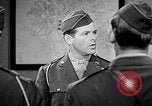
A patrol sergeant inspects military policemen before they leave for town patrolling in the United States (WW2)
A training film 'Military Police Town Patrolling' on functions of military policemen during a town patrolling in the United States during World War II . Soldiers wade ashore. Smoke from firing and bombardment on a battlefield. Soldiers aboard Jeeps and trucks. A military policeman directs traffic. MPs handle prisoners of war. The prisoners are marched. They guard supplies in a supply line. They also patrol captured towns. Buildings along a street side. Vehicles drive past on the street. Men playing on a field. Houses in the background. MPs stand in a line. An officer inspects them. He inspects their uniforms. The officer talks to a military policeman. They march. The MPs are headquartered in a local police station. The MPs enter the police station. Interior of the police station. A desk sergeant at work. The MPs with a criminal. The desk sergeant takes information from him. The criminal is then put behind the bars. The MPs stand in a line at attention in the police station. A patrol sergeant inspects them. He instructs them about town patrol. He says that they should help soldiers whenever they need help and should maintain order and should coordinate with them.
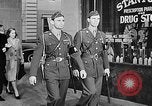
MPs work on posts which were assigned to them in the United States.
A training film on functions of military policemen during town patrolling in the United States. An officer instructs the MPs. The MPs stand at attention in a line. A wall map in the background. The officer assigns posts to the MPs. He points to places on the map. The MPs come out of building and walk. They board a military vehicle. People walking on a street. Some of the MPs are assigned fixed post. These are places like rail road terminals and places of large gathering of soldiers. Spots which could be in trouble are the fixed posts. The MPs serve as information bureau. Soldiers coming to the place for the first time are given information by the MPs. Information about arrival and departure of trains and several other things is given. The working of a roving patrol. Men in a jeep. A motor patrol. MPs in a jeep moving along a street. Buildings along street sides. Working of a foot patrol. The patrols take charge of accidents in which military vehicles are involved. Traffic control by a patrol. They see that roads do not become congested. They take full account of accidents. People walking on a street. An MP talks on a radio. If the car is not equipped with a radio, several public phones are available on the route. (World War II period).
A foot patrol works and talks to soldiers in the United States.
A training film on functions of military policemen during town patrolling in the United States. The working of a foot patrol. MPs walk on a street. Buildings along street sides. Vehicles moving past. Bullying is not allowed for the MPs. They should not accept gifts from anyone. A soldier wearing his uniform in an incorrect way. The MPs talk to him and tell him to correct his mistake. They talk to him in a good manner and the soldier obeys them. Other MPs scold a soldier for wearing his uniform in an incorrect way. This is the wrong way of talking to a soldier. Two soldiers fight. The MPs handle the situation. Two MPs standing outside a building. A board on the building reads: 'Service men's lounge'. People walking on the street near the building. (World War II period).
CRITICALPAST.COM: About Us | Contact Us | FAQs - How to Order | License Agreement | My Account | My Lightboxes | Shopping Cart | Advanced Search | Featured Collections | Website Terms & Conditions | Privacy Policy ©2026 CriticalPast LLC.
License Agreement |
Terms & Conditions |
Privacy Policy
©2026 CriticalPast LLC.