


 Francais
 Deutsch
 Italiano
Refine Your Search
V2 stock footage and images
- Showing 6241 to 6246 of 9941 results more
more Hide
Hide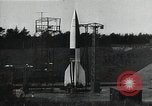
A-4 missile launches and ascends at Peenemunde Rocket Centre in Ostvorpommern, Germany, during World War II.
A-4 missile on launch pad at Peenemunde Rocket Centre in Ostvorpommern, Germany, during World War 2. Missile launches into the sky. Launch pad is surrounded by trees. Views of missile in air. Missile generates vapor trail in the sky.

Atrocities against prisoners in Nazi concentration camps at different places in and near Germany.
Atrocities against prisoners in Nazi camps at different places in and occupied by Nazi Germany during World War 2. Wounded and emaciated Americans are fed and given medical care by Yank Armies of Liberation in Grasleben, Germany. Masked grave diggers open graves in Hadamar, Germany. Around 35,000 political prisoners found buried. Soldiers question Nazi German Chief physician Adolf Wahlmann at Hadamar Killing Centre. General Eisenhower, General Patton and General Bradley inspect Camp Ohrdruf (a Nazi Camp) in Germany. Heaps of human bodies and lime pits filled with corpses can be seen. 21,000 prisoners stumble around with their broken skulls in Buchenwald Concentration Camp (a Nazi camp in Germany). Corpses lie everywhere with large tattooed numbers on their stomachs. Two crematory ovens that were used. Starved people loaded into ambulances for treatment. (World War II period).
Major General Hardigg's speech on fat and oil recycling efforts; view of Halloran Army Hospital kitchen, Staten Island, New York
United States Army Major General Hardigg speaks about the need for saving waste fats and oils for recycling and reuse in the war effort during World War 2. Kitchen of Halloran Army Hospital is shown with Chefs preparing chicken and other foods, and saving fats. Homemakers and housewives shown straining fats through strainers to reserve and save fats. A housewife speaks to another woman. A girl presents a can of reserved fats to a store clerk who weighs it and gives the girl back a ration receipt.
Debate about admission of Argentina to United Nations in its founding San Francisco Conference.
Debate about admission of Argentina during San Francisco Conference working toward United Nations Charter. Disabled and injured United States war veterans from World War 2 combat (mostly Navy in this image) enter the Veterans Memorial Opera House (War Memorial Opera House). View of interior of hall. Ezequiel Padilla, Secretary of Foreign Affairs, Mexico, addressing the gathering. Russian Foreign Commissar Molotov and an interpreter speaking, followed by secretary of States Edward Stettinius. Agenda of meeting is whether or not Argentina be invited for UN Security Conference. Chairman Anthony Eden calls for vote, Argentina is invited by a vote of 31 to 4. View of a parked Eastern Airlines silver liner parked at airfield in Washington DC, and new Ambassador Oscar Ibarra Garcia from Argentina emerges and is greeted by South American and United States officials. A person comes out of a U.S. aircraft and is received by authorities.
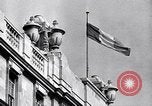
Irish Prime Minister Eamon de Valera in an official meeting in Ireland.
Irish flag on an official Irish Government building. Irish Prime Minister Eamon de Valera working in office. Exterior of Fianna Fail-The Republican Party building in Ireland. Officials in a meeting, de Valera addressing. Pictures of important historic political leaders who struggled for independence of Ireland can be seen. Narrator discussing Ireland's decision to remain neutral in World War 2. A statue on the top of a building. Children filling water from a communal hand pump for a town. Views of country side, sheep grazing in Ireland
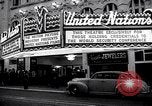
Delegates of United Nations Conference watch motion picture on surrender of Germany and work toward defining UN Charter.
Exterior of a United Nations theater in San Francisco, with movie theater marquee indicating its use exclusively for pass holders attending the United Nations Conference on International Organization. Inside the Delegates of United Nations conference gather during the 2nd week of the conference to watch footage of the German surrender at Reims, signed by General Alfred Jodl. Projectionist and movie projector in booth of theater are shown. View of men and women in movie theater watching movie, including an elevated side view of people watching the movie, and views of the theater screen and movie playing, with backs of heads of people in foreground. Delegates talking and attend meeting in San Francisco, California as they continue work leading toward defining the UN Charter and founding the United Nations organization. Footage from the San Francisco Conference vote, chaired by Anthony Eden of Great Britain, approving the Charter of the United Nations on June 26, 1945
CRITICALPAST.COM: About Us | Contact Us | FAQs - How to Order | License Agreement | My Account | My Lightboxes | Shopping Cart | Advanced Search | Featured Collections | Website Terms & Conditions | Privacy Policy ©2026 CriticalPast LLC.
License Agreement |
Terms & Conditions |
Privacy Policy
©2026 CriticalPast LLC.