


 Francais
 Deutsch
 Italiano

Refine Your Search
V2 stock footage and images
- Showing 6595 to 6600 of 9941 results more
 Hide

Royal Air Force and Yanks in a boxing match during Second World War
Newsreel titled 'RAF (Royal Air Force) and YANKS in a boxing match'. View of indoor boxing ring at an American air base in England during World War 2. British and American boxers put gloves on. Royal Air Force pilots and Americans in boxing tie during the Second World War. Crowd cheers them In the end, winner is awarded a cup.
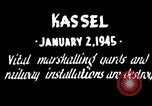
United States 8th Air Force B-17 bombers strike railroads and installations in Kassel Germany during World War II
Film starts showing view from inside a U.S 8th Air Force B-17 flying fortress bomber going through clouds of black flak from German anti-aircraft fire over Kassel, Germany during World War 2. View from another airplane of bombs falling from a B-17. View from a bomber of bombs bursting on the ground with heavy smoke rising. More views of flak clouds. A B-17 is truck by anti-aircraft fire has flames coming from its right wing. Crew members are seen bailing out of the plane, as it slowly descends. Closeup of the stricken airplane. Glimpse of a possible open parachute. View from inside a B-17 as cluster of bombs fall from its bomb bay. View of contrails below as seen from inside one of the bombers.

German propaganda film in World War II justifies German presence in Poland based on threat of Polish expansionism into Germany
German propaganda film during World War 2, before invasion of Poland, entitled 'Feuertaufe' meaning baptism by fire. A polish soldier on horseback sounds a bugle. What appears to be a newspaper, shows image of Polish Marshal Edward Smigly-Rydz; artillery; and warplanes; and comments about Polish military resistance. Narrator refers to Poland, and Britain at war with Germany. A parade of Polish cavalry units, airplanes, armored units and tanks before Polish military leader Edward Smigly-Rydz. A map illustrates Poland's presumed expansionist policies, including the conquest of Slovak Republic; the German protectorate of Bohemia and Moravia; and threatening Germany, itself. Referring to Danzig Narrator says: "But Danzig is German." Large crowd in Danzig listen to Nazi Gaulieter Albert Forster. German- Danzig troops patrol and construct razor wire obstacles. German flag and symbols on buildings in Danzig. German troops seen in Poland. Views of the German battleship Schleswig-Holstein, underway and entering the harbor at Danzig as crowd on docks cheers. A row of German JU-87 Stuka dive bombers parked on a field. Other German warplanes, including float planes, and twin engine bombers.
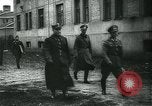
The fall of Warsaw to German forces in 1939, during World War II
Polish General Tadeusz Kutrzeba, deputy commander of Warsaw, is seen accompanied by German officers, as he proceeds toward a military bus where he will sign a ceasefire agreement incident to the capitulation of Warsaw defenders in World War 2. Views of the city in ruins, after the ceasefire. Thousands of Polish citizens gathered in an open square, damaged buildings in background. Polish children being escorted by teachers away from the gathering. Aerial views of the bombed out city, with smoke still rising in places. Unknown locations might include the Warsaw Ghetto. View of Polish General Kutrzeba, inside, the bus, where he signed capitulation agreements. He is reviewing local maps with German officers. He exits the bus and is escorted away (taken as a prisoner of war).
German Luftwaffe operations during invasion of Poland in World War II
German ground support crews pull refueling apparatus from hiding in woods at edge of airfield in Poland, during World War 2. They set up to receive and service arriving German Heinkel HE-111 bombers. A squadron of bombers lands. Ground crews assist them in parking. As flight crews leave their aircraft, ground crews load the planes with bombs. A German Henschel Hs 126 observation plane arrives at the field and rear-seater delivers a reconnaissance camera to waiting ground crewman. View of a rustic field photo intelligence operation in the woods. Technicians wind developed photograph strips using a large cylinder of wooden slats. Photo interpreters study the pictures to glean information about enemy installations and movements. Group of German soldiers working at a large table, outdoors in the woods
German JU-87 Stuka dive bombers attack Westerplatte in Gdansk, Poland, during World War II
A formation of German JU-87 Stuka dive bomber aircraft en route to attack Polish forces at Westerplatte peninsula in Gdansk, Poland, during World War 2 invasion of Poland. Alternating scenes of the Stukas in flight and views of the ground as they approach Westerplatte. View from inside a Stuka as it commences dive over the target. Smoke rising from exploding bombs on the ground. Sequence shifts to several JU-87s landing at their home field. German soldiers stripped to the waist lift bombs and carry them to the aircraft. Several more Stukas landing. Then a Stuka is seen flying over the field, with no landing gear visible. (Some Stukas were fitted with explosive charges to jettison the gear in emergency.) The pilot makes a successful belly landing, although the aircraft sustains considerable damage. German fliers gather around the JU-87 and examine it and converse. (It appears that the aircraft may have suffered some battle damage, as well.) Fliers look over photographs of their next target, while armorers move a heavy bomb to an aircraft with the aid of a dolley lift. Groups of ground crew carry smaller bombs. Several men together lift a bomb under a wing. An aircraft is refueled, and hand cranked to start, and takes off. A Stuka in flight, and view from the rear seat, of the pilot and his cockpit bomb sight. Slow motion view from aircraft as it dives toward a rail marshaling yard and pulls out upon release of its bomb. It flies through smoke from exploding bombs. View as it begins to strafe a column of Polish military vehicles at low altitude.
CRITICALPAST.COM: About Us | Contact Us | FAQs - How to Order | License Agreement | My Account | My Lightboxes | Shopping Cart | Advanced Search | Featured Collections | Website Terms & Conditions | Privacy Policy ©2026 CriticalPast LLC.
License Agreement |
Terms & Conditions |
Privacy Policy
©2026 CriticalPast LLC.