


 Francais
 Deutsch
 Italiano
Refine Your Search
V2 stock footage and images
- Showing 6961 to 6966 of 9941 results more
more Hide
Hide
A convoy of Allied ships underway at sea during the invasion of Iheya Jima in Japan.
Allied invasion of Iheya Jima, Japan during World War II. Allied ships underway off the coast of Iheya Jima, Japan with United States 2nd Marine Division. Convoy of Allied ships underway. Naval gun in the foreground. Convoy consists of transport ships, Landing Ship Tanks underway.
Allied planes lay smoke screen on the beach during the invasion of Iheya Jima Island of Japan.
Allied invasion of Iheya Jima, Japan during World War II. Allied landing crafts and ships at the harbor. A destroyer fires at the beach. United States 2nd Marine Division troops loaded in LVT (Landing Vehicle Tracked) underway at sea. Landing craft move towards the beach. An Allied plane lays a smoke screen. Landing craft in the foreground.
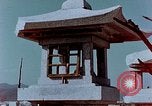
Flash burn effects on a wooden frame of a lantern in Hiroshima, Japan.
Shadow details and flash burns caused due to atomic bomb explosion in Hiroshima, Japan during World War II. A granite lantern with a replaced wooden framework on upper section. Wooden frame with the flash burned area and the protected portion by an overhanging top of the lantern. Torii or the entrance to the Hiroshima Gokoku Shrine (21-2 Motomachi, Naka Ward, Hiroshima, 730-0011, Japan). Men and women move past the entrance.
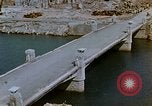
Business center of Hiroshima, Japan and rubble filled fields as a result of the atomic bomb explosion.
Physical damage caused due to atomic bomb explosion in Hiroshima, Japan in World War 2. Damaged Motoyasu Bridge across river in the foreground and the business center of Hiroshima in the background. Area covered with rubble and devastation, with wooden huts amid debris. Wide sweeping view of area between Ota River and Tenma River. People walk on the road and a bus moves past the rubble. Huts built in rubble covered areas.
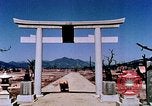
People enter and exit a Torii of a Shinto shrine in Hiroshima, Japan.
Physical damage caused due to World War II atomic bomb explosion in Hiroshima, Japan. A Torii at the entrance of the Hiroshia Gokoku Shinto Shrine (21-2 Motomachi, Naka Ward, Hiroshima, 730-0011, Japan). People enter and exit the gateway or Torii. Men pulling hand cart enter the gateway. Statues on either side of the Torii. Woman on bicycle moves out. Men push a cart out of the gateway.
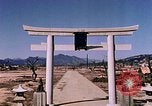
A Torii with stone statues on either side in Hiroshima, Japan.
Structures in Hiroshima, Japan. Torii with stone statues on either side in Hiroshima Gokoku Shrine (21-2 Motomachi, Naka Ward, Hiroshima, 730-0011, Japan). Hills and trees without leaves in the background.
CRITICALPAST.COM: About Us | Contact Us | FAQs - How to Order | License Agreement | My Account | My Lightboxes | Shopping Cart | Advanced Search | Featured Collections | Website Terms & Conditions | Privacy Policy ©2026 CriticalPast LLC.
License Agreement |
Terms & Conditions |
Privacy Policy
©2026 CriticalPast LLC.